

If you were asked to raise your hand whether you had ever interacted with a chatbot, you would raise it high. If you were asked, was the experience always consistent and fulfilling, you would think twice before saying yes. Chatbots are a powerful innovation. However, they have not been as seamless as they were presented to be.
In fact, chatbot mistakes have caused companies millions of dollars along with reputational and credibility loss. A reputed car dealer’s chatbot agreed to sell a car worth seventy thousand dollars for one dollar to a client. Another chatbot of a famous airline gave false discount fare information to a passenger, which the company later denied. The passenger filed a case and the airline had to pay $812 in damages and tribunal fees.
The failed promise of chatbots
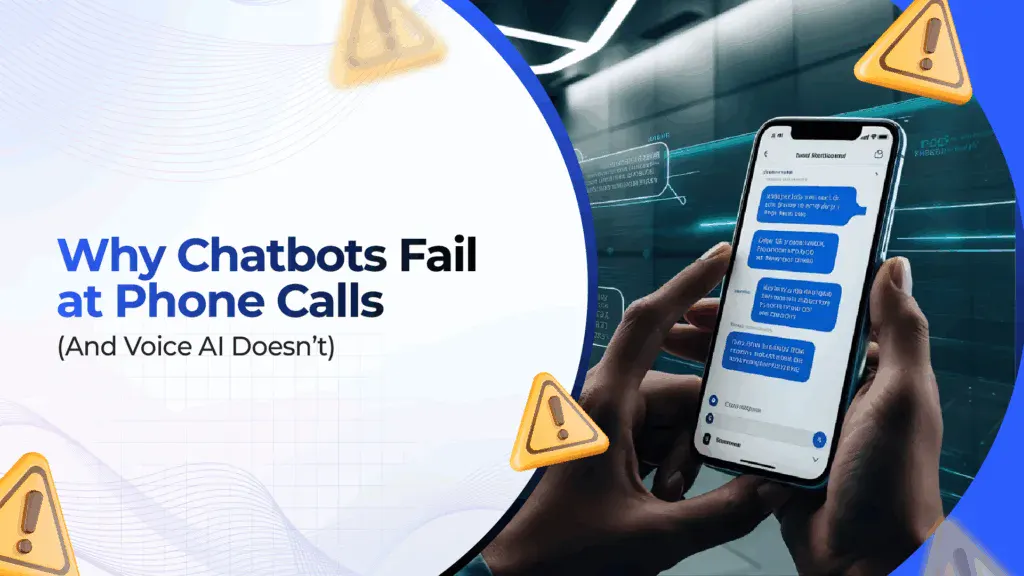
Chatbots were built on the promise of providing information quickly and easily. They were sold like a panacea for every industry whether it was a customer engaging with customer service, an HR professional helping an employee, an agent in a call center, a sales representative supporting a prospect, or even a marketing specialist answering product questions. However, text chatbots were never designed to have a real conversation. They were built for forms and structured inputs. For situations where you type exactly the right thing, and it matches exactly the right answer in a database somewhere. Put that on a phone call and everything breaks.
On a call ,there is no going back. You cannot pause, think, or rephrase. Every second of silence feels like something is wrong. People talk over each other. They use slang. They say, “my phone is acting up” and the bot responds, “I do not see any actors in our system.” A customer would hang up immediately after.
More than 65 percent of people abandon chatbots specifically because they cannot get to a human. They are not giving up out of impatience. They are giving up because the system is designed to block them. Deflection is dressed up as assistance.
That is why chatbots fail miserably at answering questions that even slightly deviate from their input data. Chatbots were never perfect, even on texts. And, they have proved to be far more frustrating in making phone calls.
Enter Voice AI
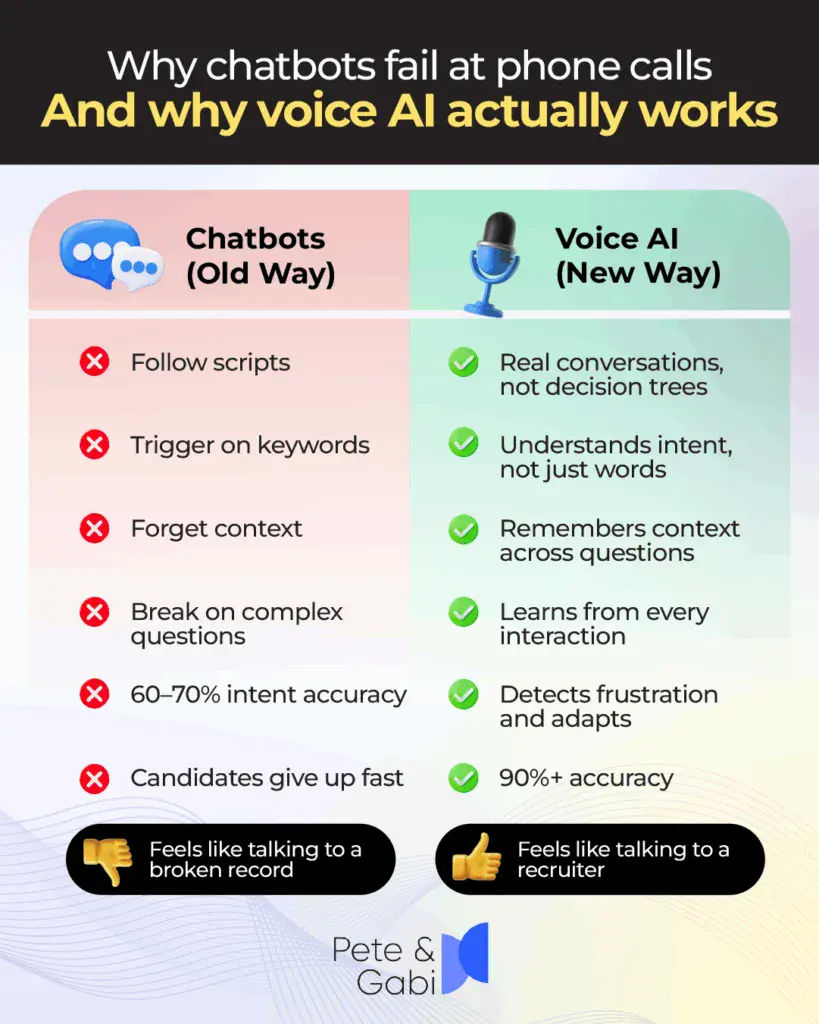
Voice AI are not chatbots with speakers. The engineering underneath it is different.
A text chatbot adapted for voice takes three to four seconds. On a phone call, four seconds of silence does not feel like thinking. It feels like the call dropped.
These systems are also trained on how people actually speak, not how they type. Interruptions, topic shifts, filler words, metaphors. When someone says, “I have been going back and forth with your team on this,” the system understands history and frustration. It does not ask them to please hold while it processes that query.
The good ones also watch for distress signals. Faster speech. Rising pitch. Repeated words. When those patterns show up, the system offers a human transfer before the customer has to beg for one. Voice AI also knows when to bring a human in the loop. A chatbot goes around in loops, annoying the customer.
What the numbers indicate
Voice AI has been evolving at a monumental speed, improving with every update to a point that 48% of customers find it harder to tell the difference between AI and human service reps (as per a Zendesk study). The same report stated that 47% consumers feel AI agents can be empathetic while addressing concerns.
From comprehension gap to hallucination, context loss to escalation failure, Voice AI has managed to resolve major systemic problems with chatbots.
Leading voice AI agents that have changed the game of automated voice AI calling forever are Rebecca and Olivia. Our conversational AI agents handle over 10,000 calls daily, qualifying prospects and reactivating customers, while your team closes roles and deals faster.
What Rebecca and Olivia can do for your business
Rebecca and Olivia are voice AI recruiting and sales agents respectively. Rebecca AI helps streamlines hiring workflow by conducting prequalifying screenings, video interviews, scheduling appointments, real-time scoring, and handing over the insights to the human recruiter once the process is over.
Olivia AI on the other hand helps in making sales decisions by conducting outbound sales calls, qualifying leads, booking meetings, and re-engaging inactive customers.
Rebecca and Olivia help with the repetitive, draining grunt work, so your recruiters and sales representatives can focus on higher value tasks.
Want to see our voice AI agents in action? Schedule a demo today.
Frequently asked questions:
What is the main difference between a chatbot and a voice AI agent?
Chatbots have become a bit of a catch-all term. They refer to a computer program being able to answer a human question whether using gen AI or not, which is what can often create confusion. Chatbots traditionally are built with things like decision trees, rules engines, and often have a limited list of questions that they can support a user around.
On the other hand, voice chatbots powered by generative AI technology are better identified as voice AI assistants. They are powered by AI capabilities like natural language processing and machine learning so that they can understand and correctly assist a user question and match them to specific needs. Voice AI assistants also have the ability to learn over time (known as deep learning). They also have memory capabilities that allow them to remember the history of a user’s inquiries and better assist them.
Who are Rebecca and Olivia?
Rebecca and Olivia are voice AI recruiting and sales agents respectively. Designed by Pete and Gabi, they help with automating hiring and sales workflows so your teams can hire top talent and close sales deals without adding headcount or suffering burnout.
How much time does it take to set them up?
Our conversational AI agents are designed to integrate with your systems seamlessly. You can go from setup to scale in days, not months.