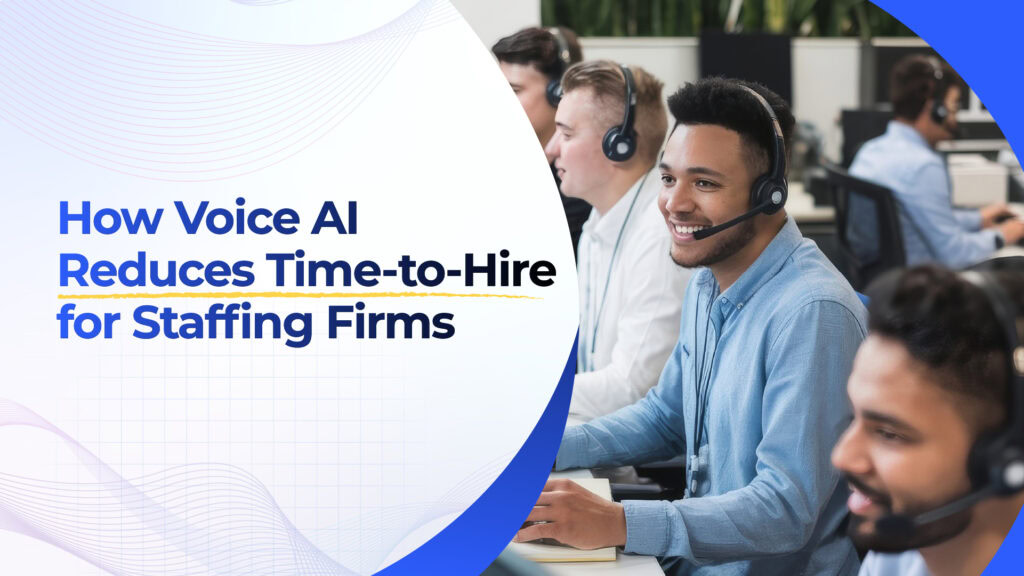


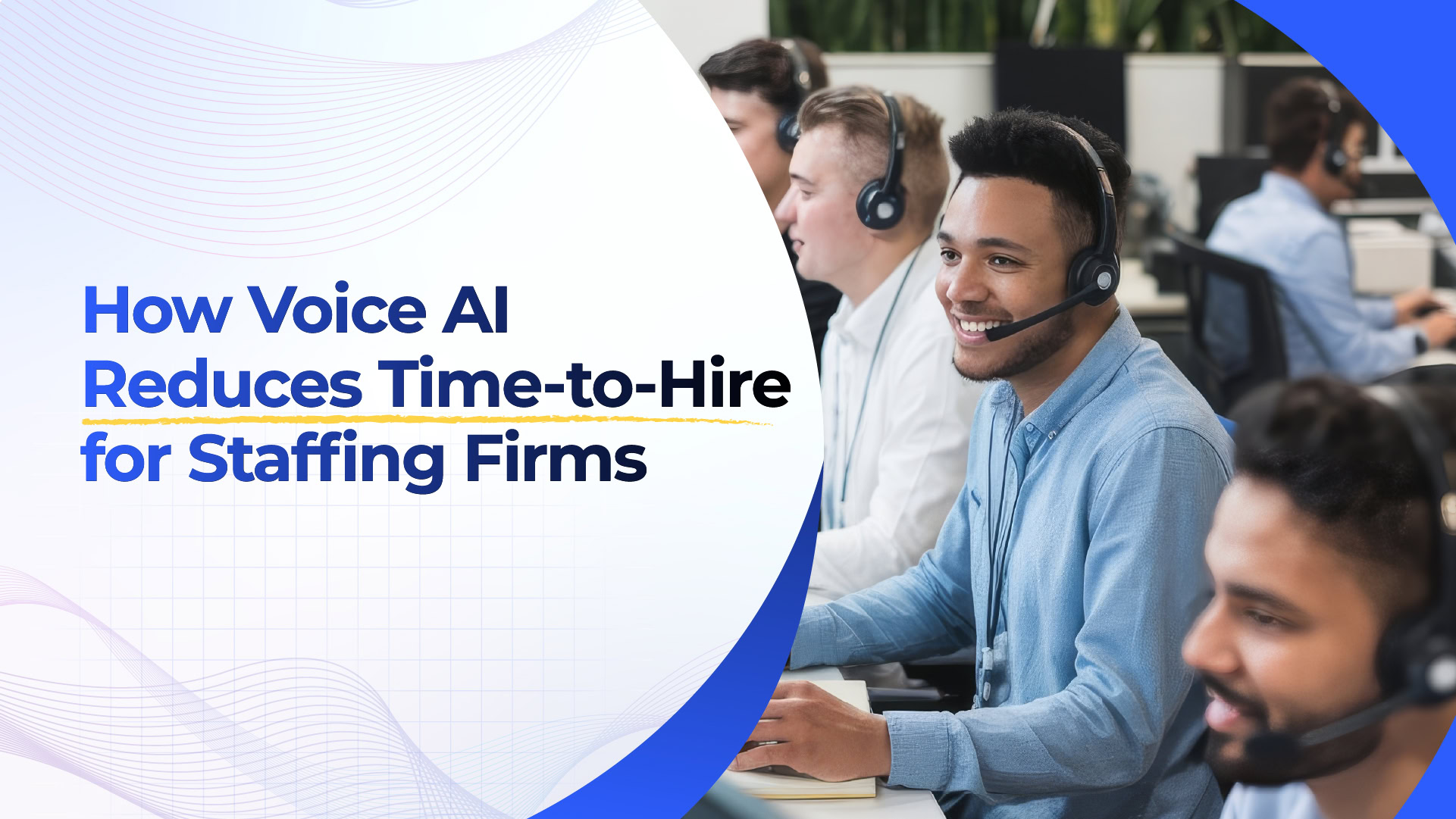
The average staffing firm has a 44 days time-to-hire today. The average best candidate, the one preferred by your client, is off the market in 10. The problem with that the 34-days-gap is not an inefficiency in the process. It is a monetization issue within a stage in your hiring process that has not been automated anywhere by the majority of companies.
The stage in question is the initial couple of hours once a candidate applies. What happens then? Usually nothing. An automatic confirmation email. A queue. A recruiter will reach them tomorrow, possibly the next day. At this point, you already miss your best candidate who has been called by another staffing firm.
Voice AI in staffing firms is created to resolve this issue. This is what the data reveals, and why the companies that are racing on the speed problem are winning.
Speed Problem Has a Price Tag
Each additional day in an average recruiting process costs 98 on average in compounding cost-per-hire. That is 4312 per position that happens every 44 days even before a single interview can occur. Scale in 50 open placements, and you have gone past 200,000 in delay-induced cost – without a hit on agency fees, job board money, or margin at a client whose placement is not accomplished.
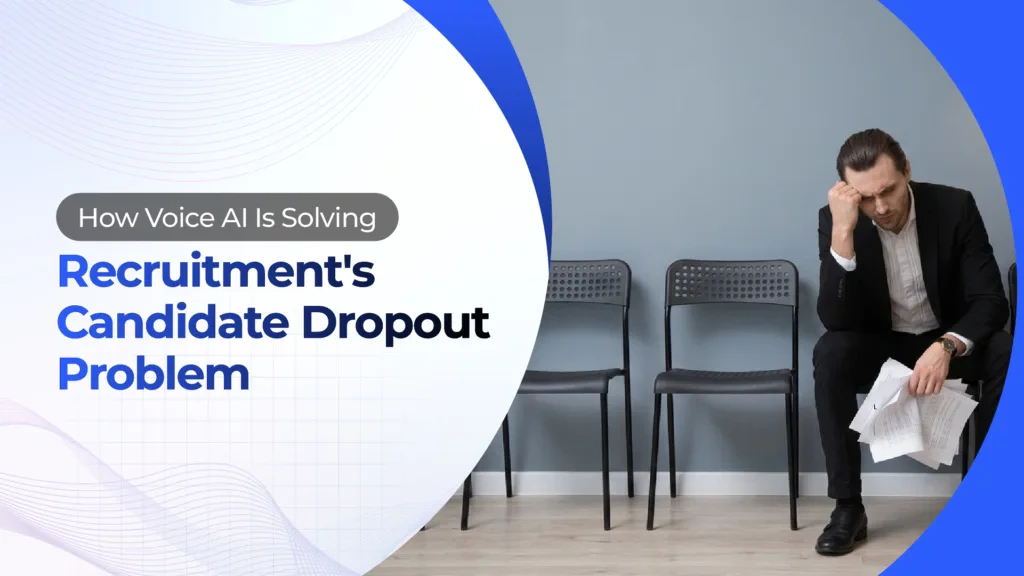
The candidate half is similarly inexpiable. Studies indicate that 57% of all candidates lose interest in a company that requires over two weeks to reply. Over half the applicants are mentally leaving the workflow long before average staffing passes through a phone screen. They are not being flaky. You were out of time with the company that called them first.
Where Voice AI Alters the Equation
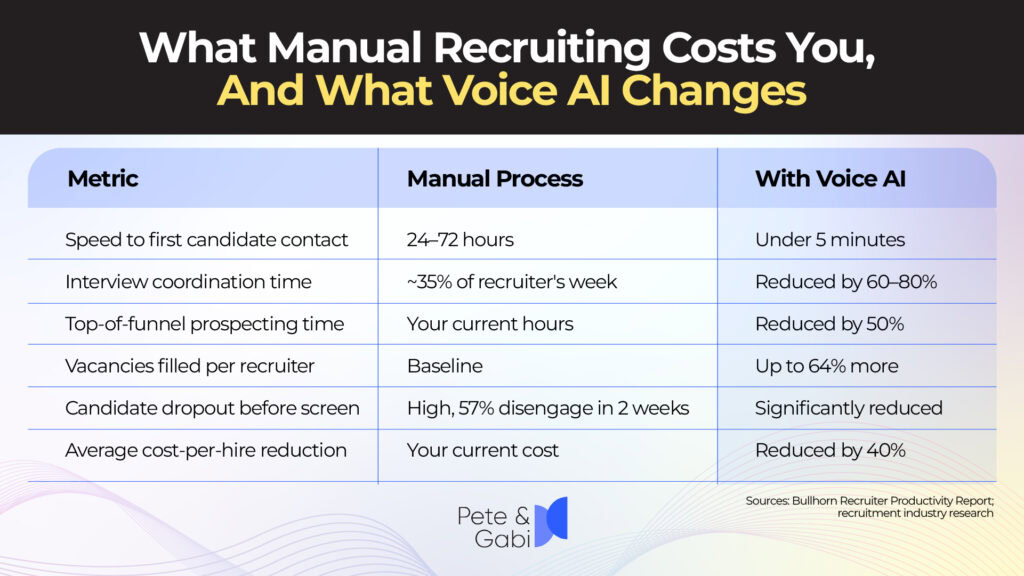
The most unattended point in any staffing process is the few seconds once an application is received. Here is the result of applying AI in staffing firms to mined voice AI staffing tools:
The Workflow: What an Automated Top-of-Funnel Looks Like
The companies that are getting the greatest ROI from voice AI recruiting are not using it to bypass the recruiters. The toughest step, most repetitive, and most often a weakness is the part that is falling through the cracks, so Rebecca, a voice AI hiring tool, simply aims to get that left column filled in.
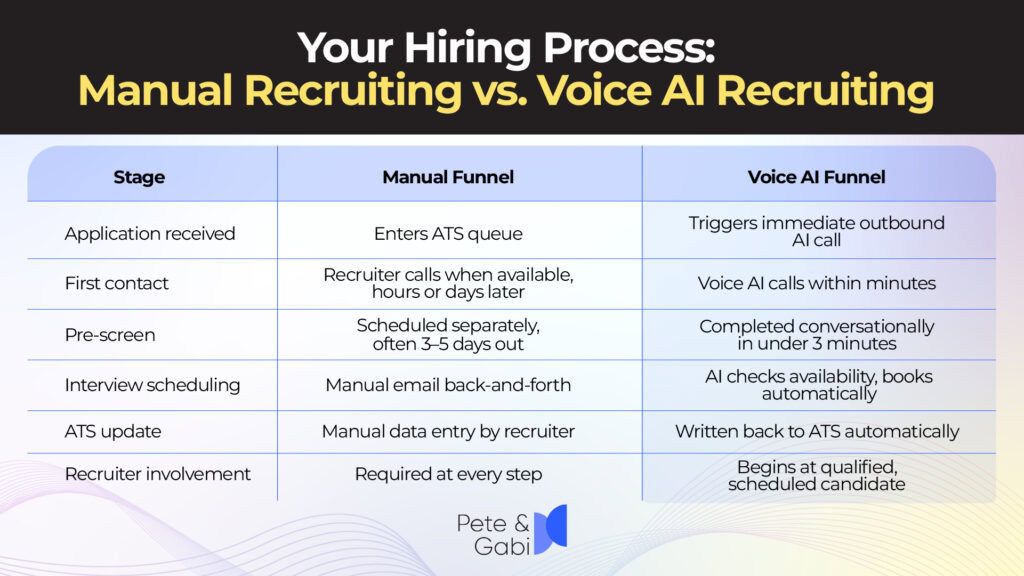
Rebecca AI hiring assistant places calls to successful candidates a few minutes after an application. The dialogue is not preprogrammed or automated. It changes dynamically according to what the job seeker is saying. She verifies the availability, schedules the interview, and provides the entire record back to your ATS, in less than three minutes.
Firms currently operating Rebecca AI state that the time-to-hire decreased by 80%, and the cost-per-hire decreased by 60%. In the case of high-volume staffing such as healthcare, warehouse, logistics, retail, and call center, the numbers are realized within the first 30 days of deployment since the automation is active throughout every applicant, every shift, at all times.
The Hidden ROI: Your Recruiters Actually Stay
Here is the number that nearly never gets entered into the business case: 78% of organizations report lower administrative workload when using AI recruitment tools. 71% of organizations report higher recruiter satisfaction. The already tedious task is further complicated by the administrative drag. Once you take out of the job, the element that involves no judgment whatsoever, the scheduling, the pre-screen coordination, the calendar ping, you have recruiters who have spent their day in the hiring aspects where human instinct is crucial: Client relationships. Candidate reads. Offer negotiations.
This is a retention strategy where the reductions on cost-per-hire are seen after a single placement cycle, which is usually 60-90 days. Three numbers after which you come to an understanding of before you roll out anything, include time-to-first-contact present, pre-screen completion rate, and interview show rate. Those will inform you of what and when changed.
Discover what Rebecca AI can do for your hiring funnel. Schedule a demo.
FAQs
Q: What is the actual reduction in time-to-hire of voice AI, and how do I quantify it?
Most staffing companies notice tangible progress of top funnel metrics in 30 to 60 days: candidate response rates, speed of first contact, pre-screen completion rates. Reductions in the cost-per-hire can be observed in a single placement cycle, which should be 60 to 90 days. The three background figures you must consider prior to rolling out anything: when time-to-first contact is, the rate of pre-screen completion is, and the rate of the interview show.
Q: Can voice AI be used for specialized roles or staffing in large volumes only?
The ROI is most acute in high volume settings, including healthcare, retail, and logistics, where the ratio between recruiter to candidate is most extreme. However, the major efficiency benefits are universal to the role types. The difference worth considering is voice AI fits into a conversational format as well as the non-conversational chatbot-based screening. Conversational voice AI, such as Rebecca AI, modulates questions based on what the candidate says during the interview, so it is able to deal with complexity that a hard-and-fast intake form will inevitably fail to do.
Q: What are the largest implementation threats to the staffing companies?
As far as failures are concerned, two points arise. First: all the tools which are not in the portfolio of your current ATS are forgotten. When your recruiters are required to have a separate login or need to manually integrate data, adoption fails within 90 days no matter how well the technology is actually functioning. Also, make sure to inquire about the tool being a native part of your stack (on your signature) Bullhorn, Workday, Greenhouse, Lever, iCIMS. Second: applying automation without having any knowledge of your workflow. You must be aware of where applicants are falling currently so that you can gauge whether that varies. The companies that had taken two to three weeks to map their funnel prior to launching are those who have the best ROI story after 90 days.
Q: What is the difference between voice AI and the automated email cycles which we are currently operating?
The email series are unidirectional and asynchronous. They send. They do not listen. Voice AI makes a call to the applicant, listens to what they say, and reacts to it on the fly. It is that two-way exchange that reduces candidates’ dropout. The outcome is a professional, pre-scheduled applicant, who is already in your ATS before your competitor has even written his first outreach email.
Share on