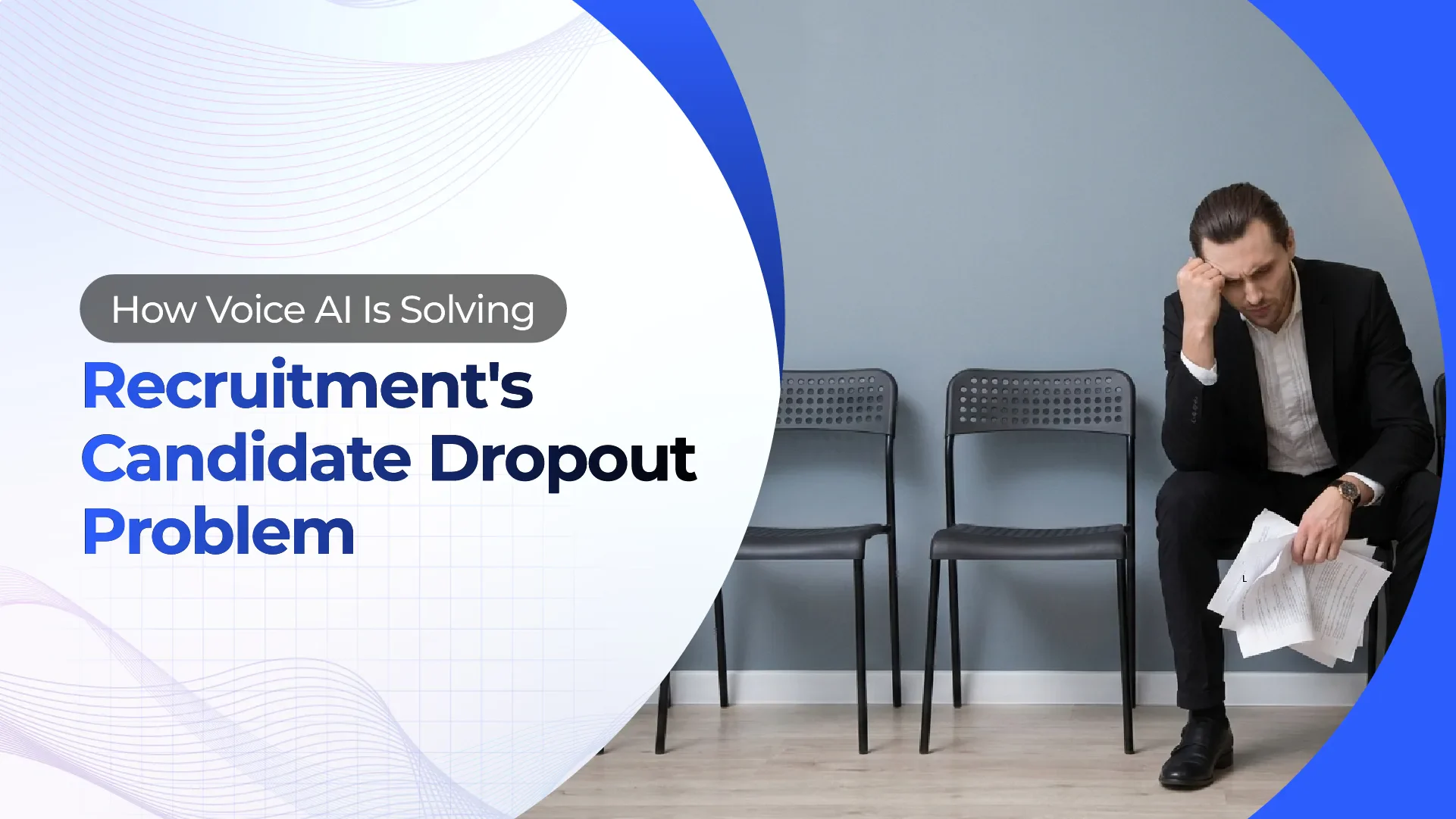
Every harried candidate looking for a role has been through the phase where they have filled an application, hit submit, and it has disappeared into the internet.
And then? Nothing.
After spending an hour on tailoring one’s resume and cover letter according to the job description, candidates jump every time they receive an email notification, or a message, or a call, anticipating a response from the recruiters. Then, two weeks pass. They apply somewhere else. The first company eventually sends them an automated email that begins: “We regret to inform you…”
Recruiters have a different name for this moment. They call it candidate dropout, and it is destroying their hiring pipelines. However, at last, there is a tool that could ease the burden on recruiters and as a cascading effect, on candidates as well: AI voice recruiting platform, Rebecca.
The Numbers Are Worse Than You Think
Here’s what the data actually says.
42% of candidates withdraw from the hiring process because scheduling took too long. Not because they found a better job or changed their mind. Simply because no one moved fast enough. Nearly half of candidates, 47% to be accurate, say poor communication would cause them to disengage from the process entirely.
And yet, only 9% of candidates were able to get a first interview scheduled in a day or less. The largest share of 31% waited two to three weeks just to get that first conversation on the calendar.
In a market where the best candidates are typically only available for about 10 days before another company snaps them up, two to three weeks can be an expensive delay.
The cruel irony is that 89% of employers say it’s a problem when job seekers drop out or don’t show up for the first day. Everyone agrees it’s broken but almost nobody has fixed it.
Why Recruiters Can’t Keep Up
Recruiters are spending 35% of their time on interview scheduling alone. This is the time they could have spent on sourcing talent, building relationships, and not doing the work that does not require human judgment. Scheduling.
In 2024 alone, employers were flooded with 180 applicants per vacancy on average. That’s 900 applications to review, respond to, and schedule, all while managing hiring managers, ATS systems, and compliance paperwork simultaneously.
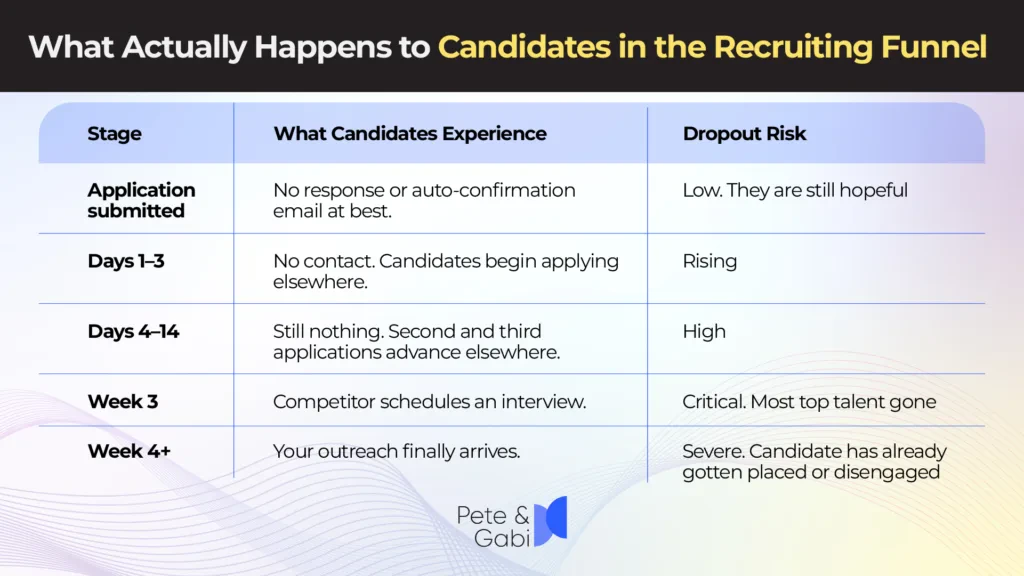
The problem lies in the process, built on manual outreach and back-and-forth scheduling.
Enter Voice AI
A VP of Marketing at a medical staffing company once described her hiring problem in the most straightforward terms possible. She needed to build a nursing candidate database. The calls required to do that numbered in the tens of thousands. Her team numbered considerably fewer than that.
The calls required to do that numbered in the tens of thousands. Her team numbered considerably fewer than that. The VP wanted to solve the problem without increasing headcount or causing burnout to their existing hiring team.
So, the VP turned to Rebecca AI for help. Rebecca AI handled more than 50,000 calls, the kind of volume that, by the VP’s own estimate, would have consumed her current human team for six months or more. The advanced practice department, which had been the weakest recruiting unit in the company for the longest time, turned into the strongest.
Voice AI tools like Rebecca empower recruiters and help prevent candidate dropout by following up within minutes of getting an application. The whole sequence of a pre-screening, confirming availability, scheduling interview on the calendar, and sending a confirmation text or phone call, takes about three minutes.
What used to take a week now takes three minutes. Want to see how? Schedule a demo now.
Frequently asked questions:
Does voice AI feel robotic to candidates? Will it hurt the candidate experience?
No, because Rebecca comes very close to a human conversation. The early generation of recruitment bots were rigid, scripted, and felt so lifeless that they did damage candidate experience. However, Rebecca voice AI is built different. She can conduct natural-sounding conversations with context (that she derives from the candidate’s resume and job description), asks intelligent follow-ups, pre-screens, handles accents and interruptions, and responds to varied phrasing in real time.
Does voice AI work for high-skill or specialized roles, or just high-volume hiring?
Rebecca AI voice recruiting tool is built for all kinds of hiring because the underlying problem including slow response, scheduling friction, and candidate dropout exists across every role type, irrespective of the volume.
What happens to recruiters? Does voice AI replace them?
Recruiters feel empowered after using Rebecca AI hiring agent. As repetitive, grunt work that causes burnout and bad hires gets automated, recruiters become more productive. They spend valuable time on high-value tasks such as building relationships, evaluating culture fit, negotiating offers, and retaining candidates through a competitive process and report a better work-life