

Recruiting Automation Showdown: Rebecca vs Chatbots, Scheduling Tools, and CRMs

Recruiting automation tools have been around for a while—chatbots for screening, scheduling tools for interviews, and ATSs for tracking. And while they can work great on their own, together these tools seriously complicate the recruitment workflow. Why? Each tool solves just one problem and someone has to bring it all together. A chatbot screens candidates—sort of. A scheduling tool books interviews—but only when candidates actually click the link. And the ATS tracks everything—but does nothing with it. Compare this to Rebecca. She’s not a chatbot, nor a scheduling tool, and definitely not a passive CRM add-on. Rebecca’s an end-to-end AI recruiter who handles it all and more. Keep reading as we break down how Rebecca compares to recruitment tools you’re probably already using (and quietly frustrated with). Today we profile the showdown between Rebecca and the status quo. The Recruiting Automation Landscape: What’s out There? The modern recruiting world runs on tools. Lots of them. Let’s break it down. Now, here’s the problem. Recruiting isn’t a series of isolated tasks. It’s a conversation that spans days, requires immediate contact and follow-through, and falls apart the moment context gets lost between platforms. For instance, even if candidates get screened by a chatbot, they then sit and wait for a recruiter to follow up. Rebecca vs. Chatbots: The Difference Between Talking and Recruiting Recruitment chatbots were a good start. They made candidate communication faster, answered FAQs, collected candidate information via text, and helped companies stay responsive around the clock. They’re fast. They’re scalable. And they work well when the questions are predictable. So How Do Chatbots Fall Short? Chatbots do not recruit—they only respond. This means: What Does Rebecca Do Differently? Rebecca’s an AI recruiter that listens, interprets intent, and keeps the conversation flowing. She knows when to dig deeper, when to reschedule, and when to pass a qualified candidate to a hiring manager. She brings: Rebecca delivers full candidate insights with summaries, transcripts, and readiness scores—directly into your CRM or ATS. Rebecca vs. Scheduling Tools: Automation That Engages Scheduling tools solved one piece of the recruiting puzzle: logistics. They book interviews, send calendar invites, and automate reminders—freeing recruiters from endless back-and-forth emails. So How Do Scheduling Tools Fall Short? Logistics isn’t engagement. How so? What Does Rebecca Do Differently? Rebecca doesn’t wait for candidates to click a link. She picks up the phone and books the interview herself. While scheduling tools wait for candidates to take action, Rebecca the AI interviewer acts first—and drives the outcomes that matter. Rebecca vs. ATS: Passive Tracking to Active Recruiting ATSs are powerful. And they remain useful. They store candidate data, track pipeline stages, manage recruiter workflows, and keep everything organized for compliance and reporting. But your ATS is also a passive tool. It records progress but doesn’t drive it. So How Do ATS and Candidate CRMs Fall Short? It’s a record system, not a system of action. A filing cabinet, not a recruiter. What Does Rebecca Do Differently? With Rebecca, your CRM stops being a static database and becomes a living system—constantly refreshed with qualified, engaged candidates ready for the next stage. Your ATS helps you keep track of where candidates are. Rebecca gets them there. Takeaway: Rebecca as a True Differentiator Recruiting automation isn’t about having more tools. It’s about having the right tool that empowers your team to build more relationships, close more hires, and make smarter decisions. Rebecca doesn’t just automate outreach, scheduling, or data entry—she holds natural and real conversations. She engages candidates and keeps your hiring pipeline moving 24/7. Ready to move beyond chatbots and static CRMs? See how Rebecca stacks up in your recruiting process. FAQs Does Rebecca replace our ATS, or does she work with it? Rebecca works with your ATS—she doesn’t replace it. She integrates directly with platforms like Greenhouse, Lever, iCIMS, and Workday, automatically syncing every call, screening result, interview booking, and note in real time. What makes Rebecca different from regular chatbots? Most chatbots can answer FAQs—but they don’t qualify candidates, adapt mid-conversation, or conduct live interviews. Rebecca offers you conversational AI capabilities that go beyond scripts to engage candidates naturally, screen, and deliver actionable insights. Will using AI for recruiting hurt our candidate experience? Not if it’s done right. Slow responses, ghosting applicants, clunky scheduling, and inconsistent communication are what hurt candidate experience. Rebecca eliminates these pain points by responding instantly (24/7), following up consistently, and treating every candidate professionally.
The Real Estate Edge: 8 AI Agent Use Cases You Can’t Ignore

Real estate is a volume game. Not one you lose because your real estate team is incompetent, but because there aren’t enough hours in the day to work every lead, chase every follow-up, and nurture every client. But conversational AI can solve these problems. AI voice agents are quietly changing the game for real estate companies. In this article, we’ll show you how. Here we break down eight use cases showing exactly how AI agents are rewriting the real estate playbook for connecting with leads, following up, and sealing deals. Inbound Lead Management Before you can close deals, you have to know quickly which leads are worth chasing. Since the company who responds first can be the one who gets the listing or the buyer, and your human team can’t be everywhere at once, here’s how AI redefines lead acquisition in real estate. 1. Property Inquiry Handling The lead inquiry stage is where many real estate companies lose out on potential business. Why? There was no one there to pick up the phone. Thankfully, this is one critical gap AI voice agents are filling with 24/7, instant responses to buyer and seller questions. Whether it’s 8am on Saturday or 10pm on Tuesday, these AI systems answer every call, providing accurate info in real-time and following up with more details via SMS. And when a lead shows serious intent, the AI routes them directly to a live agent for a smooth handoff. 2. Follow-Up with Cold or Dormant Leads Every business CRM has these: But most teams don’t have the bandwidth to chase them all. So, these leads may sit there forever. This is where AI voice agents take action. They reach out automatically, striking up natural conversations to re-engage ignored leads. If the buyer is still searching, they offer fresh real estate listings and connect qualified prospects with an agent instantly. Conversational AI agents find otherwise lost revenue in your pipeline and prevent leads from falling through the crack. 3. Mortgage Prequalification Routing Most homebuyers start browsing before they know what they can even afford—which means real estate agents often spend time nurturing leads who aren’t really ready to buy. AI voice agents help filter out valuable prospects early. They capture essential mortgage readiness details like income range, down payment capacity, and credit standing through natural conversations. Once they identify serious, finance-ready buyers, they automatically route them to your in-house financing team or partnered loan officers. This means faster prequalification, less manual back-and-forth, and more deals that move from “just looking” to “ready to close.” Sales Enablement Capturing a lead is one thing, but converting is another. This is where many real estate teams lose momentum—endless qualification rounds, slow scheduling, and leads dropping away. Here are three ways conversational AI turns engagement into closed deals for real estate companies. 4. Lead Qualification Not every lead is worth your time. But figuring out which ones are can eat up valuable hours. AI voice agents handle this for you by pre-screening inbound calls with the questions that matter—like buying intent, budget, location preference, timeline. And while they’re talking, the AI scores and categorizes each lead in your CRM automatically. High-intent buyer looking in the right price range? Tagged and prioritized. Window shoppers with no clear timeline? Noted and nurtured for later. With conversational AI handling qualification, your team wastes less time on tire kickers. 5. Appointment Scheduling & Reminders Real estate companies using AI agents already know: Scheduling showings shouldn’t require six emails and three missed calls. Conversational AI agents book property viewings and consultations in real-time, right on the call. No back-and-forth to double check calendars. Just a “when works for you?” and it’s done. And automation confirmations and calendar invites are not where it ends. AI agents also send reminder calls and texts before the appointment, reducing no-shows. 6. Open House Promotions Getting people to show up to an open house can sometimes feel like pulling teeth. But AI voice agents are changing this part of the real estate game, too. They call your lead lists directly and announce upcoming open houses with a personal touch, getting far better results than generic email blasts. They can also answer basic questions in real-time and let prospects RSVP right on the call. And once that’s done, they follow up automatically with a text containing the date, address, and directions—ensuring your event stays top of mind. With AI agents, open house promotions become proactive, personal, and more effective, without overloading your team. Customer Experience & Feedback Great experiences are how leading real estate companies keep their customers coming back. Here’s how AI helps you build a positive company reputation and drive customer retention. 7. Client Survey & Feedback Great real estate companies don’t just close deals—they build lasting relationships with customers. But manually collecting feedback after every showing or sale can be a grind. AI voice agents make it effortless and personalized. They call recent clients to gather feedback, measure satisfaction, and even record testimonials in real time. Quick, natural conversations that feel like a courtesy check-in. And when customers have positive experiences, those clients can be nudged to share their reviews on Google or Zillow. Less-than-happy ones? The feedback goes straight to your CRM for follow-up and improvement. Putting conversational AI on feedback duty is how top-performing real estate teams turn post-sale silence into insights, reputation boosts, and repeat business—on autopilot. 8. Multilingual Buyer Support Not every client speaks English. But with multilingual AI voice agents, language doesn’t have to be a barrier to conversion. These agents can qualify and assist leads in their preferred language—from Spanish to French to Mandarin—with natural, human-like fluency. This means all your prospects or customers get top-notch experiences regardless of the language they speak. For real estate teams expanding into diverse or international markets, deploying multilingual AI agents ensures inclusivity and profitability without limitations. Taking the Next Step The real estate industry runs on conversations—every inquiry, showing, and follow-up starts with one. But your human team can only handle so many. AI voice agents change the equation. They work nonstop, across time zones and languages, ensuring no lead slips through, no buyer feels ignored, and no deal dies in the dark. The real estate companies winning today aren’t necessarily the ones working the hardest. They’re the ones working the smartest. Ready to secure your AI-powered advantage? Pete & Gabi are AI voice agents that call, qualify, and book—so your team closes more deals without the grind. Schedule a demo now to learn more. FAQs How do AI agents help real estate teams save time? They take care of the repetitive, high-volume tasks that usually drain your sales and leasing teams—like answering FAQs, scheduling viewings, or reviving cold leads. That means your team can focus on closing deals, not chasing calls. What happens if a lead asks a question the AI can’t answer? AI agents are trained on your property listings, pricing, policies, and FAQs—so they handle 90% of inquiries instantly. But when a question requires human judgment or falls outside their scope, they seamlessly route the call to your team. Can AI agents integrate with my CRM or existing tools? Yes. Most AI voice agents connect directly with leading CRMs and marketing platforms.
Wake up Your Dormant Accounts: The Power of Smarter Customer Segmentation
Dormant or inactive customers could be your hidden revenue goldmine. Did you know that starting a loyalty program increases the chances of existing customers buying from you again by 30 to 60%? That’s just one example of thousands of potential dollars quietly waiting for a reactivation strategy. So how do you bring this dormant revenue to life? By combining AI call agents geared on customer reactivation with smart segmentation—understanding which customers are worth re-engaging, how to reach them, and when. In this article, we’ll break down why customer segmentation is key to reviving inactive accounts and how conversational AI makes the process effortless. What Is Customer Segmentation (And Why It’s Not Just Marketing Fluff) Customer segmentation means grouping your buyer database into categories to create more targeted and personalized marketing campaigns. This also makes it possible to deliver customer experiences that are more effective and relevant to each group. Forget the outdated “age and location” spreadsheets. Modern segmentation is about customer behavior, not just who they are. How do they actually engage with your business? Who clicks? Who ghosts, and who’s one personalized nudge away from reactivating? Many companies choose to segment their customers based on the following categories: This article focuses on inactive customers in the lifecycle stage. As we’ll get to, this just means passive and reactivating a customer who already knows your brand is easier, cheaper, and far more rewarding than chasing all new leads. The ROI of Segmenting Your Dormant Customers Imagine outreach with renewal offers to high-value dormant accounts who left due to pricing. At the same time, you’re also reaching out to one-time buyers with educational content about features they never used. That’s targeted reactivation versus the “spray and pray” approach. The latter wastes your budget on customers who’ll never return. Here are several benefits to creating intentional segmentation before targeting your inactive customers. At the end of the day, targeting specific dormancy reasons always wins against generic “we miss you” campaigns. 5 Critical Questions to Ask Before Creating Segmentation for Inactive Customers Before you can win back dormant accounts, you need to understand who they are and why they’ve slipped away. This begins by asking better questions, helping you uncover insights that turn inactive accounts into revenue. Here are five questions every organization should be asking when it comes to segmenting their inactive accounts: 1. Have You Defined What “Inactive” Means for Your Business? Dormancy looks different for every business. For a retail brand, it might mean 90 days without a purchase, while for SaaS, it could mean six months of login inactivity. In B2B distribution, a dormant account may mean one missed reorder cycle. Defining “inactive” with precision helps you separate customers who are truly lost from those who just need a reminder or nudge. Without such clear criteria, you may waste resources chasing customers who haven’t really disengaged—or worse, overlook the ones who have. A good place to start is by mapping your customer lifecycle stages and aligning your segmentation triggers to match. 2. Do You Know Why They Stopped Buying? Every dormant account has a story—and understanding that is half the battle. Segmenting by reason for churn helps you customize your outreach. A price-sensitive customer, for example, deserves a different message than one who left due to poor service. Understandably, reaching out to tons of inactive customers can be an overwhelming ask. This is where our second point—conversational AI agents—comes into play. AI agents help you reach out to dormant accounts at scale, conducting discovery conversations that reveal whether it was pricing, product fit, service issues, or simply timing. They help you tailor your reactivation strategy to address the real reasons for dormancy, not make assumptions. 3. Do You Know Which Inactive Customers Are Actually Worth Chasing? Not all customer inactivity has the same repercussion. A customer who placed 20 high-volume orders but hasn’t reordered in six months is far more valuable than a one-time buyer who disappeared after their first purchase. Segmenting dormant customers by order frequency and spend value helps you prioritize your outreach intelligently. When segmentation follows buying patterns, your team stops guessing who to reach out to and starts acting with precision on the evidence. Effective reactivation isn’t just about making contact. It’s about making contextual outreach that resonates with each customer. 4. Can You Identify Your ‘House Accounts’ That Went Dark? Some of your most profitable “house accounts” may have quietly gone dark simply because you assumed they were secure. These can be large clients and repeat buyers managed by senior sales reps—accounts that slip into inactivity unnoticed. By analyzing customers by account value, historical purchase volume, or assigned relationship owner, teams can quickly identify high-potential revenue gaps before they widen. This data-driven visibility helps prioritize reactivation efforts where they matter most—among customers who have already proved their worth. Losing a loyal account is one of the costliest forms of churn. 5. How Does Sales Rep Turnover Affect Your Customer Base? Asking this question helps you know if a customer’s reason for dormancy is a problem with your product or just plain old neglect. Sales team transitions often create unintentional blind spots in customer engagement. For instance, when a rep leaves, the relationships they built may not transfer smoothly, which means some accounts fall through the cracks. Segmenting inactive customers by previous ownership or representative can help uncover clusters of accounts that went silent after a personnel change. This insight makes it easier to reassign outreach responsibilities, maintain relationship continuity, and ensure no customer is left unattended because of internal shifts. The Payoff: Don’t Let Dormant Accounts Stay Silent Segmentation is the difference between generic customer reactivation outreach and conversations that resonate. By segmenting intentionally, you identify who’s ready to re-engage, why they left, and what will bring them back. This results in lower reactivation costs, faster conversions, and stronger relationships. When paired with conversational AI, customer reactivation campaigns become dynamic, data-driven conversations that feel personal and drive business outcomes at scale. Modern segmentation gives you clarity on how to target each customer group. Voice AI helps you start the conversation that brings them back. Ready to turn your dormant list into active conversations? Let Pete & Gabi reach and re-engage your customers with intelligent, human-like outreach that turns silence into sales. Schedule a demo today. FAQs Why does customer segmentation matter for reactivation? Customer segmentation divides your inactive customers into meaningful groups based on shared traits like purchase history or churn reason. This helps you create targeted campaigns for each segment that increase success rates. How do I identify which inactive customers are worth re-engaging? Start by analyzing historical purchase data, lifetime value, and churn reasons. Look for customers with strong past engagement or high order values. These often yield the greatest ROI when reactivated. How can AI call agents improve customer reactivation campaigns? AI call agents automate personalized conversations at scale. They reach hundreds of inactive customers simultaneously, identify buying signals in real time, and reintroduce your offering in a natural, human-like way. Do AI agents replace sales reps or work alongside them? They work alongside your sales team. AI agents handle the initial outreach, qualification, and handoff. Your reps focus on high-intent leads and deep relationship building. What kind of results can businesses expect from combining segmentation with conversational AI? Companies that blend data-driven segmentation with AI-powered outreach
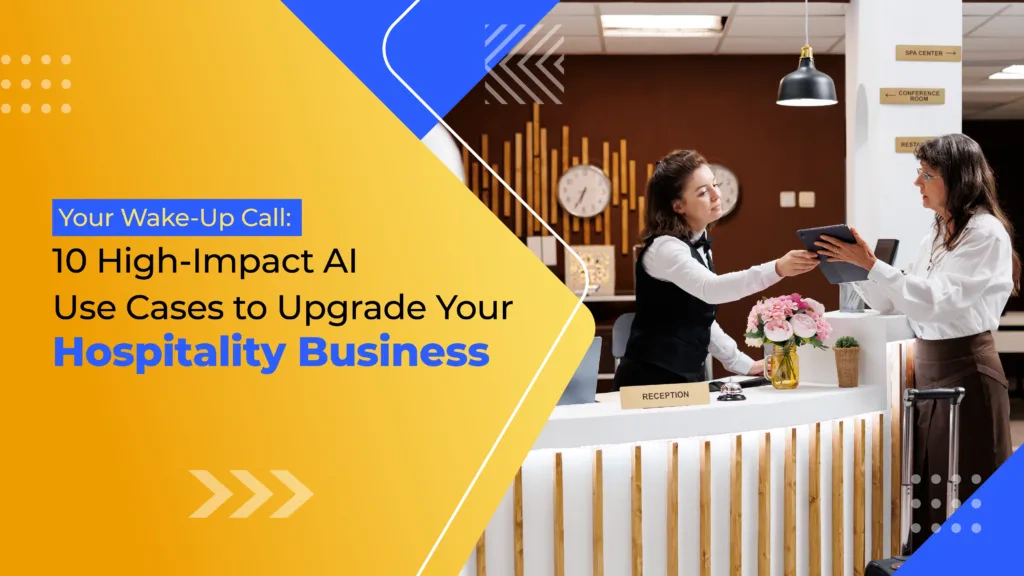
Your Wake-Up Call: 10 High-Impact AI Use Cases to Upgrade Your Hospitality Business
Hospitality operates on razor-thin margins—meaning every missed call, booking delay, or service gap could be the difference maker. Guests calling at midnight getting voicemail. Booking inquiries sitting unanswered for hours while competitors capture the revenue. And front desk staff overwhelmed by inquiry calls. It doesn’t have to be like this. AI call agents have closed the gap for many leading hospitality businesses. Keep reading as we explore 10 high-impact conversational AI use cases hotels and resorts are deploying to dominate their markets. Booking & Reservations Every empty room is lost revenue you can never recover. And too often, business owners lose these bookings because guests can’t reach who they need to when they need to. Here are three ways AI agents help hospitality providers capture more of these reservations to maximize occupancy. 1. 24/7 Reservation Handling Conversational AI picks up every incoming call and handles bookings around the clock, giving guests instant confirmations. Whether it’s midnight in New York or noon in Tokyo, your property always stays open for business. Say goodbye to losing bookings because staff weren’t available. 2. Instant Event & Group Booking Qualification Group bookings drive massive revenue but qualifying them manually wastes days in emails and phone tag. AI agents can capture every critical detail upfront—event size, attendee counts, date flexibility, and budget—and handle follow-ups automatically. And the best systems also route qualified leads (with all the details) right to your sales team. 3. Intelligent Waitlist & Overbooking Management Are you overbooked? Running a waitlist for peak nights? AI call agents can manage both problems. They notify guests of availability changes in real time, handle cancellations, and shift bookings without chaos. Instead of juggling spreadsheets and making mistakes, you keep occupancy high and guests happy at the same time. With voice AI, you protect your revenue and reputation with smart automation. Revenue Optimization Most hospitality businesses leave money on the table every single day—missed upsells, forgotten promotions, and guests who churn because nobody has the time to reach out or reach out right. AI agents change this equation. Here are three ways hospitality businesses maximize revenue per guest and recover lost opportunities with AI call agents. 4. Promotions & Upselling on Autopilot Revenue in hospitality isn’t just made at the front desk. It’s hidden in every guest interaction. AI call agents today excel at smart upsells for things like room upgrades, late checkouts, spa packages, or dining offers by making the pitch at exactly the right moment—without needing reminders. Get a higher average spend per guest with promotions that convert steadily. 5. Automatic Revenue Recovery Cancellations, no-shows, and abandoned bookings are common profit drainers. Conversational AI helps here by instantly following up on guests that cancel. They offer smart alternatives and plug revenue leaks before these cancellations turn to losses. Whether it’s rescheduling a missed booking or securing deposits, AI agents can work 24/7 to recover revenue many hotels and resorts on manual workflows simply lose. 6. Proactive Loyalty Program Engagement Guest loyalty programs only work if they’re nurtured. But most hospitality teams don’t have the time. AI call agents handle the heavy lifting by reminding guests of unused points, promoting tier upgrades, and offering personalized rewards. Instead of letting loyalty members drift away, AI keeps your brand top of mind to ensure repeat business. AI-driven loyalty programs mean agents actively reaching out to guests, improving engagement and driving more repeat bookings. Guest Experience & Support Guest experience determines whether someone books once or becomes a lifetime customer. Here are four ways AI agents elevate guest experience for hospitality businesses and drive repeat business. 7. On-Demand Guest Inquiry Management Guests don’t wait for business hours when they have questions about amenities, local attractions, or hotel policies. AI agents handle inquiries instantly—answering common questions, providing detailed information, and, if possible by system, routing complex requests to appropriate staff. With conversational AI, every question gets answered immediately, boosting guest satisfaction. 8. 24/7 On-Property Support Calls Maintenance issues, service requests, and guest concerns also don’t happen on convenient schedules. Someone has to be on the other end of the phone when guests call. AI agents can now handle on-property support calls. From midnight maintenance requests to early morning transport questions, they keep guest lines open 24/7. Immediate answers mean no guest gets abandoned, and urgent issues get escalated to staff in real time without requiring extra staff. 9. Seamless Multilingual Support International guests choose properties where they feel comfortable. AI agents have multilingual capabilities that ensure natural, fluent conversations across many languages, breaking down communication barriers that frustrate both guests and staff. From booking confirmations to in-room service requests, everyone gets real-time clarity. 10. Personalized Guest Feedback Capture Most guests only leave reviews when something goes wrong. AI agents can help solve this problem, too. They reach out after each stay, asking personalized questions that feel genuine, not generic. These capture authentic insights, resolve frustrations before they hit the internet, and highlight positives you can amplify. Guests also get heard. Bringing It Together Hospitality, like so many other businesses today, has a greater emphasis on speed, precision, and on-demand service. And this is where AI agents shine. Properly trained, refined, and implemented, they can help business owners capture revenue manual processes lose to slow responses, missed opportunities, and inconsistent service. AI agents cut costs, capture revenue, and elevate guest experiences in ways humans alone can’t. Can they do it all? No. But they can become your staff’s best friends. And the best part? Conversational AI scales on demand. Ready to capture the revenue you’re losing now? Schedule a demo now and see for yourself. FAQs Can AI agents handle questions on our specific property’s amenities? Yes. AI agents are trained on your property’s specific offerings, policies, room types, and other relevant details. They deliver accurate, personalized information that reflects your unique brand and location. How do AI agents impact our current staff roles? AI agents handle repetitive inquiries and administrative tasks, freeing your staff to focus on high-value
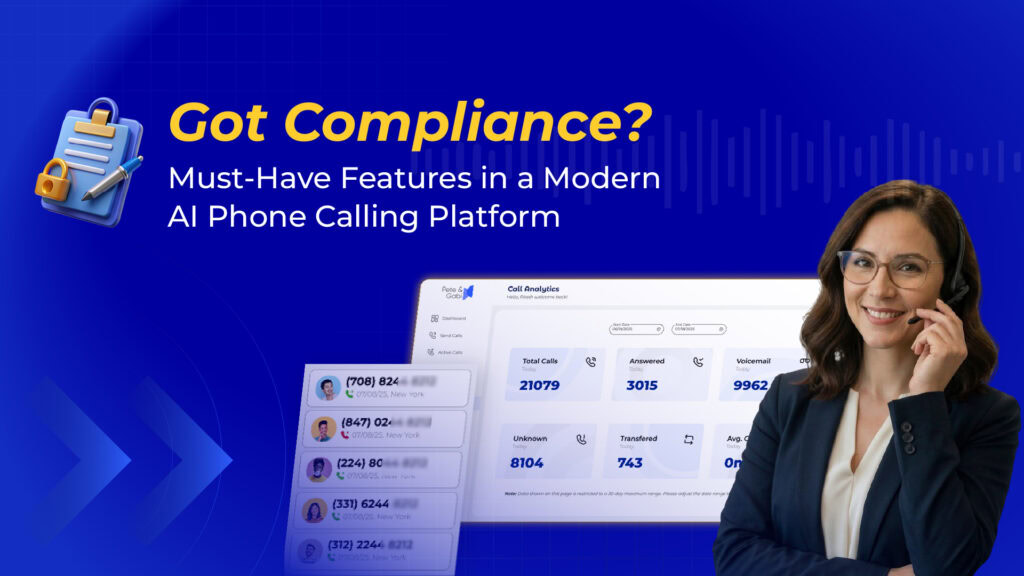
Got Compliance? Must-Have Features in a Modern AI Phone Calling Platform
DemandSage found that 90% of companies that implement AI agents see increased productivity, and AI sales agents like Olivia have changed how firms interact with customers during sales calls, so it’s no wonder that 63% of businesses intend to boost their automation budgets for 2026. There is a greater disparity between an enterprise-grade, compliant solution and a potentially perilous workaround than most clients expect. The TCPA regulations, GDPR data management standards, and regulations regarding consent to record phone calls vary greatly among the states making the compliance environment complex and filled with risk. These risks are associated with misusing compliance regulations by using a nonconformant compliance system may result in reputational harm to a firm’s customer base that will take years to recover from. When investing in AI, ensure you are spending money on accountability and built-in compliance standards with transparent audit reports and a flexible system that can adapt as regulations change. When considering AI providers, it is important to ask whether the AI platform will support safe, legal, ethical AI phone calls. What Are AI Phone Calling Platforms? AI phone calling platforms are advanced systems powered by conversational AI that make and receive calls. And they should do so in a human-like fashion, not relying on pre-recorded scripts. So how do they work? Built on natural language processing (NLP) and machine learning, they understand intent, respond intelligently, and adapt in real time. They listen and adjust responses intuitively to keep the conversation going and going smoothly. These platforms aren’t simple automation—they can handle outreach, lead qualifications, customer support, scheduling, and even more complex inquiries. By combining scalability with human-like interactions, they hit the low-hanging fruit easily—freeing teams from repetitive tasks. They also ensure customers, prospects, or candidates get fast, accurate, and personalized conversations every time. 9 Features to Look for in AI Phone Calling Platforms Here is the difference between AI platforms that deliver results and those that waste your time and money, and why they matter when choosing an AI calling solution. 1. Natural Language Processing (NLP) At the heart of any AI calling platform is Natural Language Processing (NLP). This is what allows virtual AI call agents to understand context, interpret intent, and respond in a way that feels natural to the caller. Instead of rigid scripts, NLP enables dynamic, two-way conversations—essential for customer service, sales, and recruitment. With NLP, AI can detect tone, handle variations in speech, and engage callers like a real person. This intelligent call automation feature makes conversations smoother and is critical for higher satisfaction and better outcomes. 2. Seamless Integrations AI phone calling platforms don’t drive the best results in isolation. By easily connecting with CRMs, ATSs, and scheduling tools, they streamline workflows and keep your team in sync and ready to act. Your recruitment team is going to need candidate details automatically pulled from their ATS, and CRM integrations allow sales teams to sync leads with call notes. These eliminate manual data entry, reduce errors, and ensure your team is always making data-driven decisions in real time. 3. Live Transfer and Intelligent Call Routing Even the best AI cannot handle every situation. For this, and regulatory compliance (see below), real-time call transfer is a critical feature. When a call requires human expertise—whether it’s a high-value lead, sensitive customer complaint, or legal compliance issue—your AI calling system must be able to seamlessly hand off to a live agent. This transfer should feel natural, coming with all context and notes so the caller doesn’t have to repeat themselves. 4. Call Summaries & Transcripts Every call is a goldmine of data your team should be able to access—using call records to analyze customer interactions and predict buyer behavior, as well as refine AI conversation flows. Your AI phone calling platform must be able to compile call summaries and real-time transcriptions, so crucial information doesn’t get lost. Summaries give quick highlights for busy managers, and full transcripts are essential for compliance, training, and quality assurance. It can also help uncover trends in customer needs. Over time, these insights drive better decision-making and continuous improvement. 5. Multilingual Support This is particularly important if your company operates across multiple regions. AI phone calling platforms with multilingual capability can engage callers in their preferred language, breaking down barriers and enhancing accessibility. Whether it’s English, Spanish, French, or beyond, multilingual AI ensures businesses serve global markets without needing multiple teams of native speakers. This not only widens your customer base, but it also shows that your brand values inclusivity, which is both a practical and competitive advantage. 6. Real-Time Personalization Capabilities According to McKinsey, personalized marketing reduces customer acquisition costs by up to 50 percent, increasing marketing ROI by 10 to 30 percent. This makes personalization a must-have capability in AI call agents. With real-time personalization, your AI agent can tailor calls to each customer’s unique needs based on data from CRM records, past interactions, and more. This improves call engagement rates and drives successful outcomes. It also ensures every interaction feels human, relevant, and timely. By adapting in real-time, AI platforms create less robotic and more engaging experiences, ultimately increasing conversions and improving customer loyalty. 7. Scalability As your business grows, so will your call volume. This means it’s essential to pick an AI-powered call provider that scales easily with you. Whether you’re a small contractor scaling up or an enterprise handling global campaigns, scalability guarantees no lead is left waiting. Flexibility is crucial for peak periods, rapid expansions, or handling sudden surges in demand while keeping costs predictable. Bottom line: your AI phone calling platform should handle hundreds of calls simultaneously without sacrificing quality. 8. Analytics & Reporting Dashboards Visibility is critical for measuring AI outcomes. This makes it essential your AI calling platform includes an analytics and reporting dashboard. Data drives decisions—turning raw call data into actionable insights. With a reporting dashboard, it’s easy to track call performance, monitor conversion rates, and uncover patterns in customer behavior. AI-powered call analytics allow managers to identify what’s working, improve lagging areas, and see where opportunities lie. Some platforms include data-backed optimizations. This
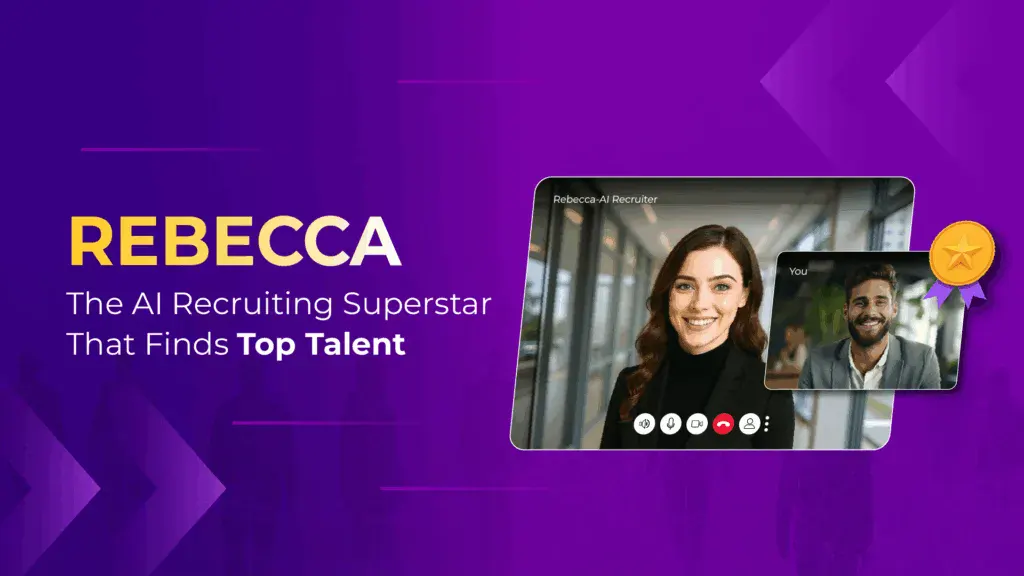
Rebecca: The AI Recruiting Superstar That Finds Top Talent
Remember the dark ages of recruitment? Recruiters spent 40+ hours per week manually dialing candidates who never answered, sifting through hundreds of identical resumes, and conducting repetitive screening calls. All to lose top talent to competitors who moved faster. That process is brutal, inefficient, and time-wasting—turning your skilled talent acquisition professionals into exhausted administrative workers. But now those days can be over. AI recruitment tools have transformed talent acquisition from that resource-intensive grind to an intelligent, scalable operation. And this is where Rebecca shines. In this blog, we profile Rebecca and how she automates candidate screening, gives real-time assessments, and conducts effective video interviews that eliminate the bottlenecks. With Rebecca, you can improve candidate quality and experience, lower costs, and save your recruiters. Who Is Rebecca? And What Does She Do? Rebecca is Pete & Gabi’s specialized AI recruiting agent and interviewer, and she’s been designed purely to solve talent acquisition challenges. Unlike generic AI tools that handle multiple business functions, Rebecca focuses solely on finding, evaluating, and qualifying talent through conversations and assessments. Here’s a quick breakdown of her core capabilities: Instant candidate engagement: Rebecca contacts applicants within minutes of submission, eliminating the “application black hole.” Initial candidate screening: She engages applicants in natural, structured conversations to uncover role-specific details and filter out mismatches early. Intelligent video interviews: She conducts face-to-face interview assessments with both technical challenges and soft skill evaluation. Real-time candidate scoring: She provides objective, bias-free assessments based on role-specific criteria in real-time. Automated pipeline management: Rebecca handles scheduling, follow-ups, and candidate nurturing automatically. Seamless ATS integration: She also syncs all interaction data, scores, and recommendations with your existing systems, ensuring you can make data-driven decisions on demand. Ultimately, Rebecca acts as a tireless AI recruiting partner, screening hundreds of candidates simultaneously while maintaining conversation quality that rivals your best human recruiters. She delivers only pre-qualified candidates who meet your specifications, allowing your recruiters to focus on the top talent. What Are the Recruitment Challenges Rebecca Solves? The operational chaos and systematic failures that traditional recruitment teams experience cost organizations millions in lost productivity and missed opportunities. Let’s look at how Rebecca solves them. Application Overload Drowns Your Recruitment Teams Traditionally, recruiters received hundreds of applications daily, but with AI tools in use on the candidate side, the volume of submissions is snowballing. For even the least popular of positions, it can be too great a volume for human recruiters to keep up with. And without the capacity to engage quickly, high-quality prospects either get buried in queues or snapped up by the competition. All while your recruiters are manually sifting unqualified submissions. Specified AI recruiters like Rebecca solve this problem by processing and instantly engaging hundreds of candidates simultaneously. Long Time-To-Hire While Quality Candidates Slip Away Another issue is the long time-to-hire from extensive manual candidate screening cycles. With clogged pipelines, these hiring cycles lead to top talent accepting offers elsewhere before you can even complete initial screenings. Rebecca compresses qualification by conducting immediate screening conversations and delivering interview-ready candidates within hours rather than weeks. Manual Screening Bottlenecks Limit Team Capacity Most human recruiters can only conduct about 20 meaningful screening calls daily. In a fast-paced industry where recruitment teams receive hundreds of applications per day, this slow, manual screening process constrains capacity and limits hiring speed. Deploying Rebecca as an AI interviewer kicks this into gear. She conducts hundreds of simultaneous screening conversations without quality degradation, eliminating bottlenecks that prevent scalable talent acquisition. Inconsistent Evaluation Creates Hiring Mistakes Even the best human recruiters can be influenced by personal bias. And everyone has good days and bad days. But this, coupled with high pressure deadlines, can lead to uneven candidate assessments and costly hiring mistakes. One recruiter’s yes could be another’s maybe, and these disparities lead to talent mismatches and pipeline delays. Rebecca provides consistent evaluation and eliminates this problem. With her handling candidate screening and assessment, every applicant gets the same experience. Each gets identical, role-specific evaluations with real-time, objective scoring. Rebecca greatly aids in eliminating bias and enabling decisions driven by data—not mood swings. Cost-Per-Hire Keeps Rising Quality and experience cost money. And human labor, essential for closing deals, requires additional overhead and brings more unpredictable outcomes when wasted in every stage of the process. People are also slower, and the longer the hiring cycle, the more expensive it becomes. AI recruiters like Rebecca slash these expenses by automating early-stage screening, prequalification, and follow-up. They free your recruiters to spend their time on high-value conversations with interview-ready candidates. They also reduce operational costs dramatically, accelerate hiring speed, and deliver a far lower cost-per-hire without sacrificing quality. Keep reading as we walk you through Rebecca’s hiring process and how it is a game-changer. Rebecca’s AI-Powered Talent Discovery Process Rebecca offers recruitment teams an intelligent and comprehensive talent discovery package that identifies, evaluates, and delivers top candidates. Here’s what the workflow of that AI hiring solution looks like. 1. Intelligent Candidate Outreach Rebecca initiates contact within minutes of application submission, capturing candidates while interest is peak and before competitors respond. She holds natural conversations that help candidates feel at ease, immediately engaging them in meaningful dialogue about career goals and role fit. Through multi-channel outreach including voice calls and email follow-ups, Rebecca ensures no qualified candidate slips through the gaps. 2. Comprehensive Screening and Assessment Rebecca conducts sophisticated evaluations that adapt based on responses and role requirements. For technical positions, she presents conversational coding challenges and assesses problem-solving approaches. At the same time, she’s gauging communication skills by analyzing speech patterns, response structure, and engagement levels to predict cultural fit and team compatibility. With Rebecca’s AI-powered recruitment system, assessments align with company-specific criteria, ensuring candidates not only meet requirements but match organizational culture and values. 3. Real-Time Candidate Scoring and Ranking Rebecca’s evaluation metrics eliminate the inconsistencies that plague human screening. She provides reliable assessments regardless of recruiter availability or energy levels. Rebecca also provides objective scoring across data points to identify candidates with highest
Attention CX Leaders: See How Agentic AI Crushes Sales Pipelines

Customer experience and sales are no longer separate games. Today’s CX leaders are expected to retain, upsell, and delight customers… all while battling shrinking attention spans and ever-rising expectations. The bad news? Traditional CX playbooks don’t keep up. Teams burn out. Opportunities slip away. Revenue goals get missed. The good news? Agentic AI changes the rules. Unlike reactive chatbots, agentic AI actively hunts for revenue opportunities—choosing the right moments to engage, re-engage, and upsell—all without dropping service quality. By bridging exceptional experiences and scalable growth, it turns your CX team into a profit engine. In this blog, you’ll see how forward-thinking leaders use agentic AI to build stronger pipelines—and why every day you wait is another day of needless waste. Common CX Pain Points Impacting Sales Growth Every day, CX teams unknowingly kill revenue opportunities. The reason is simple: Most systems designed to deliver great customer experiences create barriers to sales growth, leaving money on the table. Here’s are some key ways traditional CX approaches fail at revenue generation: These gaps can lead to millions in revenue getting lost to competitors with smarter systems. Fortunately, agentic AI addresses these challenges head-on, transforming each pain point into a profit opportunity. Why Agentic AI Matters for CX Leaders Agentic AI is artificial intelligence that doesn’t just react—it takes action. These systems pursue specific goals, make intelligent decisions on the fly, and take proactive steps to drive outcomes on autopilot. Traditional AI reacts when customers call with problems. But agentic AI initiates conversations, identifies opportunities, and converts satisfaction into sales—automatically. For CX leaders managing complex, high-touch customer journeys, this is revolutionary. Instead of hoping customers upgrade organically, agentic AI detects the perfect moments for revenue conversations and makes a pitch immediately. It reads customer sentiment, analyzes interaction history, and triggers sales when satisfaction peaks. The result? Your CX team becomes a revenue-generating machine that turns every positive interaction into a pipeline opportunity. Seven Ways Agentic AI Strengthens Your Sales Pipeline While your competitors may treat customer service as a cost center, agentic AI transforms it into a powerful profit driver. Below are seven key ways agentic AI helps you take advantage of potential pipeline opportunities across customer touchpoints. 1. Proactive Lead Engagement Agentic AI eliminates the deadly delay between customer interest and sales contact. While traditional systems rely on slow lead routing and human follow-up, AI agents detect buying signals in real-time— whether from support tickets, satisfaction surveys, or live conversation —and initiate outreach within minutes. This speed advantage is crucial as the average buyer loses interest with every passing minute. In a world where every delay means potentially losing prospects to the competition, agentic AI ensures your team never misses this window. 2. Automated Qualification & Efficient Routing Gone are the days of sales teams wasting time on unqualified leads. Agentic AI analyzes customer interactions, budget signals, and behavioral patterns to score every prospect by readiness, fit, and revenue potential. High-intent leads get immediate escalation, while lower-priority prospects receive nurturing sequences until they’re sales-ready. This intelligent prioritization solves the visibility problem that buries signals in support tickets and satisfaction data. Instead of hoping your sales teams spot an opportunity, AI finds and ranks them all, ensuring your best prospects get immediate attention. 3. Seamless Handoff Between CX and Sales Agentic AI eliminates cold handoffs that kill pipeline momentum. When AI detects a sales opportunity during interactions, it automatically delivers warm, qualified leads to sales teams. This includes complete context—conversation history, pain points, and stated needs—empowering your sales teams to take action. This seamless transition breaks down the data silos that prevent CX insights from reaching sales teams. 4. Upsell & Cross-Sell Triggers Rather than hoping customer success teams spot expansion opportunities in quarterly reviews, agentic AI monitors behavior in real-time and identifies perfect upsell moments. It analyzes usage patterns, milestone achievements, and satisfaction scores for personalized upgrade opportunities when customers are most receptive. This proactive approach captures missed upsell windows. Instead of waiting for renewal conversations or hoping customers self-upgrade, AI initiates them directly. 5. Consistent, 24/7 Follow-Up While human teams operate within business hours and time zone limitations, the right agentic AI ensures every lead and customer receives timely engagement regardless of when they reach out. International prospects get immediate response, weekend inquiries don’t wait until Monday, and follow-up sequences continue on autopilot, with no memory lapses. This always-on consistency eliminates the inconsistency across touchpoints that confuses customers and delays buying decisions. 6. Churn Prediction & Retention Calls Agentic AI doesn’t wait for cancellation requests to fight churn. It continuously monitors engagement patterns, satisfaction trends, and usage data to identify at-risk customers weeks before they check out. When warning signals appear, an AI agent automatically initiates retention conversations with personalized solutions and recovery offers. This predictive approach transforms customer retention into proactive relationship building. By addressing concerns before they escalate to cancellations, agentic AI prevents revenue loss and increases customer lifetime value. 7. Data-Driven Insights for Ongoing Pipeline Optimization Finally, agentic AI systems create a real-time feedback loop to continuously improve pipeline performance. Every conversation generates actionable data about customer preferences, pain points, and potential messaging approaches. This intelligence helps identify the most pressing customer needs and refines their targeting criteria. Unlike traditional CX systems that generate reports, agentic AI applies insights directly to improve customer outcomes and drive results. And as rates improve, AI agents learn to identify which approaches work best for specific customer types, getting smarter and more effective with every interaction. The Bottom Line: The Future of CX Is Revenue-Driven CX excellence and pipeline strength don’t have to be separate goals. The most successful companies understand this connection and use every customer interaction to drive growth—not just solve problems. It’s time to evolve beyond traditional support metrics. Customer satisfaction scores and ticket resolution times matter, but measurable revenue contribution is what separates industry leaders. Schedule a demo to turn your customer conversations into automatic revenue opportunities. FAQs How does agentic AI maintain customer experience quality
Candidate Outreach AI Tools: Top Features That Are Helping Recruiters Dominate
Picture this: Your open role just went live. Within minutes, an AI voice agent is already on the phone—calling, speaking to, and screening hundreds of potential candidates at once. We’re talking about natural, human-like conversations happening on autopilot. And by the time your team logs in, interviews have already been booked with the best-fit candidates. No back-and-forth. No wasted hours sifting through unqualified leads. This isn’t a glimpse into the future—it’s what AI-powered candidate outreach tools are doing right now. In this blog, we’ll break down how candidate outreach AI tools work, the powerful features behind them, and how to integrate them into your hiring workflow. If you’re looking to speed up your recruitment process and boost your team’s productivity, this is where you start. What Are AI Candidate Outreach Tools? AI candidate outreach tools are advanced AI-powered recruitment tools designed to automate and improve how recruiters connect with talent. Instead of relying solely on cold calls and manual follow-ups, these tools use AI call agents to handle outreach at scale. The best part? These AI-driven call agents hold natural, human-like conversations, ask context-aware questions, and respond or pivot depending on candidate responses. Most AI outreach tools combine multiple capabilities in one solution, including: Whether through voice, chat, or multichannel outreach, AI outreach tools engage candidates, qualify them, and move them forward in your pipeline automatically. And with these tools doing the heavy lifting to provide your hiring team with a shortlist of qualified and interview-ready candidates, you effectively cut down on hours wasted chasing prospects on the phone or starting cold conversations. Core Features That Power Modern Candidate Outreach Tools AI-driven candidate outreach isn’t just about reaching people faster. It’s about making every conversation count—at scale. The best AI tools combine human-sounding conversations with machine-level precision, helping recruiters cover more ground, faster, and with zero drop in quality. Here are some of the features that drive AI-driven candidate outreach tools: Fully conversational voice outreach AI voice agents hold natural, two-way phone conversations with candidates. No scripts, no robotic pauses. Instead, they listen and respond in real-time, handling everything from initial outreach to rescheduling requests like a human recruiter would. Personalized outreach automation These tools don’t just blast the same message to everyone. They come up with tailored, context-relevant responses to candidates based on what they say and what recruitment stage they’re in. This boosts candidate engagement rates. Sentiment analysis It’s not just what candidates say—but how they say it. AI detects tone, hesitations, and sentiment in voice or text, giving your team insights into interest level, objections, or concerns. That means smarter follow-ups, not just faster ones. Instant screening and pre-qualification AI-powered outreach tools also instantly qualify candidates based on your pre-set criteria—from experience levels to required skills, location, and more. You get shortlisted prospects with the qualities you want, ready for the next step. Everyone else? Filtered automatically. Analytics dashboards Another feature of modern AI outreach tools is a metrics dashboard that shows you exactly what’s working and what’s not. You track screening success, candidate insights, time-to-interview, and more. These eliminate guesswork and offer clear, recruiter-friendly insights that help double down on what moves the needle. Smart scheduling and follow-up Whether it’s booking interviews or rescheduling them, AI tools keep things moving. Reschedule instantly after a no-show, send reminders, and follow up when candidates engage. It’s like having an assistant who’s always available and never drops the ball. CRM + ATS integration Outreach only works if it’s tracked. As a result, AI candidate outreach tools offer seamless integration with your ATS or CRM, ensuring that every interaction is logged, every result is measurable, and your team isn’t toggling between systems. What Problems Do AI Candidate Outreach Tools Solve? Manual outreach is slow, tiring work. And while it’s happening, the great talent gets snapped up by the competition. And all that wasted time equals more revenue lost. AI-powered candidate outreach tools fix these gaps—fast. Here are some of the operational problems in recruitment that AI outreach tools solve: Volume vs. quality dilemma While blasting hundreds of messages helps you reach more prospects, it sacrifices personalization—which may lead to lower engagement rates. But AI-powered candidate outreach tools scale outreach while personalizing every interaction with each candidate. Slow time-to-first-touch rates The longer it takes to reach out, the colder the candidate gets. AI outreach tools eliminate this lag with real-time responses the moment a potential candidate applies or shows interest. Consistency issues While your recruitment team may be excellent, the human factor means that they’re not at 100% everyday—which can hurt your business. But AI outreach tools provide every candidate with the same high-quality, on-brand experience. Every single time. Scalability limitations Hiring more recruiters to scale outreach isn’t sustainable—from overhead costs to limited office space. With AI tools, you expand your reach without driving operations costs sky high. Choosing the Best AI Candidate Outreach Tool for Your Recruiters Every AI platform promises speed, automation, and better hires. But not all tools are built the same—and not all are useful to recruitment teams. The best AI candidate outreach tools feel like a team extension instead of a clunky dashboard to babysit. Here are tips to help you pick an effective AI outreach tool: Introducing Rebecca: Your Superstar AI Recruiter Meet Rebecca, Pete & Gabi’s recruitment-focused AI voice agent that transforms how organizations connect with, evaluate, and hire talent. Unlike generic AI platforms that try to do everything, Rebecca specializes exclusively in recruitment challenges. She brings laser-focused intelligence to every stage of your candidate engagement process. Rebecca initiates contact with candidates, conducts comprehensive pre-qualification screening tailored to specific role requirements, and generates detailed scoring reports that include qualification assessments and recommendations for your human hiring team. Bottom line? Rebecca filters out unqualified applicants before they consume your team’s valuable time. Rebecca’s operational efficiency extends to complete interview coordination—automatically scheduling qualified candidates directly into your interview pipeline. The best part? She can actually conduct video interviews with the intuition of your most experienced
AI-Driven Candidate Outreach Calls: A Game-Changer for Recruiters
The biggest bottleneck in modern hiring isn’t finding candidates—it’s the manual, time-intensive process of initial outreach and qualification. While job boards and LinkedIn have solved the discovery problem, the human hours required to call, screen, and qualify candidates remain a massive drain on recruitment teams. And with growing industry-wide competition for top talent, it’s no surprise that traditional outreach methods are struggling to hit the mark. This is where AI-driven candidate outreach calls come into play. In this article, we’ll explore what AI candidate outreach is and how it is helping recruitment teams break free from the endless cycle of manual screening. It lets them focus their expertise where it matters most—closing top candidates. You’ll also discover the specific AI-powered recruitment solution that’s helping recruitment leaders cut their time-to-hire by up to 80%. What Are AI-Powered Candidate Outreach Calls? AI-powered candidate outreach calls are automated phone conversations driven by artificial intelligence. They simulate human-like dialogue with job candidates, and unlike automated dialers or pre-recorded messages, are handled by AI voice agents who engage in natural, context-aware, two-way conversations. AI candidate outreach calls represent a fundamental shift from traditional recruitment processes, helping handle the initial touchpoints that typically consume so many hours of recruiter time. They introduce available roles, clearly explaining position requirements, expectations, and growth opportunities. More importantly, AI recruiting assistants excel at pre-qualifying candidates by asking targeted questions about experience, availability, salary expectations, and specific skills. The best part? They can operate at scale without sacrificing personalization. While a human recruiter may be able to complete 15 to 20 meaningful candidate conversations per day, AI agents can do hundreds, automatically shortlisting top candidates and updating your ATS with detailed interaction summaries. By handling first-touch outreach, AI call agents help recruiters save hours and keep their pipelines moving while ensuring no qualified talent slips through the cracks. How AI-Powered Outreach Is Changing the Recruitment Game What if your recruitment team never had to choose between speed and quality? That’s the promise of AI in recruitment. Here are some ways AI candidate outreach is transforming hiring workflows. 24/7 Candidate Engagement AI outreach agents eliminate the “ghosting” experience that many candidates fear by initiating contact within minutes of application submission. With automated candidate calls, there’s no lag between a candidate applying and hearing back. Calls go out instantly, 24/7—even outside working hours. Whether it’s midnight or midday, AI ensures candidates are engaged at their peak moment of interest. And while competitors are leaving candidates wondering if their resume was even received, you are already conducting screenings and scheduling interviews. This immediate response dramatically increases engagement, especially with top-tier talent who often receive multiple offers and appreciate rapid, professional communication. Scale without Compromise Traditional candidate outreach is limited by human capacity. After all, even the most productive recruiter can only make so many quality calls per day. But AI hiring assistants effortlessly scale to contact hundreds or thousands of candidates simultaneously, while maintaining conversation quality regardless of volume. This means you can pursue every qualified lead in your pipeline rather than prioritizing based on recruiter availability. As a result, you’re less likely to miss out on potentially great candidates due to bandwidth. Consistency in Every Interaction With automated candidate calls, every applicant hears gets the same details and is asked the same questions—no matter when they’re contacted. This eliminates the risk of slip-ups, rushed conversations, or incomplete information. While human recruiters have good and bad days, use varying energy levels, and can be affected by various day-to-day occurrences, AI agents do not. Every candidate receives the same high-quality experience—from conversational tone to information accuracy. Seamless Workflow Integration Modern AI outreach systems automatically sync conversation data, candidate responses, and qualification details directly into your existing ATS and CRM platforms. This means no manual data entry, no missed notes, and no information silos. And when recruiters get the details of shortlisted applicants, they come with comprehensive candidate profiles with interaction notes, interest levels, and next-step recommendations, allowing them to focus on relationship-building rather than administrative tasks. Introducing Rebecca: Your AI Recruiter On-Call Rebecca is Pete & Gabi’s specialized AI-powered voice agent designed exclusively for recruitment. While many AI tools offer generic conversation capabilities, Rebecca is laser-focused on one mission—improving how your organization engages and qualifies talent. So what does Rebecca do? Built to optimize your hiring workflow, Rebecca plugs directly into your organization’s recruitment ecosystem. She integrates with ATS platforms to automatically update candidate profiles with detailed interaction summaries, qualification scores, and next-step recommendations. Based on these comprehensive candidate reports, your human recruitment team can then focus on building relationships with pre-qualified, engaged candidates. Integrating AI-Powered Candidate Outreach into your Recruitment Workflow The most successful recruitment teams aren’t choosing between AI and human recruiters. Instead, they’re strategically combining both to create a hiring machine that’s faster, more efficient, and delivers better results than either could achieve alone. By offloading first-contact calls and basic screening to human-like AI call agents like Rebecca, recruiters get hours back in their day to focus on what really drives hires—engaging interviews, strategic offers, and excellent candidate relationships. Here’s a quick rundown of what you gain with an AI-powered candidate outreach system: Remember, when AI recruitment automation takes care of the high-volume heavy lifting, your human recruiters can focus on the high-value moments that close the best talent. The Bottom Line Manual candidate outreach is no longer sustainable in today’s competitive talent market. While your team struggles with capacity limitations and delayed responses, top candidates choose employers who engage them immediately with professional, consistent communication. AI-driven candidate outreach levels this playing field by delivering instant, personalized, and high-volume first-touch candidate calls without burning out your hiring team. And with Rebecca handling everything from instant candidate contact and intelligent screening to interview scheduling and ATS updates, your recruiters can focus on closing deals with pre-qualified, engaged talent. Let your recruiters build relationships—not chase first-touch calls. Schedule a demo today to see how Rebecca can supercharge your outreach and help fill roles
Ethical Standards in AI Voice Technology: An Exploration of Transparency, Trust & Boundaries
Summary: Maintaining trust is more challenging and essential than ever. With 90% of US consumers buying only from brands they trust (Capital One, 2025), and 96% saying excellent service builds that trust, it is critical for companies to ensure their AI systems are transparent, respectful, and compliant. This article explores the rising concerns around AI deception, privacy, and deepfakes, outlines regulations like the TCPA, BIPA, and the EU AI Act, and provides a checklist for businesses seeking to deploy voice AI systems responsibly. Introduction: No matter what your business is, trust is critical. Most American consumers (90% per Capital One research in 2025) prefer to buy from brands they trust. 62% will pay more for an identical product from a company they trust, and 75% of consumers age 18–34 say trust is even more important than in the past. And critical to that? Customer service, with 96% stating excellent customer service, builds trust in an organization. So, what happens to that trust when customers can’t get through to you, don’t get called back, deal with burnt out agents, or interact with unreliable or deceptive AI? In today’s article, we address some of AI’s most critical (and challenging) dimensions, exploring: Why AI-powered outreach transparency is so important How different regions are regulating ethical AI for voice systems What AI calling providers must do to ensure customer safety and trust remains high How Pete & Gabi was built to maintain trust, ensure compliance, and provide voice AI with the highest ethical standards At a time when building trust in AI is both essential and often overlooked, voice system providers play a critical role in ensuring it’s done right. Why Voice AI Ethics Matter The truth is, most people still prefer dealing with humans, that is, provided that person is available, knowledgeable, and interested in helping. So, with voice AI technology having improved to the extent that most people can’t tell voice AI from human in blinded tests (per University of California Berkeley, OpenAI, and ElevenLabs research), the potential for deception is significant. Deepfake scams powered by AI have become an increasingly common form of fraud, feeding a spike in scams that’s already caused $1 trillion in annual, global losses. Customers are wise to be suspicious of who they’re talking to. This is why AI systems that fool people into believing they’re real are not only unethical, they’re also increasingly illegal (see below). Consent and Concerns over Privacy AI systems, unlike humans, have perfect recall. Some can analyze biometric data and even incorporate predictive analytics. Visible, high-profile lawsuits involving training data, concerns over AI systems spitting back out private information, and the growing quality of AI deepfakes are leading customers to become increasingly concerned over whether their data is being handled safely and kept private. And governments, in turn, are increasingly enacting legislation to ensure transparency and enforce a customer’s right to opt-out of data collection. Without transparency of use and effective ethical standards, AI systems can lead to consumer anxiety and distrust. They can also lead businesses to inadvertently break regional laws or regulations, triggering fines, damaged reputations, or even the risk of being dragged through the courts. Current and Emerging Regulations Impacting AI Calling Technology AI regulations vary widely and evolve rapidly, though not as fast as the technology itself. In the US, much is currently left to individual states, and there are a variety of laws either already in place or working their way through legislatures now. Many are aimed at bringing protection for consumers in the area of voice AI and data privacy with AI systems. This variability can be highly challenging for companies, both for managing regional variations and in keeping up with changes. As of now, the following regulations impact voice AI systems: Sources here include: Marashlian & Donahue PLLC, the FCC, the Skadden Foundation, the IAPP, ISACA, and the Government of Canada. Keeping up with it all is no small feat. And with over 40 state attorneys general acting to enforce existing consumer protection laws in AI cases, it’s not going to get easier any time soon. Deploying AI in Customer Communication: The Must-Haves To protect both business and customers, companies must demand more from their AI partners. At the very least, all voice AI systems must enforce transparency by either directly acknowledging they are AI, or providing that information upon request, and without fail. And it is best practice to always disclose AI involvement in customer interactions from the get go. Customers must also be given a means of opting out and reaching a human agent. For voice AI systems that do not enable live transfer, they must still provide some means of connecting customers or clients with human agents in a timely fashion. All recordings, too, should be disclosed, especially if it’s being used for training or emotional conditioning of systems. This should be explicit with the purpose clearly noted. AI agent boundaries should be reinforced with internal stress testing, rule-based limits, machine learning systems that improve AI behavior with experience, and regular monitoring of calls. This includes checking across languages, accents, and dialects for bias and translation issues, feedback loops for improvement, and clear audit trails that provide transcripts and details of call outcomes. And to assuage fears of voice cloning, consent must always be used before training models on call data. Vetting Providers of AI Voice Agents Any provider of an AI voice system should be willing and able to discuss the ways they maintain compliance and trust. They should be knowledgeable of rules and regulations by region and have a means to ensure you aren’t violating these with cross-regional calling. The following should be non-negotiable when implementing an AI system: How Pete & Gabi Builds Ethical AI Voice Assistants With Pete & Gabi, we built the system that we wanted. One that we felt was lacking. Refined for more than four years on thousands of calls across industries, we devoted hundreds of hours of developer time and more than a