Choosing the right recruiting technology is one of the most important decisions a hiring team has to make. For decades, the traditional applicant tracking systems (ATS) were the de facto digital filing cabinet for collecting and storing resumes from candidates.
But traditional tools cannot keep pace with the increasing competition for qualified talent and rising application volumes. HR teams often find themselves spending hours sifting through resume databases manually, filtering keyword matches and scheduling phone screens.

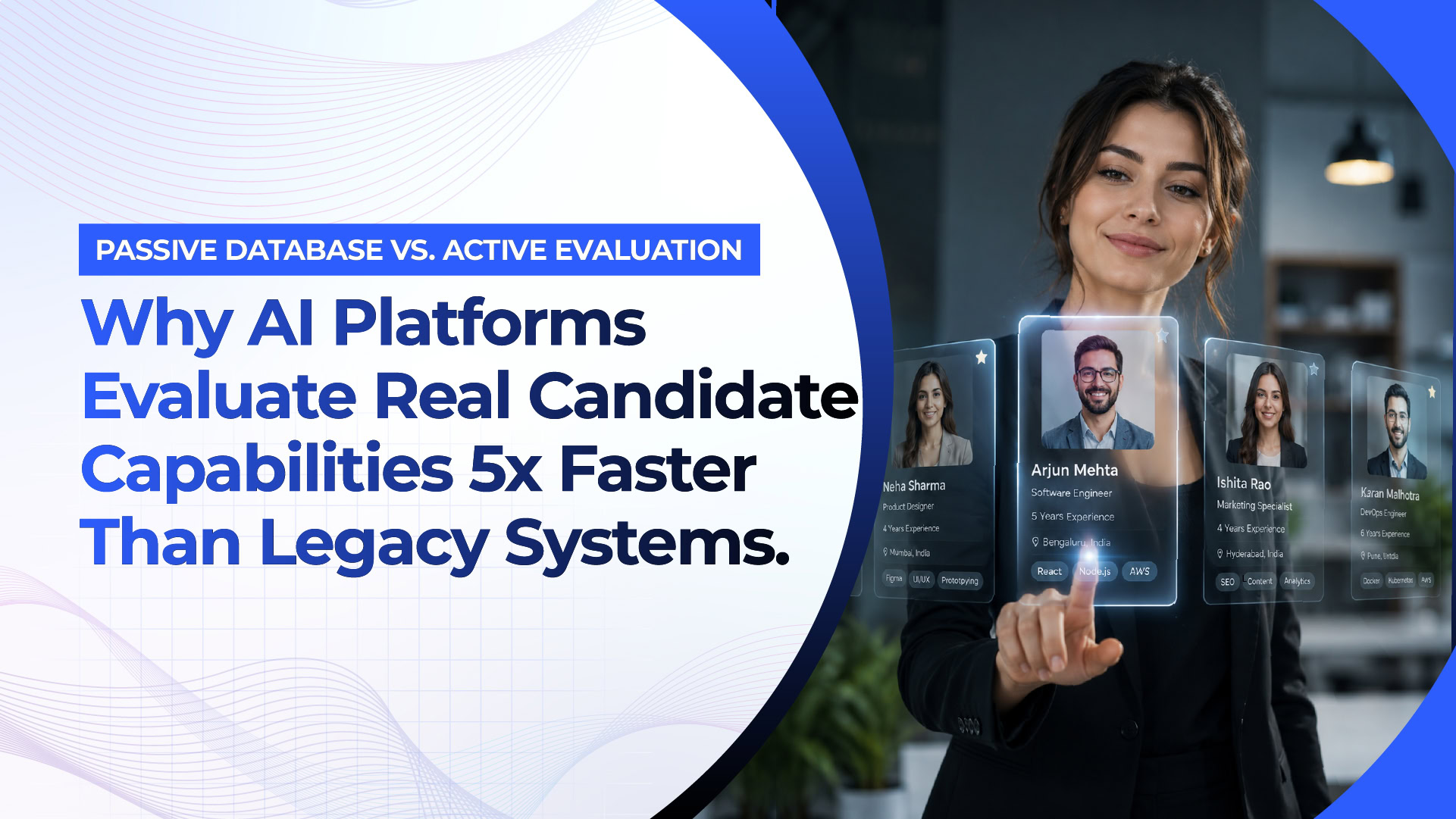
The difference between AI hiring tools and traditional recruiting software is really just one big change: going from passively keeping records to actively and automatically assessing candidates. With a clear operational strategy in place, teams can move qualified applicants through the pipeline more efficiently while ensuring consistent candidate quality across all departments. In this guide, we’ll review the key functional differences, costs, and selection criteria to help you choose the right hiring technology for your organization.
What is AI hiring software?
AI hiring software is an intelligent recruitment software that uses automated conversational engines, natural language processing, and machine learning to source, screen, and evaluate job candidates.
Unlike legacy software that stores documents, AI hiring tools can conduct real-time interactions and actively analyze candidate qualifications. They look beyond simple keyword searches, delving into candidate intent, the relevance of their past work and the depth of their skills.
Today’s AI hiring platforms automate the high-volume admin work. They can reach out to passive candidates, do two-way screening calls, answer applicant inquiries on a 24/7 basis and create structured scorecard summaries for hiring managers. This allows talent acquisition teams to make faster, data-driven decisions without being overwhelmed by the volume of resumes.
How is AI hiring software different from traditional recruiting tools?
Unlike traditional recruiting tools, AI hiring software does more than just store resumes, it actively automates sourcing and two-way screening.
The main distinction is proactive decision support versus reactive record keeping. A traditional applicant tracking system (ATS) sits there, waiting for applicants to submit their resumes, which recruiters then have to review one by one.
Below is a direct side-by-side comparison of five core recruiting functions:
| Recruiting Function | Traditional ATS / Recruiting Tool | AI Hiring Software |
| 1. Candidate Sourcing | Reactive: Waits for inbound applicants to post resumes on job boards | Proactive: Searches passive networks and matches qualified talent automatically |
| 2. Screening & Filtering | Keyword Matching: Filters resumes based on exact word matches, missing strong talent | Contextual Analysis: Evaluates actual skill depth, experience progression, and capability |
| 3. Interview Scheduling | Manual Email Coordination: Recruiters send multiple emails to align calendar availability | Automated Self-Scheduling: Candidates select open slots directly on team calendars instantly |
| 4. Data & Analytics | Historical Reporting: Tracks static metrics like past time-to-fill and application volume | Predictive Insights: Analyzes pipeline velocity and highlights high-fit candidates in real time |
| 5. Total Cost Model | Fixed Per-User Pricing: Pays per recruiter seat regardless of candidate throughput | Usage / Performance Pricing: Scales directly with candidate evaluation volume and hiring needs |
The traditional recruiting tools are managing files while the AI hiring tools are managing workflows. This difference enables talent acquisition teams to take candidates from the application stage to the interview stage in days, not weeks. The use of AI platforms means candidate data is captured in a consistent manner throughout the process, enabling team alignment at every step.
What can AI hiring software do that a traditional ATS can not?
AI hiring software lets you conduct interactive candidate screenings, verify actual technical abilities using conversational dialogue, and safeguard pipelines against synthetic candidates.
A conventional applicant tracking system (ATS) has no knowledge of the events that take place before an interview is arranged. It can’t talk to applicants, answer questions about the position, or assess communication skills. AI hiring software changes the game for each step in your hiring funnel:
| Hiring Funnel Stage | Traditional ATS Limitation | AI Touchpoint & Advantage |
| 1. Inbound Application | Stores static PDF resumes in database | Engages candidates instantly with automated two-way screening calls |
| 2. Early Qualification | Requires recruiters to read every resume line by line | Evaluates skill relevance, salary alignment, and notice period automatically |
| 3. Verification & Security | Fails to detect AI-generated resumes or fake profiles | Detects synthetic candidate profiles and deepfake audio during screening |
| 4. Panel Coordination | Relies on manual email follow-ups for scorecard notes | Generates structured scorecard summaries and sends automatic reminders |
| 5. Pipeline CRM | Candidate records become inactive after job closure | Nurtures passive candidate pools for future open requisitions automatically |
Plus, automation workflows help ensure transparent and consistent candidate communication throughout the evaluation process – eliminating manual tracking and keeping applicants engaged.
Today, the employment market poses a challenge for HR leaders in identifying fraudulent applicants. Dishonest candidates could use generative AI tools to populate job boards with fake, perfectly tailored resumes. Discover how dedicated AI platforms are fighting this threat in our guide on why Rebecca AI is the new firewall against synthetic candidates.
What factors should you consider when selecting AI-powered hiring software?
When assessing vendors for AI-powered hiring software, some of the criteria to consider are ease of integration, evaluation accuracy, fraud detection, candidate experience, and compliance standards.
Not all AI tools are created equal. Some platforms have basic keyword wrappers, while others have real conversational intelligence. Evaluate platforms based on these 5 key criteria:
-
- Depth of Conversational Screening: Is the platform engaged in a two way interactive dialogue or is it merely asking static multiple choice questions? True AI platforms customize follow-up questions based on the candidate’s responses and are designed to verify the candidate’s real-world experience and depth of knowledge.
-
- Effortless Fit with Your Stack: The software should be built in directly with your existing email systems, calendars and ATS. It should make your current workflow better without the pain of migrating data or forcing recruiters to learn a whole new database system.
-
- Fraud detection and candidate verification: Does the tool verify the candidate’s identity and detect AI-generated answers? Rebecca AI and other platforms verify voice and profile before hiring managers waste hours interviewing candidates in real life to make sure people are who they say they are.
-
- Bias mitigation and explainable AI: Evaluation scorecards should be transparent. Finally, the system must be structured to ensure that ratings of candidates are based only on the skills relevant to the job. The rationale for these ratings should be transparent to meet compliance requirements and foster diversity goals.
-
- Candidate Experience & Transparency: The platform needs to provide the experience of seamless and organic communication. Candidates should be respected and kept in the loop with regards to the automated screening process and expectations around the timeline and what is coming next.
Can AI recruiting software replace human recruiters?
AI hiring software does not replace human recruiters, yet it makes repetitive administrative tasks more efficient so recruiters can focus on building relationships and hiring strategy.
Recruiting is basically a human relations function. Before switching careers, candidates want to have conversations with actual team members about company culture, career development, and team dynamics. AI software handles the top-of-funnel mechanics—screening hundreds of resumes, scheduling interview times and checking salary requirements.
Recruiters can automate administrative tasks and save 10-15 hours a week. They can use that time to partner with hiring managers to make better final hiring decisions, to sell the company vision to candidates, and to build relationships with passive talent. Human judgment is still important for cultural fit evaluation, final offers.
What is the cost of AI hiring software compared to a traditional applicant tracking system (ATS)?
AI hiring software pricing tends to be based on usage or performance, whereas traditional ATS platforms tend to have fixed annual fees based on recruiter seat licenses.
A traditional ATS vendor will charge between $3,000 and $15,000 per user per year for a seat for a recruiter. This pricing model penalizes growing teams that need seat access for hiring managers, hiring coordinators, or guest panel interviewers.
Contemporary AI hiring platforms are priced based on the number of candidate assessments or hires. This approach ties software spending directly to active recruiting. During slow hiring months, companies are paying for active candidate evaluations, not unused software seats. A 70% reduction in screening times from AI tools delivers a quick ROI.
Why Rebecca AI is the Superior AI Recruiter for Modern Teams?
If your hiring team is struggling with resume backlogs, slow response times, or unqualified candidates, sticking with a traditional ATS will only prolong the bottleneck. Legacy systems simply were not designed for high-volume conversational evaluation.
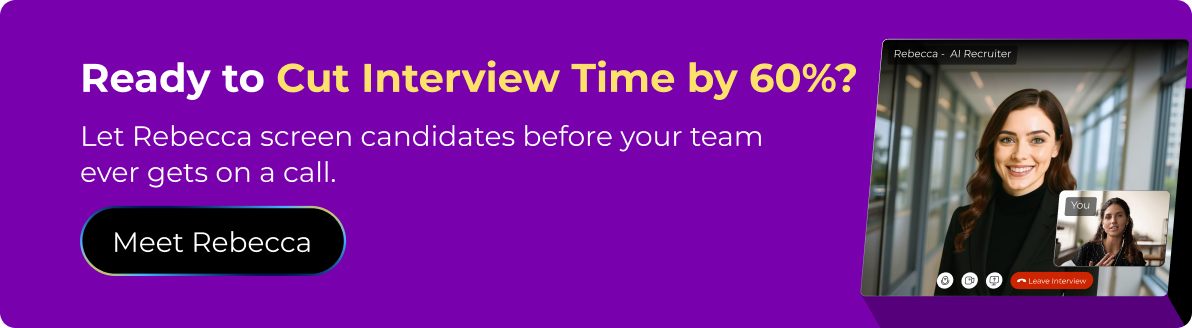
The Rebecca AI Recruiter is planning to combine the static application tracking and active candidate evaluation paradigms. The Rebecca AI Recruiter is an intelligent extension of your talent team that can do two-way screening calls, verify technical skills, check for synthetic candidate profiles, and deliver structured scorecard summaries directly into your existing workflow.
Your team will be given a shortlist of the best pre-screened candidates ready for final interviews instead of spending weeks sifting through resumes. This drastically decreases time to hire and simultaneously improves the quality of candidate assessments.
Want to shake up your hiring pipeline? Discover our complete suite of recruitment solutions or schedule a live demo with our team to see Rebecca AI in action.