

How Voice AI Is Solving Recruitment’s Candidate Dropout Problem
Every harried candidate looking for a role has been through the phase where they have filled an application, hit submit, and it has disappeared into the internet. And then? Nothing. After spending an hour on tailoring one’s resume and cover letter according to the job description, candidates jump every time they receive an email notification, or a message, or a call, anticipating a response from the recruiters. Then, two weeks pass. They apply somewhere else. The first company eventually sends them an automated email that begins: “We regret to inform you…” Recruiters have a different name for this moment. They call it candidate dropout, and it is destroying their hiring pipelines. However, at last, there is a tool that could ease the burden on recruiters and as a cascading effect, on candidates as well: AI voice recruiting platform, Rebecca. The Numbers Are Worse Than You Think Here’s what the data actually says. 42% of candidates withdraw from the hiring process because scheduling took too long. Not because they found a better job or changed their mind. Simply because no one moved fast enough. Nearly half of candidates, 47% to be accurate, say poor communication would cause them to disengage from the process entirely. And yet, only 9% of candidates were able to get a first interview scheduled in a day or less. The largest share of 31% waited two to three weeks just to get that first conversation on the calendar. In a market where the best candidates are typically only available for about 10 days before another company snaps them up, two to three weeks can be an expensive delay. The cruel irony is that 89% of employers say it’s a problem when job seekers drop out or don’t show up for the first day. Everyone agrees it’s broken but almost nobody has fixed it. Why Recruiters Can’t Keep Up Recruiters are spending 35% of their time on interview scheduling alone. This is the time they could have spent on sourcing talent, building relationships, and not doing the work that does not require human judgment. Scheduling. In 2024 alone, employers were flooded with 180 applicants per vacancy on average. That’s 900 applications to review, respond to, and schedule, all while managing hiring managers, ATS systems, and compliance paperwork simultaneously. The problem lies in the process, built on manual outreach and back-and-forth scheduling. Enter Voice AI A VP of Marketing at a medical staffing company once described her hiring problem in the most straightforward terms possible. She needed to build a nursing candidate database. The calls required to do that numbered in the tens of thousands. Her team numbered considerably fewer than that. The calls required to do that numbered in the tens of thousands. Her team numbered considerably fewer than that. The VP wanted to solve the problem without increasing headcount or causing burnout to their existing hiring team. So, the VP turned to Rebecca AI for help. Rebecca AI handled more than 50,000 calls, the kind of volume that, by the VP’s own estimate, would have consumed her current human team for six months or more. The advanced practice department, which had been the weakest recruiting unit in the company for the longest time, turned into the strongest. Voice AI tools like Rebecca empower recruiters and help prevent candidate dropout by following up within minutes of getting an application. The whole sequence of a pre-screening, confirming availability, scheduling interview on the calendar, and sending a confirmation text or phone call, takes about three minutes. What used to take a week now takes three minutes. Want to see how? Schedule a demo now. https://www.petegabi.com/schedule-a-demo/ Frequently asked questions: Does voice AI feel robotic to candidates? Will it hurt the candidate experience? No, because Rebecca comes very close to a human conversation. The early generation of recruitment bots were rigid, scripted, and felt so lifeless that they did damage candidate experience. However, Rebecca voice AI is built different. She can conduct natural-sounding conversations with context (that she derives from the candidate’s resume and job description), asks intelligent follow-ups, pre-screens, handles accents and interruptions, and responds to varied phrasing in real time. Does voice AI work for high-skill or specialized roles, or just high-volume hiring? Rebecca AI voice recruiting tool is built for all kinds of hiring because the underlying problem including slow response, scheduling friction, and candidate dropout exists across every role type, irrespective of the volume. What happens to recruiters? Does voice AI replace them? Recruiters feel empowered after using Rebecca AI hiring agent. As repetitive, grunt work that causes burnout and bad hires gets automated, recruiters become more productive. They spend valuable time on high-value tasks such as building relationships, evaluating culture fit, negotiating offers, and retaining candidates through a competitive process and report a better work-life
Recruit Smarter: 5 Hiring Tasks AI Can Automate Today (No ATS Migration)

Recruiting’s increasingly an impossible ask. AI is not only perfecting resumes—making it faster and easier for candidates to submit (and making applications more polished and similar in the process)—it’s also doing the applying in many cases, at scale and across openings. It’s an arms race, in other words, and the best way to survive is to keep up with the technology. Luckily, AI helps on both sides. Between sourcing, screening, scheduling, and follow-ups, most recruiters spend their days buried in a mountain of repetitive tasks, which automation can tackle better than humans in many cases. So the question for recruiters may not be, “Should I use AI?” Instead, it’s how and what AI to use. Do you need to rip out your tech stack? Replace an ATS that you’ve already integrated? Manage complex setups and an array of new tools? Today we look to answer these questions, walking you through five recruiting tasks you can easily automate today without changing your ATS. You’ll also discover how plug-and-play AI recruiters like Rebecca can solve these issues while slotting directly into your existing hiring workflow, without any disruptions. Stop falling behind. It’s easier than you think. The Integration Problem (And Why It Matters) Most AI recruiting tools promise automation, but in the process deliver integration hell. This can mean custom API work, manual data exports, weeks of back-and-forth with IT, and timelines that stretch to months. And all with rising costs. Meanwhile, recruiters are stuck doing the same manual work—but now they have an extra tool to manage, too. Productivity drops. Your team grows frustrated, adoption stalls, and your data lives in silos. But there is a better way. The best AI recruiting tool isn’t necessarily one with the longest feature list. It’s the one your team will actually use—because it fits seamlessly into how you already work. It lets you hit the ground running. in 2026 and when to bring them into your stack. Recruitment Automation: 5 Tasks AI Recruiters Handle with Ease Recruiting doesn’t have to be a grind, especially if the tasks that eat your day aren’t strategic work that moves the needle. Here are five recruiting tasks AI handles with ease: 1. Candidate Outreach & First Contact Manual outreach is low-hanging fruit. It’s tedious, repetitive, and caps your hiring velocity. Your recruiters can only call so many candidates per day, and by the time they connect, top talent has already moved on. AI recruiters should remove this bottleneck by handling outreach calls, follow ups, and first responses automatically. Candidates are contacted instantly, any time of day, with natural, human-like conversations that introduce the role and gauge interest. It’s faster, more effective, and eliminates phone tag entirely. And the best systems should log every interaction directly into your ATS, so your team stays in sync without lifting a finger. The outcome: 2. Pre-Screening & Qualification Calls Recruiters waste numerous hours every week speaking with candidates who were never a fit to begin with. This is exhausting and it kills momentum. It’s also work that AI hiring agents should take on. AI recruiters run structured pre-screening calls that ask role-specific questions, probe experience, and assess qualifications objectively. Each response is also recorded, saving your human recruiters time and energy. This means a cleaner pipeline without wasting tons of time on unqualified options. AI assessments help recruiters make informed decisions, and step faster into conversations with the right candidates. The outcome: 3. Interview Scheduling (Without the Back-and-Forth) Interview scheduling shouldn’t feel like a second job. Endless emails, calendar conflicts, and rescheduling are a huge waste of recruiter talent and time. This is another task AI agents can easily take off your team’s shoulders. AI handles calendar booking, availability coordination, confirmations, and reminders automatically. No email ping-pong. No chasing. No guesswork. It sends confirmations, reminders, and handles rescheduling if something changes. Candidates move forward faster, hiring managers stay aligned, and recruiters get hours of their week back. The outcome: 4. First-Round Candidate Interviews First-round interviews are essential—but they’re also time-consuming and hard to scale. The best AI recruiters also solve this problem. AI agents today can conduct effective, structured, conversational interviews that adapt based on candidate responses. They ask follow-up questions, evaluate answers against predefined criteria, and generate detailed interview summaries and scorecards. This ensures every candidate is assessed without fatigue or bias creeping in and also gives recruiters clear insights to help them make the right decisions faster. The outcome: 5. Candidate Follow-Ups & Nurturing When recruiters get busy, follow-ups can be the first thing to go. This is one common cause for even strong hiring teams to lose the best candidates to their competition. AI recruiters solve this, helping you maintain consistent communication with candidates throughout the hiring process. They call candidates to provide updates, reminders, and next steps automatically, keeping them informed and engaged from first contact to final decision. AI recruitment agents never forget a follow up, meaning your candidates are never ghosted. This makes a smoother experience that reflects well on your brand, even when hiring volumes spike. The outcome: Rebecca: The AI Recruiter That Fits into Your Existing ATS Stack AI recruiter Rebecca isn’t just another tool that automates parts of hiring—she’s a full-cycle AI recruiting partner. She’s also designed to work seamlessly with the ATS you already use. Many AI recruiting platforms promise automation but deliver integration nightmares. Rebecca is different. She integrates natively with leading ATS platforms—Greenhouse, Lever, Bullhorn, iCIMS, Workday, and more—without requiring technical expertise, custom development, or workflow overhauls. Your recruiters can keep using the tools they know, with Rebecca working in the background, handling the tasks that slow your hiring today. While your ATS stores candidate data and tracks pipeline stages, Rebecca conducts outbound calls, runs pre-screening interviews, schedules appointments, follows up with candidates, and recovers no-shows. Every Rebecca interaction syncs back to your ATS in real time. Notes, scores, next steps, and outcomes update automatically, giving your team full visibility. Built for staffing firms and TA teams that need to scale fast without adding headcount, Rebecca delivers speed, consistency, and capacity that manual processes can’t match. Why Choose Rebecca? Wrapping It Up Recruiting teams today are struggling because so much of their time is trapped in work AI can already handle well. And adding the solution doesn’t have to mean overhauling your entire tech stack. The best AI recruiters can plug into what you already use and handle the grunt work burying your team right now. Rebecca works quietly inside your existing ATS, handling outreach, screening, scheduling, and interviews—so your team can focus on closing great hires and not chasing calendars and making endless callbacks. If you’re ready to see what full cycle recruiting automation actually looks like, come and meet Rebecca. Schedule a demo to see exactly what she can do. FAQs Will AI recruiting tools replace human recruiters? No. AI handles repetitive, time-consuming tasks like outreach, screening, and scheduling. Recruiters stay focused on relationship-building, decision-making, and closing top candidates. Think assistant, not replacement. Will candidates respond negatively to AI instead of human recruiters? Candidates don’t hate AI—they hate slow response times and being ghosted in a hiring black hole. Rebecca eliminates this by keeping them informed. She answers instantly, follows up consistently, and keeps candidates in-the-know throughout the process. Do I need to change my ATS to use AI recruiting automation? Not with the right tool. Top AI recruitment providers integrate seamlessly with existing hiring tech infrastructure, including your ATS and scheduling tools. How long does it take to deploy AI recruiting automation? Deployment varies by platform. Some tools take months and require
Recruiting Automation Showdown: Rebecca vs Chatbots, Scheduling Tools, and CRMs

Recruiting automation tools have been around for a while—chatbots for screening, scheduling tools for interviews, and ATSs for tracking. And while they can work great on their own, together these tools seriously complicate the recruitment workflow. Why? Each tool solves just one problem and someone has to bring it all together. A chatbot screens candidates—sort of. A scheduling tool books interviews—but only when candidates actually click the link. And the ATS tracks everything—but does nothing with it. Compare this to Rebecca. She’s not a chatbot, nor a scheduling tool, and definitely not a passive CRM add-on. Rebecca’s an end-to-end AI recruiter who handles it all and more. Keep reading as we break down how Rebecca compares to recruitment tools you’re probably already using (and quietly frustrated with). Today we profile the showdown between Rebecca and the status quo. The Recruiting Automation Landscape: What’s out There? The modern recruiting world runs on tools. Lots of them. Let’s break it down. Now, here’s the problem. Recruiting isn’t a series of isolated tasks. It’s a conversation that spans days, requires immediate contact and follow-through, and falls apart the moment context gets lost between platforms. For instance, even if candidates get screened by a chatbot, they then sit and wait for a recruiter to follow up. Rebecca vs. Chatbots: The Difference Between Talking and Recruiting Recruitment chatbots were a good start. They made candidate communication faster, answered FAQs, collected candidate information via text, and helped companies stay responsive around the clock. They’re fast. They’re scalable. And they work well when the questions are predictable. So How Do Chatbots Fall Short? Chatbots do not recruit—they only respond. This means: What Does Rebecca Do Differently? Rebecca’s an AI recruiter that listens, interprets intent, and keeps the conversation flowing. She knows when to dig deeper, when to reschedule, and when to pass a qualified candidate to a hiring manager. She brings: Rebecca delivers full candidate insights with summaries, transcripts, and readiness scores—directly into your CRM or ATS. Rebecca vs. Scheduling Tools: Automation That Engages Scheduling tools solved one piece of the recruiting puzzle: logistics. They book interviews, send calendar invites, and automate reminders—freeing recruiters from endless back-and-forth emails. So How Do Scheduling Tools Fall Short? Logistics isn’t engagement. How so? What Does Rebecca Do Differently? Rebecca doesn’t wait for candidates to click a link. She picks up the phone and books the interview herself. While scheduling tools wait for candidates to take action, Rebecca the AI interviewer acts first—and drives the outcomes that matter. Rebecca vs. ATS: Passive Tracking to Active Recruiting ATSs are powerful. And they remain useful. They store candidate data, track pipeline stages, manage recruiter workflows, and keep everything organized for compliance and reporting. But your ATS is also a passive tool. It records progress but doesn’t drive it. So How Do ATS and Candidate CRMs Fall Short? It’s a record system, not a system of action. A filing cabinet, not a recruiter. What Does Rebecca Do Differently? With Rebecca, your CRM stops being a static database and becomes a living system—constantly refreshed with qualified, engaged candidates ready for the next stage. Your ATS helps you keep track of where candidates are. Rebecca gets them there. Takeaway: Rebecca as a True Differentiator Recruiting automation isn’t about having more tools. It’s about having the right tool that empowers your team to build more relationships, close more hires, and make smarter decisions. Rebecca doesn’t just automate outreach, scheduling, or data entry—she holds natural and real conversations. She engages candidates and keeps your hiring pipeline moving 24/7. Ready to move beyond chatbots and static CRMs? See how Rebecca stacks up in your recruiting process. FAQs Does Rebecca replace our ATS, or does she work with it? Rebecca works with your ATS—she doesn’t replace it. She integrates directly with platforms like Greenhouse, Lever, iCIMS, and Workday, automatically syncing every call, screening result, interview booking, and note in real time. What makes Rebecca different from regular chatbots? Most chatbots can answer FAQs—but they don’t qualify candidates, adapt mid-conversation, or conduct live interviews. Rebecca offers you conversational AI capabilities that go beyond scripts to engage candidates naturally, screen, and deliver actionable insights. Will using AI for recruiting hurt our candidate experience? Not if it’s done right. Slow responses, ghosting applicants, clunky scheduling, and inconsistent communication are what hurt candidate experience. Rebecca eliminates these pain points by responding instantly (24/7), following up consistently, and treating every candidate professionally.
Top 10 AI Recruiting Tools for Staffing Companies
Fact: Traditional recruiting methods can’t keep pace with demand. Fact: Staffing companies that don’t adapt are getting buried and left behind. But knowing you need AI-powered recruiting tools is just the first step. Deciding WHAT automation solutions you need is just as important. And this is where things can get dicey. Choose the wrong AI recruiting tool, and you waste budget and momentum. Deploy poorly, and your team could rebel against technology meant to help them catch up and get ahead. This guide aims to help you cut through the noise. Here we break down the top 10 AI recruiting tools with their key features, honest pros and cons, and scenarios where each one shines—so you can invest confidently and deploy successfully. Why Staffing Companies Use AI Recruiting Tools Have you lost several perfect candidates to faster competitors? They were probably using AI recruitment tools. The recruiting game has fundamentally changed—speed wins, volume is crushing teams, and companies that invest in AI wisely are the ones pushing ahead. Here’s why you should stop waiting and make the switch: Speed to Hire Challenges: AI recruitment tools help companies stay ahead of the competition by engaging and screening candidates faster. Overwhelming Application Volume: Going through endless piles of resumes burns out your hiring team and reduces productivity. AI is excellent at screening hundreds of applications simultaneously, then scoring and ranking candidates. Time Wasted on Screening: More applications also doesn’t necessarily mean better candidates. Instead of wasting time on unqualified prospects, AI recruiting tools help you find the A+ candidates in massive talent pools faster. Cost Pressures: Recruitment is expensive. Every day a position stays open costs money, and manual methods stretch timelines beyond what clients can tolerate. The right AI-powered hiring reduces time-to-fill and cost-per-hire. Competitive Advantage: AI recruitment tools give you an extra business edge. While competitors debate AI adoption, you can capture top talent faster and scale operations without adding headcount. Keep reading to explore the top options to evaluate when shopping for an AI recruitment tool for your company. The Top 10 AI Recruitment Tools for Hiring Companies in 2025 Here we share info on the top 10 AI hiring tools on the market today, including crucial details on what each does best, where it falls short, and how it makes sense for your operations. 1. Rebecca by Pete & Gabi First on our list is Rebecca, and for good reason too. Rebecca is a full cycle hiring partner designed to take the weight off recruitment teams. Built specifically for staffing and recruitment companies, Rebecca streamlines everything from candidate outreach and prequalification to interview scheduling and live video interviews, complete with detailed scorecards. Unlike tools that focus on single functions like resume screening or chatbot interactions, Rebecca handles the entire front-end of your recruiting. This means your hiring team can focus on closing conversations with pre-vetted, top candidates that already meet your necessary criteria. She instantly engages prospects in natural conversations, asks intelligent screening questions and adapts her approach based on responses. Rebecca is capable of conducting full interviews that rival human recruiters. With conversational AI capabilities that span more than 15 languages, Rebecca ensures every candidate interaction is personal, respectful, and aligned with your brand’s voice. Key Features Live AI interviews with dynamic conversation flows Real-time candidate scoring and detailed assessments Native integration with major ATS and CRM platforms Comprehensive interview reports and candidate insights 24/7 global availability across time zones Intelligent handoff to human recruiters with full context Multi-language capability Pros Cuts time-to-hire by up to 80% Reduces cost per hire by up to 60% Offers end-to-end recruitment automation that unburdens hiring teams Keeps candidates engaged across multiple touchpoints Ensures seamless integration with existing workflows Cons Teams may need to refine workflows to maximize results Pricing is customized, which can make budgeting harder for smaller companies Best for Companies that require full-stack recruiting automation. 2. Ribbon AI Ribbon AI is a recruitment automation tool that specializes in candidate engagement and pipeline management. Designed with AI-driven personalization, Ribbon zeroes in on one of the biggest hiring challenges—keeping candidates warm and reducing ghosting. With AI-driven personalization, it helps recruiters nurture hundreds of candidates at scale while still making interactions feel thoughtful and intentional. Using automated follow-ups and contextual reminders, Ribbon aims to keep candidates connected to the hiring process by creating consistent touchpoints that reduce drop-offs and improve the overall candidate experience. Key Features AI-driven candidate engagement via email, SMS, and chat Automated follow-ups to reduce candidate ghosting Analytics dashboard for pipeline visibility Integrations with leading ATS platforms Pros Keeps candidates engaged across multiple touchpoints Reduces no-shows and ghosting with timely, automated nudges Easy integration with existing workflows Cons Limited in-depth screening capabilities compared to full AI recruiters Best suited for engagement rather than full-cycle recruitment automation Best For Companies and recruitment teams that want to minimize candidate ghosting and maintain engagement throughout the hiring process. 3. Alex (formerly Apriora) Alex is an AI-powered interview assistant built to streamline the interview stage. What sets Alex apart is its focus on fair, unbiased, and scalable interviewing. Using advanced natural language processing (NLP), the platform helps hiring teams conduct structured interviews and evaluate candidate responses in real-time. Instead of juggling multiple interviews and struggling to maintain consistency, Alex standardizes the process while still keeping it conversational and adaptive. By ensuring that every candidate is evaluated against the same criteria, Alex helps reduce the risk of human bias in the interview process. Key Features AI-driven structured interviews with adaptive questioning Automated scoring and competency assessments Transcripts and analytics for consistent evaluation Integration with popular ATS platforms Pros Ensures consistency and fairness in interviews Saves recruiters time on repetitive interview rounds Provides actionable candidate insights and analytics Cons Less effective for highly creative or unstructured roles where flexibility is key No option to hand off to human recruiters Best For Organizations that want to standardize interviews at scale, reduce bias, and make hiring more data-driven. 4.
Rebecca: The AI Recruiting Superstar That Finds Top Talent
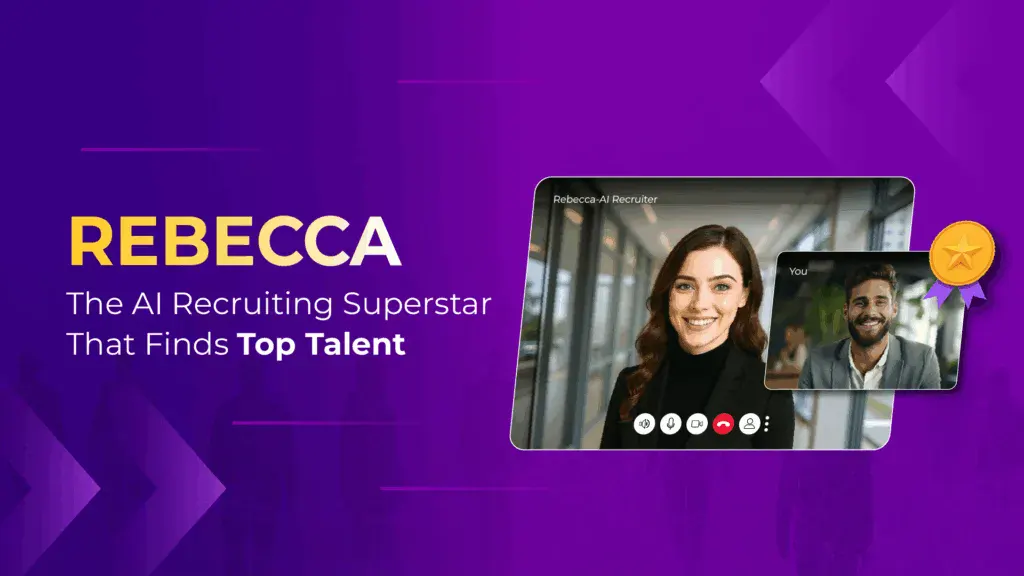
Remember the dark ages of recruitment? Recruiters spent 40+ hours per week manually dialing candidates who never answered, sifting through hundreds of identical resumes, and conducting repetitive screening calls. All to lose top talent to competitors who moved faster. That process is brutal, inefficient, and time-wasting—turning your skilled talent acquisition professionals into exhausted administrative workers. But now those days can be over. AI recruitment tools have transformed talent acquisition from that resource-intensive grind to an intelligent, scalable operation. And this is where Rebecca shines. In this blog, we profile Rebecca and how she automates candidate screening, gives real-time assessments, and conducts effective video interviews that eliminate the bottlenecks. With Rebecca, you can improve candidate quality and experience, lower costs, and save your recruiters. Who Is Rebecca? And What Does She Do? Rebecca is Pete & Gabi’s specialized AI recruiting agent and interviewer, and she’s been designed purely to solve talent acquisition challenges. Unlike generic AI tools that handle multiple business functions, Rebecca focuses solely on finding, evaluating, and qualifying talent through conversations and assessments. Here’s a quick breakdown of her core capabilities: Instant candidate engagement: Rebecca contacts applicants within minutes of submission, eliminating the “application black hole.” Initial candidate screening: She engages applicants in natural, structured conversations to uncover role-specific details and filter out mismatches early. Intelligent video interviews: She conducts face-to-face interview assessments with both technical challenges and soft skill evaluation. Real-time candidate scoring: She provides objective, bias-free assessments based on role-specific criteria in real-time. Automated pipeline management: Rebecca handles scheduling, follow-ups, and candidate nurturing automatically. Seamless ATS integration: She also syncs all interaction data, scores, and recommendations with your existing systems, ensuring you can make data-driven decisions on demand. Ultimately, Rebecca acts as a tireless AI recruiting partner, screening hundreds of candidates simultaneously while maintaining conversation quality that rivals your best human recruiters. She delivers only pre-qualified candidates who meet your specifications, allowing your recruiters to focus on the top talent. What Are the Recruitment Challenges Rebecca Solves? The operational chaos and systematic failures that traditional recruitment teams experience cost organizations millions in lost productivity and missed opportunities. Let’s look at how Rebecca solves them. Application Overload Drowns Your Recruitment Teams Traditionally, recruiters received hundreds of applications daily, but with AI tools in use on the candidate side, the volume of submissions is snowballing. For even the least popular of positions, it can be too great a volume for human recruiters to keep up with. And without the capacity to engage quickly, high-quality prospects either get buried in queues or snapped up by the competition. All while your recruiters are manually sifting unqualified submissions. Specified AI recruiters like Rebecca solve this problem by processing and instantly engaging hundreds of candidates simultaneously. Long Time-To-Hire While Quality Candidates Slip Away Another issue is the long time-to-hire from extensive manual candidate screening cycles. With clogged pipelines, these hiring cycles lead to top talent accepting offers elsewhere before you can even complete initial screenings. Rebecca compresses qualification by conducting immediate screening conversations and delivering interview-ready candidates within hours rather than weeks. Manual Screening Bottlenecks Limit Team Capacity Most human recruiters can only conduct about 20 meaningful screening calls daily. In a fast-paced industry where recruitment teams receive hundreds of applications per day, this slow, manual screening process constrains capacity and limits hiring speed. Deploying Rebecca as an AI interviewer kicks this into gear. She conducts hundreds of simultaneous screening conversations without quality degradation, eliminating bottlenecks that prevent scalable talent acquisition. Inconsistent Evaluation Creates Hiring Mistakes Even the best human recruiters can be influenced by personal bias. And everyone has good days and bad days. But this, coupled with high pressure deadlines, can lead to uneven candidate assessments and costly hiring mistakes. One recruiter’s yes could be another’s maybe, and these disparities lead to talent mismatches and pipeline delays. Rebecca provides consistent evaluation and eliminates this problem. With her handling candidate screening and assessment, every applicant gets the same experience. Each gets identical, role-specific evaluations with real-time, objective scoring. Rebecca greatly aids in eliminating bias and enabling decisions driven by data—not mood swings. Cost-Per-Hire Keeps Rising Quality and experience cost money. And human labor, essential for closing deals, requires additional overhead and brings more unpredictable outcomes when wasted in every stage of the process. People are also slower, and the longer the hiring cycle, the more expensive it becomes. AI recruiters like Rebecca slash these expenses by automating early-stage screening, prequalification, and follow-up. They free your recruiters to spend their time on high-value conversations with interview-ready candidates. They also reduce operational costs dramatically, accelerate hiring speed, and deliver a far lower cost-per-hire without sacrificing quality. Keep reading as we walk you through Rebecca’s hiring process and how it is a game-changer. Rebecca’s AI-Powered Talent Discovery Process Rebecca offers recruitment teams an intelligent and comprehensive talent discovery package that identifies, evaluates, and delivers top candidates. Here’s what the workflow of that AI hiring solution looks like. 1. Intelligent Candidate Outreach Rebecca initiates contact within minutes of application submission, capturing candidates while interest is peak and before competitors respond. She holds natural conversations that help candidates feel at ease, immediately engaging them in meaningful dialogue about career goals and role fit. Through multi-channel outreach including voice calls and email follow-ups, Rebecca ensures no qualified candidate slips through the gaps. 2. Comprehensive Screening and Assessment Rebecca conducts sophisticated evaluations that adapt based on responses and role requirements. For technical positions, she presents conversational coding challenges and assesses problem-solving approaches. At the same time, she’s gauging communication skills by analyzing speech patterns, response structure, and engagement levels to predict cultural fit and team compatibility. With Rebecca’s AI-powered recruitment system, assessments align with company-specific criteria, ensuring candidates not only meet requirements but match organizational culture and values. 3. Real-Time Candidate Scoring and Ranking Rebecca’s evaluation metrics eliminate the inconsistencies that plague human screening. She provides reliable assessments regardless of recruiter availability or energy levels. Rebecca also provides objective scoring across data points to identify candidates with highest
Candidate Outreach AI Tools: Top Features That Are Helping Recruiters Dominate
Picture this: Your open role just went live. Within minutes, an AI voice agent is already on the phone—calling, speaking to, and screening hundreds of potential candidates at once. We’re talking about natural, human-like conversations happening on autopilot. And by the time your team logs in, interviews have already been booked with the best-fit candidates. No back-and-forth. No wasted hours sifting through unqualified leads. This isn’t a glimpse into the future—it’s what AI-powered candidate outreach tools are doing right now. In this blog, we’ll break down how candidate outreach AI tools work, the powerful features behind them, and how to integrate them into your hiring workflow. If you’re looking to speed up your recruitment process and boost your team’s productivity, this is where you start. What Are AI Candidate Outreach Tools? AI candidate outreach tools are advanced AI-powered recruitment tools designed to automate and improve how recruiters connect with talent. Instead of relying solely on cold calls and manual follow-ups, these tools use AI call agents to handle outreach at scale. The best part? These AI-driven call agents hold natural, human-like conversations, ask context-aware questions, and respond or pivot depending on candidate responses. Most AI outreach tools combine multiple capabilities in one solution, including: Whether through voice, chat, or multichannel outreach, AI outreach tools engage candidates, qualify them, and move them forward in your pipeline automatically. And with these tools doing the heavy lifting to provide your hiring team with a shortlist of qualified and interview-ready candidates, you effectively cut down on hours wasted chasing prospects on the phone or starting cold conversations. Core Features That Power Modern Candidate Outreach Tools AI-driven candidate outreach isn’t just about reaching people faster. It’s about making every conversation count—at scale. The best AI tools combine human-sounding conversations with machine-level precision, helping recruiters cover more ground, faster, and with zero drop in quality. Here are some of the features that drive AI-driven candidate outreach tools: Fully conversational voice outreach AI voice agents hold natural, two-way phone conversations with candidates. No scripts, no robotic pauses. Instead, they listen and respond in real-time, handling everything from initial outreach to rescheduling requests like a human recruiter would. Personalized outreach automation These tools don’t just blast the same message to everyone. They come up with tailored, context-relevant responses to candidates based on what they say and what recruitment stage they’re in. This boosts candidate engagement rates. Sentiment analysis It’s not just what candidates say—but how they say it. AI detects tone, hesitations, and sentiment in voice or text, giving your team insights into interest level, objections, or concerns. That means smarter follow-ups, not just faster ones. Instant screening and pre-qualification AI-powered outreach tools also instantly qualify candidates based on your pre-set criteria—from experience levels to required skills, location, and more. You get shortlisted prospects with the qualities you want, ready for the next step. Everyone else? Filtered automatically. Analytics dashboards Another feature of modern AI outreach tools is a metrics dashboard that shows you exactly what’s working and what’s not. You track screening success, candidate insights, time-to-interview, and more. These eliminate guesswork and offer clear, recruiter-friendly insights that help double down on what moves the needle. Smart scheduling and follow-up Whether it’s booking interviews or rescheduling them, AI tools keep things moving. Reschedule instantly after a no-show, send reminders, and follow up when candidates engage. It’s like having an assistant who’s always available and never drops the ball. CRM + ATS integration Outreach only works if it’s tracked. As a result, AI candidate outreach tools offer seamless integration with your ATS or CRM, ensuring that every interaction is logged, every result is measurable, and your team isn’t toggling between systems. What Problems Do AI Candidate Outreach Tools Solve? Manual outreach is slow, tiring work. And while it’s happening, the great talent gets snapped up by the competition. And all that wasted time equals more revenue lost. AI-powered candidate outreach tools fix these gaps—fast. Here are some of the operational problems in recruitment that AI outreach tools solve: Volume vs. quality dilemma While blasting hundreds of messages helps you reach more prospects, it sacrifices personalization—which may lead to lower engagement rates. But AI-powered candidate outreach tools scale outreach while personalizing every interaction with each candidate. Slow time-to-first-touch rates The longer it takes to reach out, the colder the candidate gets. AI outreach tools eliminate this lag with real-time responses the moment a potential candidate applies or shows interest. Consistency issues While your recruitment team may be excellent, the human factor means that they’re not at 100% everyday—which can hurt your business. But AI outreach tools provide every candidate with the same high-quality, on-brand experience. Every single time. Scalability limitations Hiring more recruiters to scale outreach isn’t sustainable—from overhead costs to limited office space. With AI tools, you expand your reach without driving operations costs sky high. Choosing the Best AI Candidate Outreach Tool for Your Recruiters Every AI platform promises speed, automation, and better hires. But not all tools are built the same—and not all are useful to recruitment teams. The best AI candidate outreach tools feel like a team extension instead of a clunky dashboard to babysit. Here are tips to help you pick an effective AI outreach tool: Introducing Rebecca: Your Superstar AI Recruiter Meet Rebecca, Pete & Gabi’s recruitment-focused AI voice agent that transforms how organizations connect with, evaluate, and hire talent. Unlike generic AI platforms that try to do everything, Rebecca specializes exclusively in recruitment challenges. She brings laser-focused intelligence to every stage of your candidate engagement process. Rebecca initiates contact with candidates, conducts comprehensive pre-qualification screening tailored to specific role requirements, and generates detailed scoring reports that include qualification assessments and recommendations for your human hiring team. Bottom line? Rebecca filters out unqualified applicants before they consume your team’s valuable time. Rebecca’s operational efficiency extends to complete interview coordination—automatically scheduling qualified candidates directly into your interview pipeline. The best part? She can actually conduct video interviews with the intuition of your most experienced
AI-Driven Candidate Outreach Calls: A Game-Changer for Recruiters
The biggest bottleneck in modern hiring isn’t finding candidates—it’s the manual, time-intensive process of initial outreach and qualification. While job boards and LinkedIn have solved the discovery problem, the human hours required to call, screen, and qualify candidates remain a massive drain on recruitment teams. And with growing industry-wide competition for top talent, it’s no surprise that traditional outreach methods are struggling to hit the mark. This is where AI-driven candidate outreach calls come into play. In this article, we’ll explore what AI candidate outreach is and how it is helping recruitment teams break free from the endless cycle of manual screening. It lets them focus their expertise where it matters most—closing top candidates. You’ll also discover the specific AI-powered recruitment solution that’s helping recruitment leaders cut their time-to-hire by up to 80%. What Are AI-Powered Candidate Outreach Calls? AI-powered candidate outreach calls are automated phone conversations driven by artificial intelligence. They simulate human-like dialogue with job candidates, and unlike automated dialers or pre-recorded messages, are handled by AI voice agents who engage in natural, context-aware, two-way conversations. AI candidate outreach calls represent a fundamental shift from traditional recruitment processes, helping handle the initial touchpoints that typically consume so many hours of recruiter time. They introduce available roles, clearly explaining position requirements, expectations, and growth opportunities. More importantly, AI recruiting assistants excel at pre-qualifying candidates by asking targeted questions about experience, availability, salary expectations, and specific skills. The best part? They can operate at scale without sacrificing personalization. While a human recruiter may be able to complete 15 to 20 meaningful candidate conversations per day, AI agents can do hundreds, automatically shortlisting top candidates and updating your ATS with detailed interaction summaries. By handling first-touch outreach, AI call agents help recruiters save hours and keep their pipelines moving while ensuring no qualified talent slips through the cracks. How AI-Powered Outreach Is Changing the Recruitment Game What if your recruitment team never had to choose between speed and quality? That’s the promise of AI in recruitment. Here are some ways AI candidate outreach is transforming hiring workflows. 24/7 Candidate Engagement AI outreach agents eliminate the “ghosting” experience that many candidates fear by initiating contact within minutes of application submission. With automated candidate calls, there’s no lag between a candidate applying and hearing back. Calls go out instantly, 24/7—even outside working hours. Whether it’s midnight or midday, AI ensures candidates are engaged at their peak moment of interest. And while competitors are leaving candidates wondering if their resume was even received, you are already conducting screenings and scheduling interviews. This immediate response dramatically increases engagement, especially with top-tier talent who often receive multiple offers and appreciate rapid, professional communication. Scale without Compromise Traditional candidate outreach is limited by human capacity. After all, even the most productive recruiter can only make so many quality calls per day. But AI hiring assistants effortlessly scale to contact hundreds or thousands of candidates simultaneously, while maintaining conversation quality regardless of volume. This means you can pursue every qualified lead in your pipeline rather than prioritizing based on recruiter availability. As a result, you’re less likely to miss out on potentially great candidates due to bandwidth. Consistency in Every Interaction With automated candidate calls, every applicant hears gets the same details and is asked the same questions—no matter when they’re contacted. This eliminates the risk of slip-ups, rushed conversations, or incomplete information. While human recruiters have good and bad days, use varying energy levels, and can be affected by various day-to-day occurrences, AI agents do not. Every candidate receives the same high-quality experience—from conversational tone to information accuracy. Seamless Workflow Integration Modern AI outreach systems automatically sync conversation data, candidate responses, and qualification details directly into your existing ATS and CRM platforms. This means no manual data entry, no missed notes, and no information silos. And when recruiters get the details of shortlisted applicants, they come with comprehensive candidate profiles with interaction notes, interest levels, and next-step recommendations, allowing them to focus on relationship-building rather than administrative tasks. Introducing Rebecca: Your AI Recruiter On-Call Rebecca is Pete & Gabi’s specialized AI-powered voice agent designed exclusively for recruitment. While many AI tools offer generic conversation capabilities, Rebecca is laser-focused on one mission—improving how your organization engages and qualifies talent. So what does Rebecca do? Built to optimize your hiring workflow, Rebecca plugs directly into your organization’s recruitment ecosystem. She integrates with ATS platforms to automatically update candidate profiles with detailed interaction summaries, qualification scores, and next-step recommendations. Based on these comprehensive candidate reports, your human recruitment team can then focus on building relationships with pre-qualified, engaged candidates. Integrating AI-Powered Candidate Outreach into your Recruitment Workflow The most successful recruitment teams aren’t choosing between AI and human recruiters. Instead, they’re strategically combining both to create a hiring machine that’s faster, more efficient, and delivers better results than either could achieve alone. By offloading first-contact calls and basic screening to human-like AI call agents like Rebecca, recruiters get hours back in their day to focus on what really drives hires—engaging interviews, strategic offers, and excellent candidate relationships. Here’s a quick rundown of what you gain with an AI-powered candidate outreach system: Remember, when AI recruitment automation takes care of the high-volume heavy lifting, your human recruiters can focus on the high-value moments that close the best talent. The Bottom Line Manual candidate outreach is no longer sustainable in today’s competitive talent market. While your team struggles with capacity limitations and delayed responses, top candidates choose employers who engage them immediately with professional, consistent communication. AI-driven candidate outreach levels this playing field by delivering instant, personalized, and high-volume first-touch candidate calls without burning out your hiring team. And with Rebecca handling everything from instant candidate contact and intelligent screening to interview scheduling and ATS updates, your recruiters can focus on closing deals with pre-qualified, engaged talent. Let your recruiters build relationships—not chase first-touch calls. Schedule a demo today to see how Rebecca can supercharge your outreach and help fill roles
Top 5 Trends Staffing and Recruitment Leaders Need to Know About in 2025
As we are progressing through 2025 and beyond, the staffing and recruitment industry in the United States is undergoing significant transformation. Emerging technologies, shifting workforce demographics, and policy changes under the new administration are expected to significantly reshape the staffing landscape. This article explores current and projected trends, examining how the industry may be impacted and how staffing leaders can stay ahead of the competition in such a competitive market. Trend 1: Emerging Use of Client Acquisition and Candidate Outreach AI Tools AI-powered automated calling and communication tools are revolutionizing the recruitment industry–enhancing recruitment efficiencies, improving the candidate experience, streamlining client acquisition, and most importantly driving ROI. By automating routine calls, such as vetting candidates and client outreach, AI tools strategically shift the focus of staffing leaders to higher-value tasks like closing open roles, managing client and candidate relationships, and acquiring new clients. These tools are transforming recruitment in two key areas: How it is helping leaders to maximize ROI and improve the outbound experience: Statistical insights: Using various AI tools, staffing agencies can streamline their recruitment processes and enhance their ROI by lowering the costs per hire and speeding up the hiring cycle and client acquisition process. Trend 2: Rise in Data-Driven Recruitment Strategies and Predictive Analytics Data-driven recruitment strategies will continue to dominate the staffing industry in 2025. By leveraging big data and predictive analytics, staffing agencies can make more informed decisions on candidate sourcing, skill-matching, and workforce planning. How implementing data-driven strategies can improve ROI: Statistical insights: According to LinkedIn’s Global Talent Trends 2023 report, companies that leverage data analytics during recruitment improve their talent retention by 50%. Additionally, companies using predictive analytics see a 30% reduction in hiring costs. By integrating these data-driven methods, staffing agencies can significantly boost their ROI by making smarter, faster, and more cost-effective decisions and delivering higher-level value to clients. Trend 3: The Personalized Candidate Experience is Here to Stay Creating a personalized candidate experience is no longer a luxury but a necessity for staffing agencies. In 2025, automated communication tools, including chatbots and AI-driven email campaigns, will enable agencies to engage candidates at scale while maintaining a personalized touch. How automated communication drives ROI: Statistical insights: A report by McKinsey & Company found that organizations using automated communication tools saw a 23% increase in candidate engagement and a 15% reduction in hiring costs. By investing in automation technologies, staffing agencies can improve their candidate engagement while reducing recruitment costs, directly boosting ROI. Trend 4: Video Interviewing Technology Continues to Gain Traction Video interviewing is not going away in recruitment, especially as agencies seek faster, more cost-effective ways to evaluate candidates. In 2025, agencies that embrace video interviewing technology will be able to make better judgements on candidates and offer a more efficient experience for both clients and candidates. How video interviewing improves ROI: Statistical insights: According to a PwC survey, 82% of staffing agencies using video interviewing technology report faster hiring times, while 61% claim it significantly reduces recruitment costs. Trend 5: Expect Bold Changes in Governmental Policy In the US, the new administration’s policies are anticipated to influence the staffing industry in several ways over the coming years. While this is not a trend, the changes below will impact the recruitment industry and how it moves forward.