
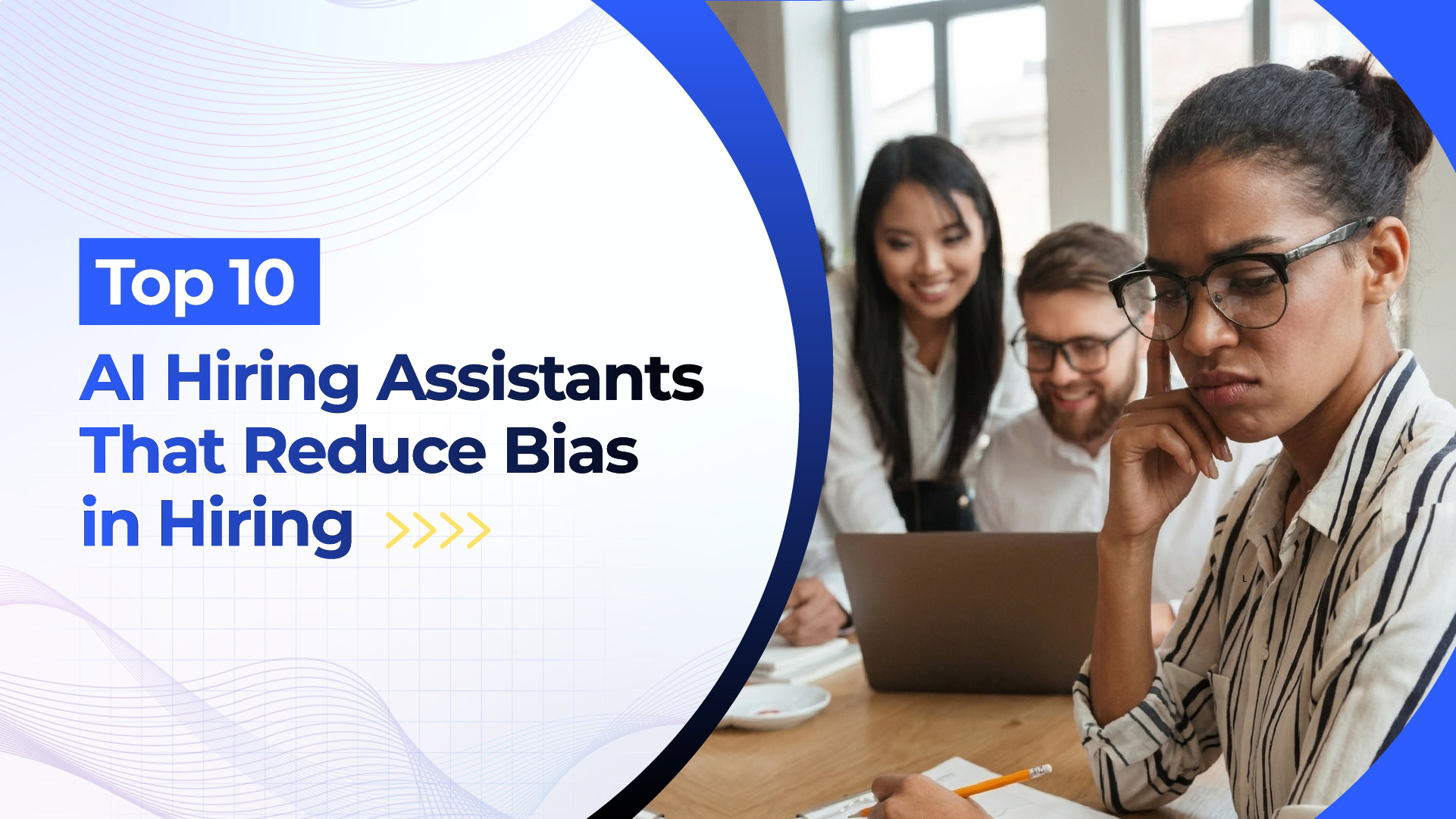
What happens when an average corporate job posting attracts 250 resumes? How much time does a hiring manager spend on each one? Only six seconds. You read that right. Candidates pour their entire professional journey onto their resumes, customizing them per description, crafting cover letters, and submitting a long questionnaire repeatedly. If reading about it feels exhausting, imagine how draining it must be for candidates in an already daunting job market.
The sheer volume leads to pattern recognition disguised as judgment, which is another way of saying bias. The name on a resume, the zip code in the address, the university on the degree, all of it gets filtered through decades of unconscious preference before a single interview is scheduled.
Precisely why AI recruiting tools were created. Because the human brain, however brilliant, was never designed to evaluate 250 strangers with fairness and consistency at scale. The best AI recruiting software in the market today are specifically engineered to take the gut feeling out of early-stage hiring, replacing it with structured data, consistent questioning, and bias-flagging that most hiring managers don’t even know they need.
If your recruiting team is losing diverse candidates to dropout before the first human conversation, or if your hiring managers can’t explain why two identically qualified candidates got different treatment, this list is for you. Here is what we found.
Best AI Hiring Assistants for Bias Reduction
- Rebecca AI by Pete & Gabi: Best overall voice AI recruiter for structured, bias-free screening at scale
- HireVue: Best structured video interviewing for enterprise teams
- Paradox AI (Olivia): Best conversational AI for high-volume intake and speed-to-screen
- Eightfold AI: Best talent intelligence platform for skills-based, pedigree-blind sourcing
- Interviewer.AI: Best async video screening with explainable scoring for SMBs
- Alex by Apriora: Best real-time AI interviewer for technical role screening
- Ribbon AI: Best async screening with built-in bias reporting for growing teams
- Converse AI: Best multi-channel recruiting chatbot for global hiring operations
- Converze AI: Best voice and chat AI for structured outbound candidate outreach
- Fetcher.ai — Best AI sourcing platform with live diversity analytics
Comparison Table: Top 10 AI Hiring Assistants for Bias Reduction (2026)
| Tool | Type | Bias-Reduction Method | Best For | Standout Feature | Pricing Model |
| Rebecca AI by Pete & Gabi | Voice AI Recruiter | Identical structured voice questions for every candidate | High-volume, all industries | Real-time voice AI screening, 24/7 | $4-$8/ per 30-minute interview (depending on scenarios) |
| HireVue | Video Interview Platform | Psychology-backed structured assessment; no facial AI | Enterprise hiring | Game-based cognitive assessments | Enterprise contract |
| Paradox AI (Olivia) | Conversational AI Chatbot | Standardized intake; removes early-stage human variability | High-turnover industries | Sub-minute scheduling via chat | Custom pricing |
| Eightfold AI | Talent Intelligence Platform | Skills-inference removes pedigree bias at source | Skills-based hiring | Potential-matching over credentials | Enterprise contract |
| Interviewer.AI | Async Video Screening | Structured questions; non-appearance, explainable scoring | SMB and remote teams | Transparent AI scoring logic | Tiered SaaS |
| Alex by Apriora | Real-Time AI Interviewer | Dynamic structured interviews with consistent rubrics | Technical roles | Adaptive follow-up questions | Not publicly listed |
| Ribbon AI | Async Video + Intelligence | Consistent evaluation + cohort-level bias reporting | Series A–C companies | Bias reporting dashboard | Tiered SaaS |
| Converse AI | Recruitment Chatbot | Standardized multi-channel screening across regions | Global hiring teams | Multi-platform deployment | Custom pricing |
| Converze AI | Voice + Chat AI Agent | Structured outreach scripts; consistent early engagement | Outbound sourcing | AI-driven passive candidate outreach | Not publicly listed |
| Fetcher.ai | AI Sourcing Platform | Automated diverse sourcing + real-time diversity analytics | Proactive diversity sourcing | Live diversity metrics on slates | Tiered SaaS |
What is an AI hiring assistant, and why does bias reduction matter now?
An AI hiring assistant is a software that automates one or more stages of recruitment such as sourcing, screening, interviewing, scheduling, using machine learning, conversational AI, or voice synthesis. Unlike legacy ATS systems that track applications, modern AI recruiting tools actively score candidates, flag inconsistencies in evaluation, and enforce structured question delivery that removes the variability human screeners introduce.
The bias case is not abstract. A 2021 study published in Nature Human Behavior found that identically qualified candidates with stereotypically Black names received 36% fewer callbacks than those with stereotypically white names. This was not a study of bad companies. They were ordinary ones.
The global market for AI-powered recruitment software is growing fast, projected to reach $1.1 billion by 2030, but growth does not equal quality. Many platforms claim bias reduction while running keyword-matching on top of historically skewed training data. The tools that genuinely move the needle have made structural choices: standardizing the questions asked, removing appearance-based signals, and building audit trails that let talent teams actually see where disparities enter.
The best AI screening platform for your organization depends on where bias enters your specific funnel. This list covers sourcing, intake, live interviewing, and async screening because the problem shows up at all of them.
Best AI Hiring Assistants for Bias Reduction in 2025: Ranked by Consistency, Candidate Experience, and Structured Data Quality
1. Rebecca AI by Pete & Gabi: Best Overall AI Recruiter Agent for Structured, Bias-Free Hiring
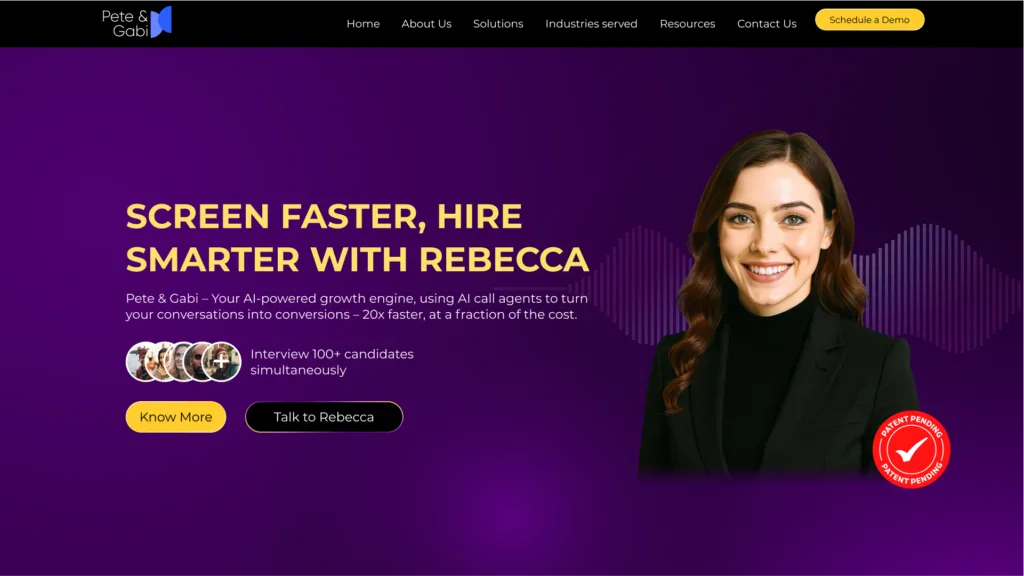
What it does: Conducts real-time voice screening calls with candidates using structured, pre-defined questions, then scores and summarizes each conversation against the job criteria.
Who it’s for: Talent teams running high-volume hiring in logistics, retail, healthcare staffing, contact centers, and any sector where recruiter capacity is the bottleneck.
What separates Rebecca AI from everything else on this list was not a feature. It was behavior. Candidate 1 and Candidate 147 received the same questions, the same pacing, the same neutral tone. A human screener doing 147 calls would have introduced dozens of small variations long before that point. Rebecca AI did not.
Because every candidate hears identical questions in identical sequence, delivered by the same voice, the variability that normally enters at the screener stage such as a rushed recruiter, an unconscious preference for a certain accent, a Friday afternoon, is structurally removed. Rebecca AI scores candidates against the job requirements, not against each other or against a human’s fluctuating attention.
The voice quality is natural enough that candidates engage rather than disconnect.
Rebecca AI built by Pete & Gabi is designed to integrate with existing ATS infrastructure without requiring months of implementation. For recruiting automation software at a genuine scale, this is the most complete bias-reduction AI hiring tool.
Pros
- Every candidate receives the same questions in the same order from the same voice; consistency that no human screener can match at volume
- Available 24/7, which keeps candidates who can’t call during business hours in the funnel
- Structured scoring against job criteria, not relative comparison between candidates
- ATS integration routes scored summaries directly to hiring managers
- Reaches candidate populations who prefer phone over chat-based intake tools
- Deployment does not require months of professional services
Cons
- Voice AI format may feel unfamiliar to some candidate populations
Pricing: $4-$8/ per 30-minute interview (depending on scenarios); Pricing is structured to accommodate both SMB and enterprise hiring volumes.
Best for: High-volume roles, bias-conscious talent teams, any organization scaling recruitment without scaling recruiter headcount
2. HireVue: Best Structured Video Interviewing for Enterprise Hiring
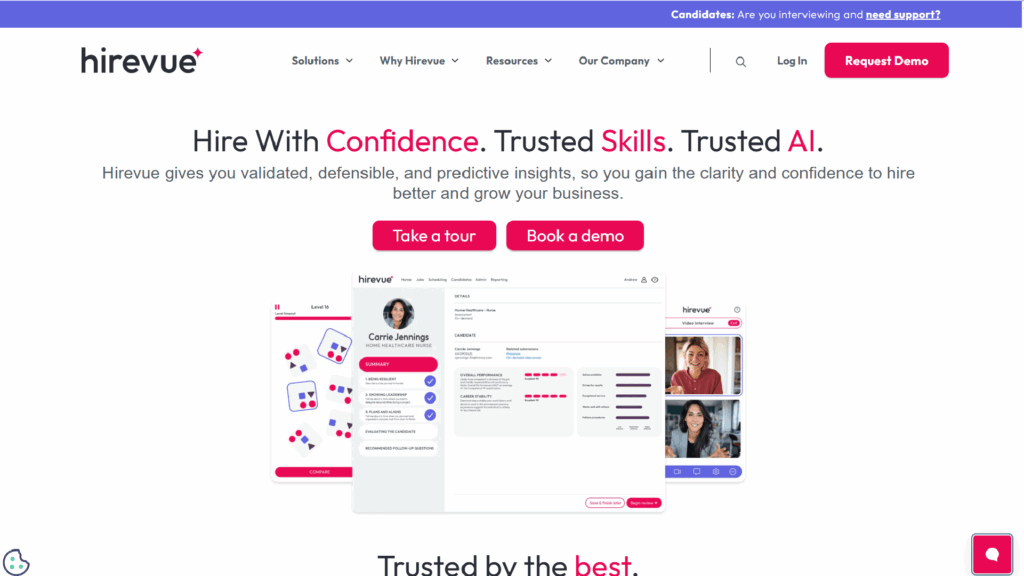
What it does: Delivers structured asynchronous video interviews and game-based cognitive assessments to enterprise candidates, with psychology-backed scoring.
Who it’s for: Large enterprises running competency-based hiring across multiple departments and geographies.
HireVue facial expression analysis feature drew legitimate criticism, and the company removed it in 2021. What remains is a solid structured video interview platform built on psychology principles: every candidate answers the same questions, evaluated against the same rubric, with scoring that does not factor in how someone looks.
The game-based cognitive assessments added what the video questions alone couldn’t provide, a measure of cognitive pattern that is genuinely independent of pedigree. A candidate from a state school and a candidate from a target school playing the same game produce directly comparable data. However, implementation takes time.
Pros
- Psychology-backed structured interview design with documented bias audit methodology
- Game-based cognitive assessments that measure ability independently of educational background
- Enterprise-grade ATS integrations and compliance documentation
- Removed appearance-based AI features following external scrutiny, a credibility signal
Cons
- Implementation timelines and pricing reflect enterprise positioning; not accessible for SMBs
- Asynchronous video format has higher candidate drop-off than real-time alternatives for some demographics
Pricing: Custom enterprise pricing (quote-based)
3. Paradox AI (Olivia) — Best Conversational AI for High-Volume Intake
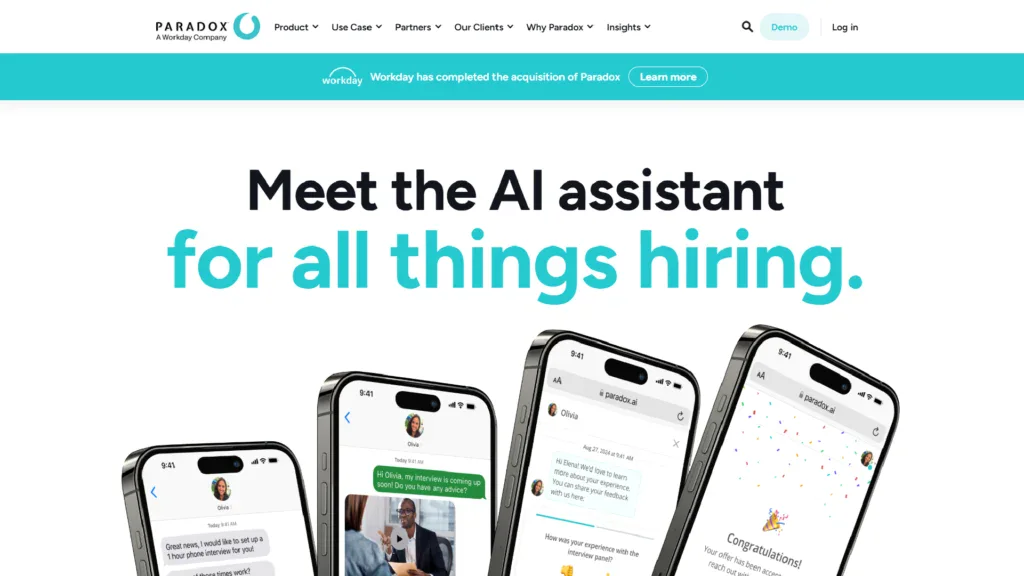
What it does: Chat-based conversational AI that handles candidate intake, structured screening questions, interview scheduling, and onboarding reminders.
Who it’s for: High-volume, high-turnover industries including retail, hospitality, logistics, light manufacturing where candidate speed and dropout are the primary problems.
With Olivia, the conversational intake starts within seconds of application submission, asked standardized screening questions through a chat interface, and for candidates who qualified, offered an interview slot from the hiring manager’s calendar immediately. I completed the full intake-to-scheduled interview flow in under four minutes on a mobile browser.
The bias reduction here operates at the intake layer. Every candidate answers the same questions before a human reviewer touches the file. What Olivia does not do is conduct the kind of deep structured screening that, for example, Pete & Gabi’s Rebecca’s voice AI provides, the questions are lighter, the interaction more transactional. But for roles where the primary bias risk is dropout and uneven recruiter attention at intake, Olivia addresses that cleanly.
Pros
- Reduces time-to-interview, keeping diverse candidates in the funnel longer
- Mobile-first chat interface reaches candidate populations with limited computer access
- Consistent screening questions at intake, regardless of which recruiter would have been assigned
- Strong ATS integrations with major platforms
Cons
- Screening depth is lighter than voice AI or structured video alternatives
- Chat interface is less natural for candidates who prefer phone communication
Pricing: Custom pricing
4. Eightfold AI: Best Talent Intelligence for Skills-Based, Pedigree-Blind Sourcing
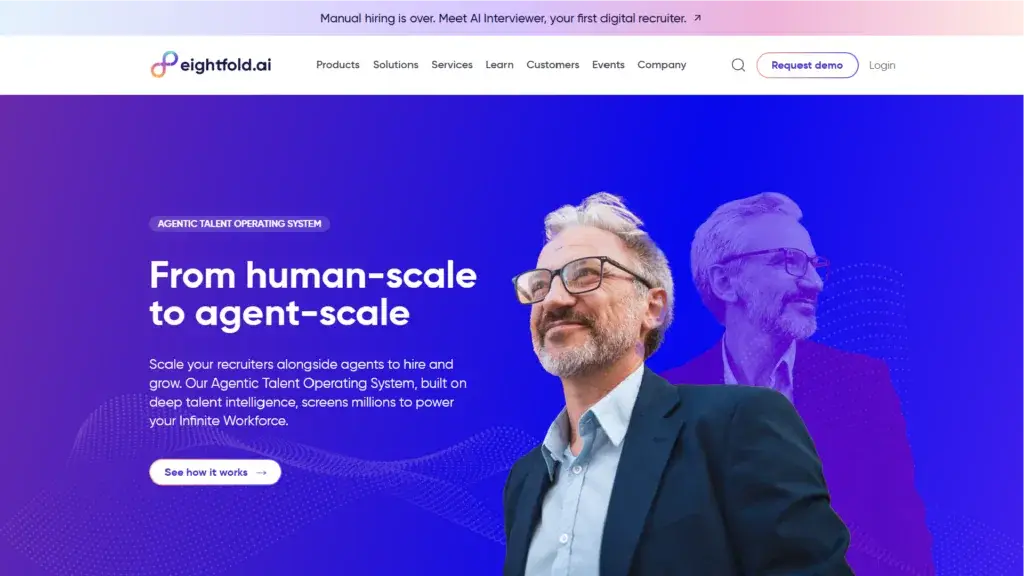
What it does: Deep learning platform that matches candidates to roles based on demonstrated skills and inferred potential, explicitly de-emphasizing university names and previous employer brands.
Who it’s for: Organizations committed to skills-based hiring strategies and companies trying to surface talent that keyword-based ATS systems systematically miss.
Overall
Eightfold operates at the sourcing layer, before any human selects. Most AI sourcing tools find the candidates who already mirror your existing employees. Eightfold’s skills-inference engine is built to break that pattern. It maps what someone can do from evidence across their career, not from whether they attended a school on your recruiter’s mental shortlist.
However, implementation requires investment. Eightfold is not a tool you configure in a day, and it performs better as it ingests more of your internal talent data. The payoff is a sourcing layer that genuinely expands who gets considered.
Pros
- Skills-inference engine identifies qualified candidates that keyword searches miss
- Explicit de-emphasis on pedigree signals (employer brand, school name) in matching
- Talent rediscovery features surface past applicants and former employees
- Strong documentation on how matching decisions are made
Cons
- Enterprise implementation timeline; not accessible for smaller teams
- Performs best with significant internal talent data to train against
Pricing: Enterprise contract
5. Interviewer.AI: Best Async Video Screening with Explainable Scoring for SMBs
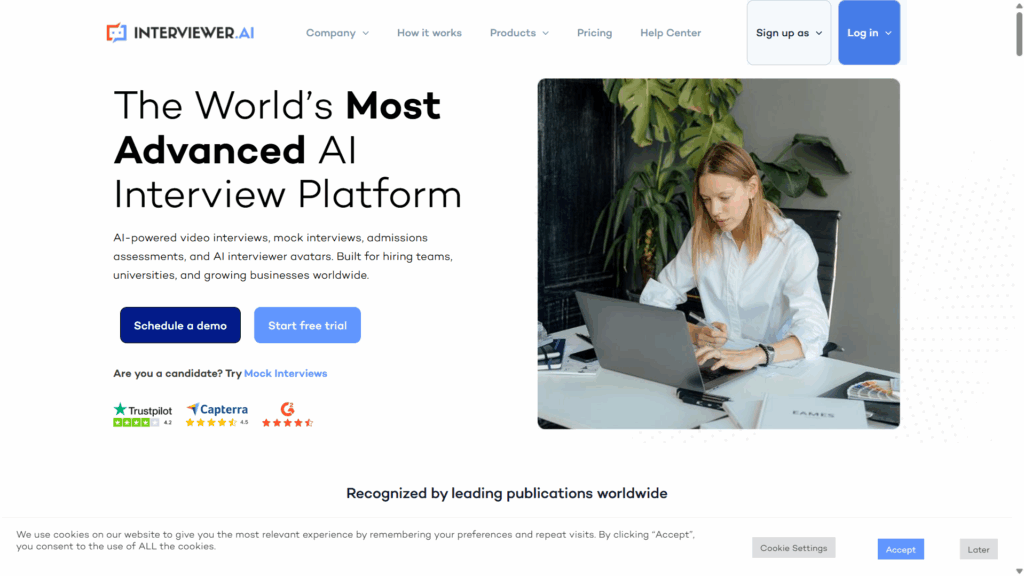
What it does: Asynchronous video screening platform where candidates record responses to pre-set questions, evaluated by AI against communication and response to quality metrics.
Who it’s for: Small to mid-market teams who want structured screening without enterprise price tags or implementation timelines.
What earned Interviewer.AI its place on this list is the explainability of its scoring. Reviewers can see why a candidate received a particular score, which specific elements of their responses drove the evaluation. If a recruiter cannot understand why a candidate was ranked lower, they cannot catch an error or challenge an unfair outcome. Interpretable scoring is a bias accountability mechanism.
The platform’s evaluation focuses on communication clarity, response structure, and relevance, things that can be described and defended to a candidate or a legal reviewer.
Pros
- Explainable scoring that keeps human reviewers accountable to the AI’s reasoning
- No appearance-based signals in the evaluation model
- Fast deployment, accessible pricing, no professional services required
- Consistent structured question delivery to every candidate
Cons
- ATS integration options are narrower than enterprise platforms
- Async format has limited ability to probe or follow up on interesting answers
Pricing: Tiered SaaS
6. Alex by Apriora: Best Real-Time AI Interviewer for Technical Roles
What it does: Conducts live, dynamic AI conversations with candidates, adapting follow-up questions based on what candidates say while maintaining consistent scoring rubrics.
Who it’s for: Engineering, data science, and research teams that need structured screening but find static async video formats too rigid for technical conversations.
Alex is doing something different from the async video tools on this list. When a candidate gives an interesting answer, Alex follows up. When a candidate gives a vague answer, Alex probes. This mirrors the actual experience of a good technical interview while maintaining structural consistency because the scoring rubric is fixed even as the conversation adapts.
Bias reduction is built into the rubric layer rather than into a rigid question sequence. Every candidate is evaluated against the same criteria regardless of the conversational path taken to get there.
Pros
- Dynamic follow-up questions produce richer screening data than static formats
- Consistent scoring rubrics applied across variable conversation paths
- Better candidate experience for technical professionals who find async video awkward
- Structured behavioral probing maintains fairness without sacrificing depth
Cons
- Adaptive AI conversation requires more careful rubric configuration than static tools
- Pricing and availability require direct engagement with Apriora
Pricing: Not publicly listed
7. Ribbon AI: Best Async Screening with Bias Reporting for Growing Teams
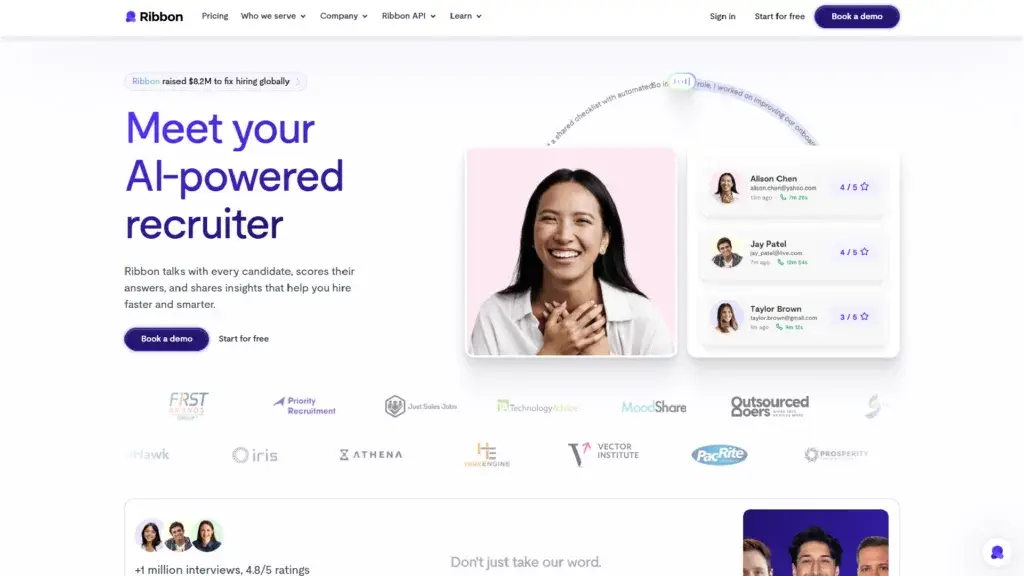
What it does: Combines async video interviews with candidate intelligence features and cohort-level bias reporting built into the dashboard.
Who it’s for: Series A to Series C companies with lean talent teams that have outgrown manual screening but can’t yet justify enterprise AI recruiting software costs.
Most bias-reduction tools on this list tell you what they’re doing to prevent unfairness at the screening stage. Ribbon tells you what actually happened afterward. The cohort-level bias reporting built into the dashboard surfaces patterns across candidate groups, if a particular demographic is systematically scoring lower in screening, the data surfaces it in real time rather than waiting for a retrospective DEI audit.
The screening experience itself is standard async video with consistent question delivery. The candidate intelligence layer tracks response quality and behavioral signals across the application process. Setup is fast relative to enterprise alternatives.
Pros
- Cohort-level bias reporting turns bias detection from a retrospective audit into a real-time signal
- Accessible pricing and deployment timelines for non-enterprise teams
- Consistent evaluation process across every candidate
- Behavioral signal tracking beyond the video response itself
Cons
- Screening depth is limited compared to real-time AI interview alternatives
- Reporting is only as useful as the volume of data passing through it; smaller pipelines produce noisier signals
Pricing: Tiered SaaS
8. Converse AI: Best Multi-Channel Chatbot for Global Hiring Operations
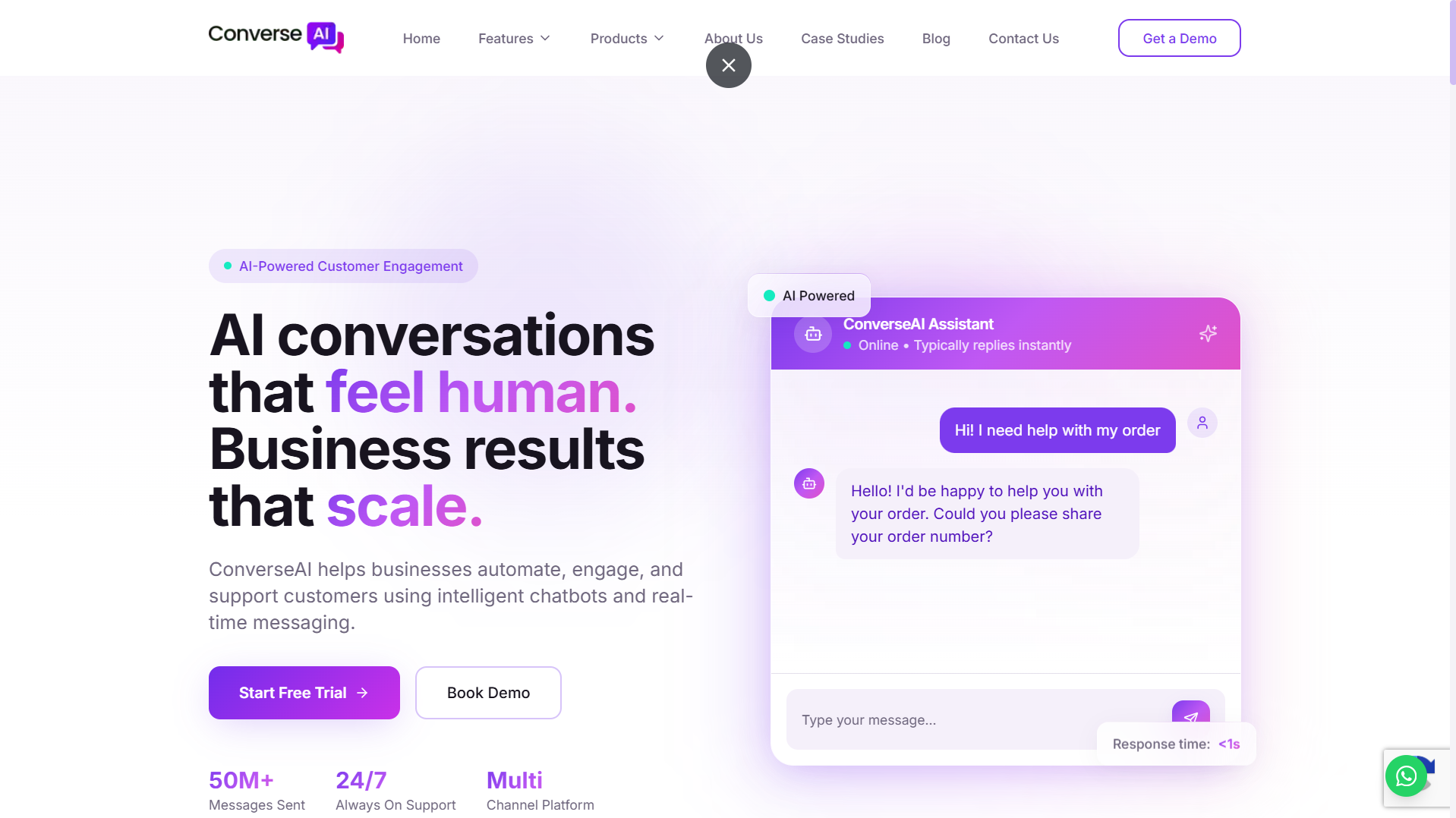
What it does: Conversational recruiting automation that deploys standardized screening questions across web, mobile, and messaging platforms.
Who it’s for: Global talent teams managing candidates across time zones and languages where consistency across channels is the primary challenge.
The bias argument for Converse AI is geographic rather than individual. When different regions of a global recruiting operation are using different intake processes, the variation itself becomes a source of inequity, candidates in lower-priority markets get a worse experience, produce less structured data, and are consequently less likely to advance regardless of their qualifications.
Converse AI deploys the same screening logic across WhatsApp, web chat, and SMS, which means a candidate applying from a mobile browser in one country goes through the same process as one applying from a desktop in a headquarters city.
Screening depth is lighter than voice or structured video alternatives.
Pros
- Multi-platform deployment (web, mobile, SMS, messaging apps) with shared screening logic
- Consistent candidate experience across geographies and time zones
- Lighter implementation overhead than enterprise voice or video platforms
- Multi-language support for global recruiting operations
Cons
- Screening depth is shallower than voice AI or structured video alternatives
- Best suited as an intake and scheduling layer rather than a primary screening tool
Pricing: Custom pricing
9. Converze AI: Best Voice and Chat AI for Structured Outbound Candidate Outreach
What it does: AI voice and chat agents that contact passive candidates, introduce roles, and conduct brief initial screens with structured scripts.
Who it’s for: Talent acquisition teams running sourced pipelines rather than purely inbound applications, particularly at volume.
The outbound recruiting phase is where the most informal bias operates. A recruiter calling passive candidates makes dozens of micro-judgments: how long to stay on a call, how enthusiastically pitch the role, whether to call back if someone didn’t answer. None of those judgments are documented. None of them are consistent.
Converze AI applies structured outreach scripts to the early engagement stage of sourced candidate pipelines. Every passive candidate who is contacted hears the same role description, is asked the same initial qualification questions, and has their responses captured in the same way.
The screening depth at this stage, however, is appropriately limited; initial outreach calls are not the place for deep behavioral interviewing. Converze AI works best as a top-of-funnel tool feeding candidates into a more structured platform downstream.
Pros
- Structured outreach scripts remove informal judgment from early candidate engagement
- Consistent pitch and qualification experience for every contacted candidate
- Reaches passive candidates at scale without requiring proportional recruiter headcount
- Voice and chat options for different candidate preferences
Cons
- Shallow screening depth by design; requires a downstream tool for substantive evaluation
- ATS integration depth is lighter than more established platforms
Pricing: Not publicly listed
10. Fetcher.ai: Best AI Sourcing Platform with Live Diversity Analytics
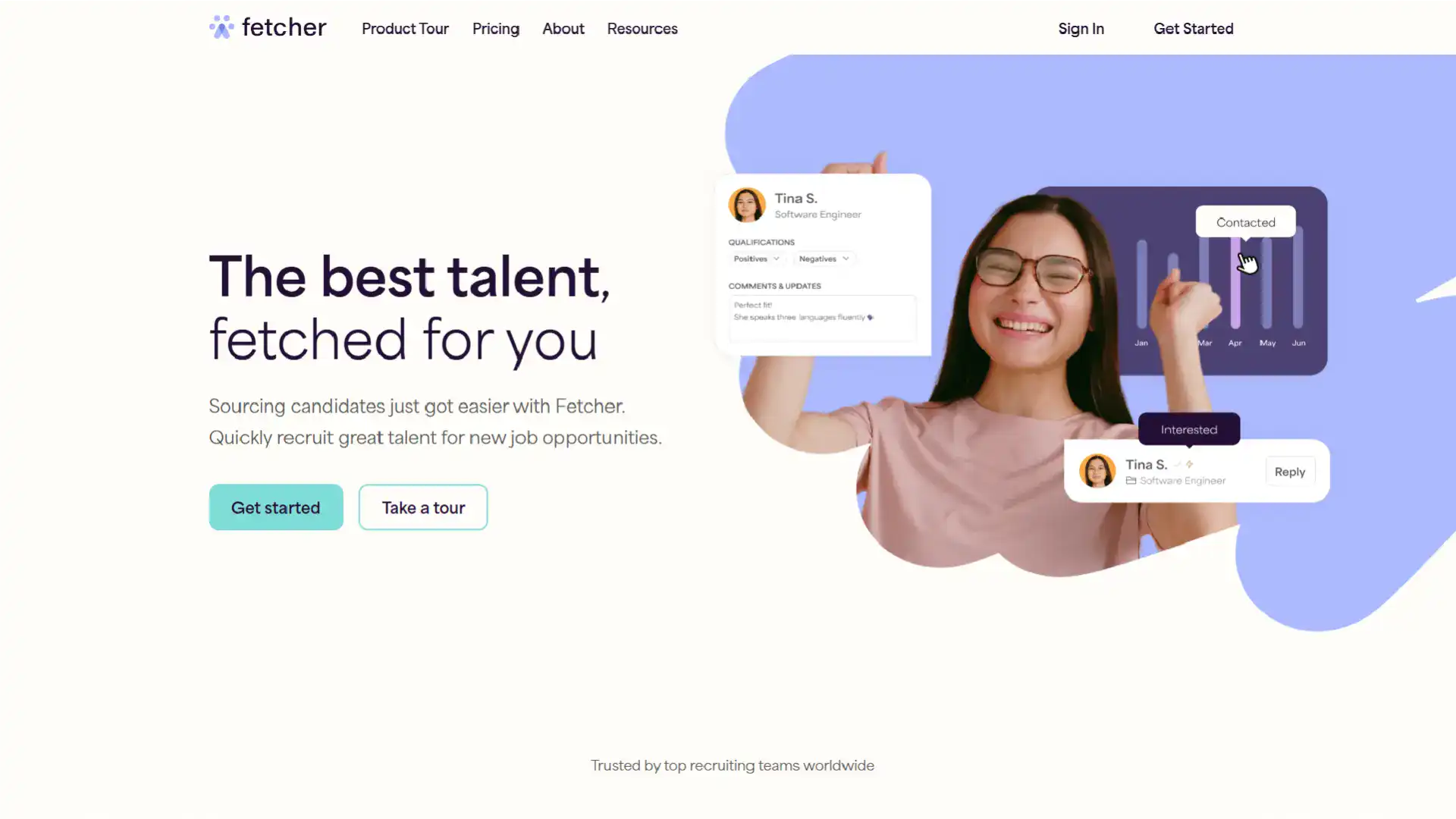
What it does: Automates candidate sourcing across the web, surfaces diverse candidate slates, and tracks diversity metrics in real time as sourcing runs.
Who it’s for: Talent teams with explicit diversity of sourcing mandates, or any organization that suspects its sourcing is producing unrepresentative candidate pools.
Most sourcing bias operates through omission. Candidates who never appear in a search because their profile didn’t use the right keywords or because they attended the wrong school, or because they worked at companies that weren’t on a recruiter’s mental list never get a chance to be evaluated fairly. They are removed from consideration before a single human sees their name.
Fetcher’s automated sourcing casts a broader net and tracks diversity of metrics across the resulting slate in real time. The real-time diversity analytics dashboard lets talent teams see whether their sourcing is producing representative results and adjusting without waiting for a quarterly review.
Pros
- Automated sourcing that expands the candidate pool beyond keyword-match limitations
- Real-time diversity analytics on sourced slates not a post-hoc audit
- Fast deployment with accessible tiered pricing
- Useful for both proactive sourcing and pipeline building
Cons
- Operates at the sourcing layer only; requires a separate screening tool downstream
- Diversity metrics depend on inferred data, which carries its own accuracy considerations
Pricing: Tiered SaaS
How to Choose the Best AI Hiring Assistants for Bias Reduction
Consistency of Candidate Experience
A tool that delivers a different screening experience to candidate 5 versus candidate 50 is introducing bias regardless of how its scoring model works.
Architecture of Bias Reduction
Removing appearance signals, standardizing question delivery, auditing training data, and producing explainable scores are architectural commitments.
Quality of Structured Data Captured
Bias reduction at the screening stage is worthless if the data flowing to hiring managers is messy or inconsistent.
Candidate Completion and Experience
A tool that keeps 60% of candidates engaged to completion is producing a biased outcome regardless of its question fairness; the 40% who dropped out were disproportionately disadvantaged by the format.
Speed and Accessibility of Deployment
Bias-reduction tools that require four-month enterprise implementations help organizations that can afford four months.
Top Use Cases for AI Recruiting Tools in Bias Reduction
High-volume frontline screening: A voice AI recruiter like Rebecca conducts structured phone screens 24/7, which means the overnight applicant and the Monday morning applicant receive the same quality of experience. This addresses both throughput and fairness simultaneously.
Skills-based sourcing roles with documented diversity gaps: AI sourcing tools like Eightfold surface candidates that keyword-dependent systems miss. For roles where hiring teams acknowledge that their pipelines lack representation, expanding the sourcing net before humans touch the data is the most efficient intervention.
Structured intake for high-turnover industries: Conversational AI recruiting platforms like Paradox AI reduce the time between application and first contact, which keeps candidates in the funnel long enough to be evaluated. Dropout-based bias, where certain populations exit the funnel due to slow response, is addressed at the intake speed layer.
Technical screening for engineering teams with pedigree-heavy hiring histories: Real-time AI interviewers like Alex by Apriora probe technical knowledge directly rather than relying on the university or employer name on the resume as a proxy. The conversation is the evaluation.
Global recruiting operations with inconsistent regional processes: Multi-channel platforms like Converse AI standardize screening across geographies, ensuring that a candidate applying from a lower-priority market goes through the same process as one applying from a headquarters city.
Diversity pipeline building and measurement: Sourcing tools with real-time diversity analytics like Fetcher.ai make the invisible visible, talent teams can see whether their sourcing is producing representative slates and correct mid-cycle rather than post-hoc.
Why Rebecca AI by Pete & Gabi Is the Right Starting Point
Of the ten tools, Rebecca AI is the only one that conducts the actual screening conversation in real time by voice, applies identical structure to every candidate, operates around the clock without quality degradation, detects fraud with a 95% accuracy, and routes structured scored summaries directly to hiring managers.
For organizations where high-volume screening is the primary bottleneck and where the first conversation a candidate has with a company sets the tone for everything that follows, Rebecca AI is the most complete answer to bias-free, scalable recruiting on this list.
The consistency argument is simple. A human screener doing her 40th call on a Friday afternoon is not delivering the same experience as she did on call 1 Monday morning. Rebecca AI on call 40 and call 4,000 is identical. That consistency is bias reduction.
Frequently Asked Questions
What is an AI hiring assistant and how does it reduce bias in recruiting?
An AI hiring assistant is a software that automates one or more stages of recruitment sourcing, intake, screening, or interviewing using machine learning or conversational AI. It reduces bias by standardizing the process every candidate experiences. Instead of variable question quality, recruiter mood, and subjective impressions, every candidate answers the same questions evaluated against the same criteria. The consistency is bias reduction.
Which is the best AI recruiting tool for high-volume hiring?
Rebecca by Pete & Gabi is the strongest option for high-volume environments because it uses real-time voice AI to screen candidates at any hour, at any scale, with perfectly consistent delivery. Paradox AI’s Olivia is a strong alternative for organizations that prefer chat-based intake over phone screening.
Can AI recruiting software find more diverse candidates?
Yes, particularly at the sourcing layer. Tools like Eightfold AI and Fetcher.ai surface candidates who are invisible to keyword-dependent searches because their profiles don’t mirror existing employee patterns. That expansion of who gets considered is one of the most concrete mechanisms by which ai sourcing tools contribute to diversity outcomes.
What is a voice AI recruiter and how is it different from a chatbot?
A voice AI recruiter conducts real-time spoken conversations with candidates over the phone, like a human phone screen. Rebecca by Pete & Gabi is the leading example in the recruiting context. A chatbot communicates through text. Voice AI reaches candidates who prefer phone communication, a demographic that text-based recruiting processes frequently underserve and produces a more natural interaction for populations less familiar with chat-based application flows.
How do I know if an AI recruiting platform is reducing bias versus just claiming to?
Ask for: a published third-party bias audit, demographic outcome reporting across their client base, an explanation of how scores are generated and visible to reviewers, and evidence of features removed when bias risk was identified. HireVue removing its facial expression analysis in 2021 is an example of a vendor responding to a documented risk. Any vendor that cannot answer these questions clearly should not be trusted with your hiring pipeline.
What is the difference between AI recruiting software and traditional ATS?
A traditional ATS is a record-keeping and workflow system; it stores applications and moves them through stages. AI recruiting software actively makes judgments: scoring candidates, identifying strong matches, conducting screening conversations, and flagging potential bias in the process. The best recruiting automation software combines both: ATS infrastructure with AI intelligence layered on top of it.
What does AI-powered recruitment cost when compared to traditional screening?
Pricing varies by tool and hiring volume. Enterprise platforms like HireVue and Eightfold AI operate on annual contracts typically starting in the five-figure range. Mid-market tools like Interviewer.AI and Ribbon AI offer tiered SaaS pricing accessible to smaller teams. For voice AI recruiting at scale, the cost of comparison against human screener capacity is usually favorable: a voice AI agent operating 24/7 replaces hours of recruiter time that would otherwise be spent on inconsistent, high-volume phone screens. Request specific ROI modeling from any vendor before committing.
Will AI replace human recruiters?
No. What it replaces is the repetitive, high-volume, early-stage work that currently consumes most of a recruiter’s time and introduces the most inconsistent. The best ai recruiter agent implementations free human recruiters for work that requires human judgment: relationship building, offer negotiation, complex role evaluation, and the organizational knowledge that no model captures. The future of recruiting is not AI instead of people. It is AI absorbing the screening volume so people can do the hiring.