
10 AI Voice Agents Staffing Agencies Use to Win Top Candidates Fast

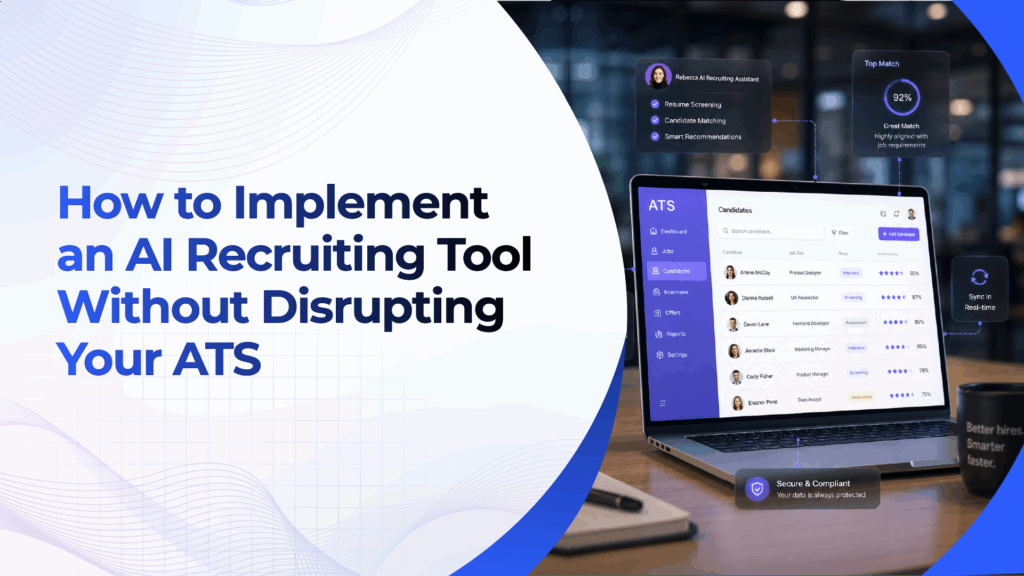
Recruiters and candidates both use AI. That’s just a fact. And according to Insight Global stats from late last year, 99% of C-level decision makers are investing more money into AI hiring, with 98% of hiring managers saying AI in their process has improved it. AI agents handle time-consuming and repetitive tasks like outreach, screening, and scheduling and give that time back to recruiters to do more with what they’re good at. But which voice AI solution is best for your recruitment workflow? Today we break down 10 of the top voice AI solutions for staffing providers that transform how agencies operate and compete. You’ll learn each one’s key capabilities, advantages, weaknesses, and the ideal scenario for its deployment. Why Your Hiring Workflow Needs Conversational AI Recruiters Hiring speed is critical for landing top talent, but recruiters can only handle so many calls, screens, and follow-ups. Here’s how AI agents for recruiting remove that friction. Keep reading as we break down the top AI staffing agencies delivering conversational AI recruiting today. Top 10 Recruitment Automation Platforms with AI Voice Calling Here’s our coverage of the top AI recruiting platforms for 2026: their key features, pros, cons, and what kinds of organizations they best serve. 1. Rebecca AI by Pete & Gabi First on our list is Rebecca AI by Pete & Gabi, a purpose-built conversational AI recruiter designed to automate high-volume hiring workflows end to end. Rebecca goes far beyond basic screening tools. She actively conducts outbound candidate outreach, holds real-time screening conversations, qualifies talent against role-specific criteria, and schedules interviews automatically. She doesn’t use static scripts or pre-recorded prompts. Rebecca adapts in real time based on candidate responses, tone, and intent. Built for scale, this hiring AI agent integrates directly with ATS platforms and CRMs, syncing every conversation and insight instantly. This gives your recruiters a live, qualified pipeline without chasing candidates, juggling calendars, or being required to do a ton of manual data entry. Rebecca AI boasts consistent time-to-hire and cost-per-hire drops for their clients. The platform is also renowned for its deployment speed and consistency. Teams launch in days, not weeks. Key Features Pros Cons Best For Staffing agencies and recruitment teams that need human-quality AI conversations for end-to-end hiring automation at scale. 2. Hirevue Hirevue is well known for its pre-recorded video interviews and structured assessments. Their platform allows candidates to respond to predefined questions via recorded video, which hiring teams can then review asynchronously. Hirevue also offers interactive assessments and games aimed at predicting job fit and performance. It thrives at standardization with workflows that are largely static—candidates are given fixed questions for screening. On the implementation front, Hirevue typically requires longer setup timelines and technical configuration, particularly for enterprise deployments. While powerful for compliance-driven organizations, this is prioritized over speed and flexibility. Key Features Pros Cons Best For Large enterprises prioritizing standardized assessments and compliance over interactive candidate experience and deployment speed. 3. Spark Hire Spark Hire is a video interviewing platform designed to simplify early-stage candidate screening. Its core offering centers on one-way and live video interviews, allowing candidates to record responses or meet hiring teams virtually. Recruiters can review interviews in their own time, collaborate with hiring managers, and move candidates forward without scheduling initial calls. One of the Spark Hire’s draws is its easy deployment and minimal technical requirement. For small to mid-sized teams, this platform offers a straightforward way to reduce phone screening time. Note that it does not automate outreach, screening conversations, or scheduling. Recruiters source candidates, follow up manually, and manage no-shows. Key Features Pros Cons Best For Small staffing agencies that need basic AI video interview functionality without fully automated recruiting workflows. 4. Paradox AI Next on our list is Paradox AI. This platform is best known for Olivia, its conversational assistant focused on automating recruiting coordination and candidate communication. Paradox AI excels at handling high volumes of inbound candidate interactions, answering questions, guiding applicants through workflows, and scheduling interviews. It also integrates well with major ATS platforms across hiring environments. Paradox’s strength lies in orchestration over in-depth screening. It does pre-qualify candidates through chat-based flows but doesn’t conduct live screening conversations as other voice-first AI recruiter systems on this list do. This makes the platform’s outreach more reactive than proactive, but Paradox AI shines when scale and candidate responsiveness are the primary goals. Key Features Pros Cons Best For Organizations hiring high volumes of hourly or entry-level workers who prefer text-based communication over phone calls. 5. Eightfold AI Eightfold AI positions itself as a talent intelligence platform, using AI to match candidates to roles based on skills, experience, and potential—not just resumes. This platform excels at rediscovering internal and external talent pools, surfacing qualified candidates already in your ATS or talent database. For large organizations, this can significantly reduce time spent sourcing new candidates. Note that it doesn’t conduct outreach calls, hold screening conversations, or engage candidates in real time—recruiters engage with identified candidates manually. Eightfold AI is also among the options on this list with heavier implementation needs, as it works best when deeply integrated with enterprise HR systems and large datasets. Key Features Pros Cons Best For Large enterprises focused on talent intelligence and workforce planning over conversational recruitment automation. 6. Tally AI Tally AI focuses on automating candidate screening through conversational assessments, primarily via chat-based interactions. The platform engages candidates early, asking structured screening questions and scoring responses automatically. It helps recruiters filter large applicant pools fast and reduce manual resume review. With a focus on improving screening efficiency, it isn’t built for outbound candidate sourcing, voice-based conversations, or complex objection handling. Its workflows do still require recruiters to step in after initial qualification. Candidates answer questions without a focus on real-time voice AI. Key Features Pros Cons Best For Teams looking to automate early-stage screening for high-volume, straightforward roles with clear qualification criteria. 7. Ribbon AI Ribbon AI is yet another AI-powered platform designed to automate recruiting coordination and candidate communication. The platform handles interview scheduling, reminders, and candidate updates, reducing the back-and-forth that consumes recruiter time. Ribbon AI also easily integrates with calendars and ATS systems to keep workflows organized. Ribbon AI excels at improving scheduling efficiency and candidate engagement through timely and continuous updates. It’s not a screening or candidate outreach engine, so it doesn’t conduct interviews or source talent. Key Features Pros Cons Best For Hiring teams overwhelmed by scheduling logistics but not seeking additional recruiting automation. 8. Humanly At number eight, we have Humanly. This platform delivers conversational AI-powered recruiting workflows through chat and focuses on improving candidate experience in high-volume hiring scenarios. It automates pre-screening, answers FAQs, and routes candidates through structured workflows. Humanly is particularly effective for frontline and hourly roles where speed and responsiveness are critical. It also seamlessly integrates with ATS platforms and helps reduce recruiter workload during peak hiring periods. Like other chat-first tools, note that Humanly can struggle with technical nuance and deeper qualification. It boasts limited outbound capability with its AI solution primarily engaging applicants who initiate contact. Key Features Pros Cons Best For High-volume recruitment teams focused on inbound candidate engagement and experience. 9. Ascendia AI Ascendia AI positions itself as a data-driven AI recruiting assistant, combining predictive analytics with candidate engagement automation. The platform helps teams identify quality matches faster by ranking
AI Agents Transform Healthcare: Here Are 15 Practical Use Cases

Healthcare is being reshaped by AI. Beyond skillful clinicians, it’s conversational AI taking on critical operational roles that once bogged down human staff. Far from replacing human expertise, these AI-powered agents act as powerful extensions—working around the clock to reduce admin burdens, improve patient experiences, and capture revenue. But how exactly are voice AI agents helping practices pull ahead? In this blog, we’ll explore 15 practical use cases that showcase how AI agents are transforming healthcare. Patient Communication & Support Patient communication is the heartbeat of healthcare, yet it’s where so many practices fall short. If patients can’t reach you, they’ll find providers they can. Here are four ways healthcare practices improve patient communication and boost positive experiences. 1. Appointment Reminders No-shows don’t just waste time—they drain revenue. To prevent this, healthcare practices use AI call agents to call or text patients with timely reminders of upcoming visits. Every patient receives personalized messages containing appointment dates, time, and location details, dramatically cutting down on missed appointments. This ensures you keep your schedule full while your staff stays focused on providing care. 2. Automated Follow-Up Calls Patient care doesn’t end when they leave your office. Unfortunately, many healthcare providers struggle to keep up with follow-ups amongst all their other workflows. AI agents conduct post-visit follow-ups, check on recovery progress, answer FAQs, and collect valuable feedback. These calls show patients you care about them while flagging issues that need further attention. The result? Improved patient experience and loyalty without overwhelming your staff. 3. Prescription Refill Reminders Missed refills disrupt care outcomes and harm patient health. But keeping up with every patient’s refill schedule is easier said than done. AI agents automatically alert patients when it’s time to renew, offering refill instructions or routing to their pharmacy. This proactive communication improves adherence and also prevents last-minute calls or treatment lapses. 4. Pre-Visit Instructions Preparation makes or breaks appointments. If the patient is not adequately prepared, the appointment may have to be rescheduled. AI agents deliver pre-visit instructions tailored to each patient—whether it’s fasting before lab work, bringing insurance documents, or filling out digital forms. The result? Improved operational efficiency and enhanced patient experience. Inbound Call Handling From new patient inquiries to urgent care questions, every missed or delayed response is lost revenue and diminished trust. Keep reading to see how wellness providers use AI agents to ensure instant, reliable call handling. 5. 24/7 First-Touch Support Patients call at all times of day or night. Even after business hours, they expect someone to pick up. AI agents provide this round-the-clock first-touch support. They capture patient details, identify urgency levels, and escalate emergencies to the right contacts. This ensures patients always feel heard while reducing call abandonment metrics. 6. Triage & Routing on Autopilot Every patient call isn’t equal. While some require immediate clinical attention, others can be handled administratively. AI agents triage incoming calls by collecting key details such as symptoms, urgency, and patient history. They route critical cases to on-call clinical staff in real time, while routine inquiries get handled automatically. This smart prioritization helps reduce staff overload and ensures urgent cases get the attention they need. 7. Instant Insurance Verification & Support One of the biggest bottlenecks for front-desk teams is answering repetitive questions. AI agents in healthcare help manage calls by confirming accepted providers, explaining coverage basics, and informing patients about what documents are required. They free up staff from the endless back-and-forth while ensuring patients get accurate, consistent answers instantly. The result? Faster patient intake and smoother onboarding for new or returning patients. 8. Smart Inquiry Management Patients sometimes call simply to confirm the basics—office hours, location, or whether a specialist is available. Instead of tying up staff in these cases, AI agents provide the information with human-like clarity and improved consistency. Whether it’s sharing directions, outlining available services, or guiding patients to the right department, conversational AI ensures patients get the answers they need. This means greater operational efficiency and better patient experience. Administrative Tasks & Operations Behind every seamless patient experience is an ocean of administrative work—calls, forms, reminders, and follow-ups. These eat up your staff’s time. Here are four ways healthcare practices use AI call agents to take on repetitive yet essential tasks. 9. New Patient Onboarding on Autopilot Welcoming a new patient shouldn’t overwhelm your staff. AI agents specific for healthcare help you streamline your process by collecting essential intake details and confirming personal information with natural, conversational calls. They also automatically schedule introductory appointments or intake calls, ensuring new patients feel supported from the go. 10. Intuitive Waitlist Management Empty appointment slots are lost revenue and wasted time. AI agents help medical providers eliminate the gaps by monitoring cancellations and immediately contacting waitlisted patients. This real-time responsiveness ensures your schedule stays filled, and your patients get quicker access to care. 11. Personalized Feedback & Satisfaction Surveys Quality care isn’t just about treatment—it’s also listening to patients after their visit. AI agents help healthcare providers handle post-appointment feedback, gathering insights on patient satisfaction, staff professionalism, and care experience. With AI handling your feedback surveys, your team doesn’t have to play phone tag. Instead, they get data delivered in easy-to-use reports on autopilot. 12. Form & Document Reminders Missing paperwork can derail appointments and create frustrating delays. To prevent this, a core use for AI agents is proactive reminders. AI nudges patients to complete intake forms, insurance documents, or consent paperwork before scheduled visits. This helps reduce no-shows and last-minute rescheduling while also ensuring providers have everything needed ahead of time. Revenue and Business Growth Even beyond streamlining workflows, AI agents can directly contribute to the business bottom line. Here are three ways voice AI is helping practices unlock sustainable financial gains. 13. Patient Reactivation Campaigns on Autopilot AI agents can automatically reach out to patients who haven’t visited in months, prompting them to book annual checkups or follow-up services. This proactive engagement fills gaps, revives dormant relationships, and brings consistent revenue back into the practice.
Top Benefits of Using Human-Like AI Assistants in Customer Engagement

Your Customers Prefer AI – Here’s Why Today’s customers expect instant, personalized, and seamless interactions—and AI-powered calling delivers precisely that. Customers don’t want long wait times, robotic scripts, or burned-out agents—they want efficiency, personalization, and responsiveness. AI-powered calling assistants provide real-time, human-like interactions, ensuring businesses engage better, convert more leads, and retain customers while reducing operational costs. Yet many businesses are still stuck using outdated call-handling systems, relying on overworked teams that struggle to keep up with demand. As competition intensifies, companies that don’t evolve risk losing customers to those that do. AI-powered calling isn’t just a convenience—it’s now a necessity for businesses that want to stay ahead. The Business Benefits: Why Using Human-Like AI Assistants is a Game-Changer 1. Provide Customers with service at the level they expect Customers hate long hold times, repeating themselves, speaking to burned-out agents who aren’t empowered to do what they need, and robotic-sounding interactions. They want fast responses and meaningful conversations. AI-powered calling solves this by: ✔️ Eliminating long wait times—AI responds instantly ✔️ Providing consistent brand experiences—Human-like AI Assistants never have dips in performance and consistently provide upbeat customer experiences, whether it is their first call of the day or the 1000th. ✔️ Using human-like emotional intelligence to adjust call handling —AI can detect frustration or urgency and adjusts its tone to ensure the call is handled according to the customer’s need. [Check out our prior blog on how these systems work for more on the nitty-gritty of conversational AI] Traditional customer service models struggle to provide this level of responsiveness, leading to frustration, lost sales, and poor customer retention. AI eliminates these pain points. 2. Serve More Customers While Cutting Costs Handling customer calls manually is expensive, time-consuming, and inconsistent. AI-powered calling enables businesses to: ✔️ Cut per-call costs significantly—reducing dependency on human agents for repetitive calls ✔️ Handle hundreds of calls simultaneously—without delays, errors, or dips in quality ✔️ Boost operational efficiency—AI assistants work 24/7, ensuring every call is answered but for a fraction of the cost of using a human agent. Stat: AI-powered call handling improves conversion rates by 10–15% and speeds up issue resolution by 30%. For businesses struggling with high call volumes, staffing shortages, or customer service inefficiencies, AI offers an immediate solution that lowers costs while improving service quality. 3. Drive More Sales, Upsell and Cross-sell Revenue AI calling assistants don’t just answer calls—they can act as proactive revenue generators. This allows businesses to: ✔️ Upsell and cross-sell more effectively—Human-like AI Assistants can routinely offer compatible services or products when talking with clients or prospects. Cross-sells and up-sells are baked in, delivering more revenue on auto-pilot. ✔️ Close more deals – by ensuring no customer need goes unmet — faster answers, proactive engagement, and seamless handoffs create loyalty and revenue. ✔️ Win Back Customers and Reduce churn – by offering promotional offers to target clients Using AI human-like assistants, businesses can ensure no opportunity slips through the cracks, while optimizing revenue from cross-sell and upsell opportunities. Integrating Human-like Assistants into your business: headache or not? NOT! One of the biggest concerns business leaders have about AI is implementation complexity. The reality? Most Modern AI-powered calling solutions integrate seamlessly with: ✔️ CRM platforms ✔️ Communication tools ✔️ Scheduling systems Good AI Platforms should offer minimal setup time and work with existing workflows, automatically logging conversations, allowing businesses to: ✔️ Reduce administrative workload—freeing teams to focus on high-value tasks ✔️ Improve consistency—ensuring all customer interactions follow best practices ✔️ Allow scalability with minimal cost—ensuring exponential increases in calling outputs for a fraction of the cost of using human assistants. The result? KPIs are met, and immediate performance gains and better customer experiences are achieved.
What is AI-Powered Automated Calling and How Does It Work

Conversational AI has completely changed the game. While people may say they don’t want to talk to a machine, their behavior with AI says otherwise, considering: ChatGPT averages 123.5 million daily active users, and processes over one billion queries a day, according to their most recent reports. 87%+ of consumers report positive or neutral interactions with chatbots. (Ecommerce Bonsai) And 82% of consumers would rather use a chatbot if talking to a person required waiting, per Tidio. (Up 22% from just 2022.) Through the combination of enormous datasets, sophisticated autocompletion, and advances in affective computing, these systems keep getting better at understanding and anticipating what people want. Pair that with multimodal capacities for audio and video, and it’s easy to see why AI automation has changed the way businesses handle calling. Reports, from The New York Times and Washington Post through to Wired and the MIT Technology Review all highlight how people have even fallen in love with chatbots, and while these may be extreme cases, the bottom line is this: conversational AI works. It’s not right to say a revolution is happening with AI in customer service in 2025, because the truth is: it’s already happened. In this article, we go back to the beginning, covering what AI-powered calling is, how it works, and how it’s redefined communication for businesses in 2025. Reaping the Benefits of AI-Powered Calling “AI-powered automated calling” is a catch-all for conversational AI solutions to a business’s telephonic communication problems, whether inbound or outbound. These platforms can make or field calls entirely without human intervention, combining conversational AI with advanced data processing. They allow AI to share information, upsell and re-connect, gather customer insights, pre-screen candidates, prospect for potential clients, and even do administrative work like scheduling. They’re already being deployed across businesses and departments to do the heavy lifting, freeing teams and individuals to focus on higher-value tasks. AI-powered calling is bringing companies greater: Efficiency: Exponential cost reductions Scalability: Making hundreds to thousands of calls simultaneously Personalization: Tailored calls utilizing business data AI calling automation is driving real business benefits- increasing productivity, revenue and operational efficiencies: Conversational AI Technology: The Mind Behind the Call So, what is ‘Conversational AI’ exactly? Let’s look at how it works and why people find it so engaging. How It Works Conversational AI reduces language into tiny pieces that can be transformed, analyzed and processed by computers. AI-calling relies on several things working together to fully parse human language, like: Powerful Data Processing: It all begins with those massive datasets of human language. This is processed so queries and responses are understood with context, intent, and sentiment. That allows on-the-fly adjustments to emulate human communication. Natural Language Understanding (NLU): This is part of Natural Language Processing (NLP) and how AI parses speech. It identifies keywords, context, and even emotional undertones, to assist with interpretation. For example, if a customer says, “I need help with my bill,” the AI recognizes “help” as intent and “bill” as subject. Natural Language Generation (NLG): With meaning registered, the system is ready to make the response. Unlike old calling automation systems that needed pre-recorded messages, NLG makes customized dialog that fits business goals and the context of the conversation. Voice Synthesis: With the response words selected, AI converts it to audio, giving it a natural-sounding tone and demeanor. Advanced systems go further, using neural voice synthesis, to mimic human inflection and tone even more effectively. Machine Learning Algorithms: While the above elements are all fine and well, it’s not much good without continual improvement. What makes AI calling systems so powerful is the capacity they have to adapt and keep adapting from each and every interaction. Machine learning refines accuracy and applies this learning to each new scenario. In other words: the more they’re used, the better they become. Here’s an example of a typical flow: Conversational AI vs Interactive Voice Response (IVR) Systems Traditional calling automation systems like IVR waste our time by making us wait through long menus, don’t hear us correctly the first time (maybe ever), and never budge from their programming. And even after you do all that waiting and cringe through misheard choices, you typically still end up on hold to get to a person who can actually do what you called to get done in the first place. Maybe you’ve had similar experiences with Siri and Alexa too (pre-AI). Conversational AI has changed this game entirely. Instead of rigid channels, it brings natural exchange. Instead of listening to options that aren’t quite right, you get your need met or even exceeded on the first go. Conversational AI allows for: Natural Conversational Interactions: Just talk to it and tell it what you need. It’s that easy. Contextual Understanding: Maybe you don’t know what you want, and they can handle open-ended queries, too. That means switching seamlessly between topics, adjusting speed and even, in the best solutions, directly transferring calls to human agents when needed. Dynamic Responses: The AI gives personalized dialog every time, in real time. Affective Computing: Adding AI Empathy in Customer Interactions Affective computing techniques take this all to the next level. As a field of study that merges computer science, cognitive science, and psychology, it helps give machines the ability to interpret and adapt to human emotions. By analyzing tone of voice, word choice, pace, volume, and context, these approaches empower systems to adapt their responses to a user’s emotional state. Why Empathy Matters Just like in life, between real people, empathy aids trust and improves communication. And no, AI doesn’t have real empathy, but the best conversational AI systems successfully emulate it, by: Using a calm, reassuring tone to de-escalate frustrated callers. Using positive, enthusiastic language to enhance sales calls. Adjusting call endings based on need. Speeding up or slowing down and clarifying based on perceived understanding. Pete & Gabi: AI-Powered Automated Calling Now we bring it all together. Pete & Gabi takes all this, the best from conversational AI and affective computing techniques,