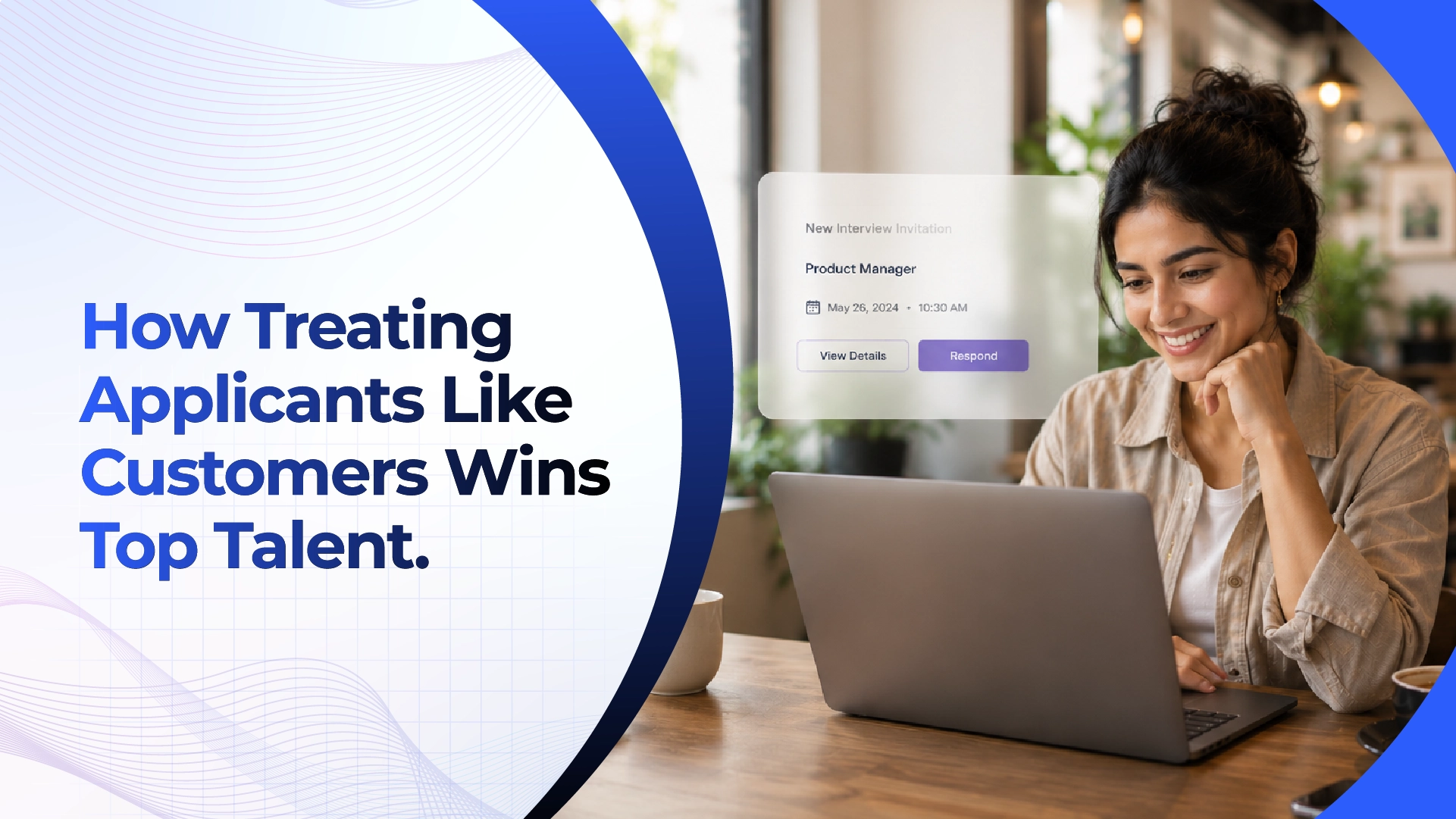
The power dynamics in hiring have shifted dramatically in today’s world. For decades, companies have operated on the assumption that job seekers should be eternally grateful to be granted an interview. Organizations built slow, bureaucratic hiring pipelines that were designed entirely for the convenience of the HR department and completely ignored the felt experience of the person on the other side of the screen.
That approach today is a huge liability.” Top talent evaluates your company like they would evaluate a consumer brand. If your hiring process is frustrating, opaque and disrespectful of their time, they won’t just abandon their application, they’ll tell their network, write a negative review and accept an offer from your competitor.
If you’re a talent acquisition leader battling high drop-off rates, ghosting or rejected offers, the problem is probably not your compensation package. The problem is your process. In this complete guide, we’ll break down exactly what this means, the hidden financial costs of a broken pipeline, clear examples of what a world-class journey looks like, and how to leverage modern automation to treat every single applicant with respect.
What is candidate experience, exactly, and why does it matter beyond “being nice”?
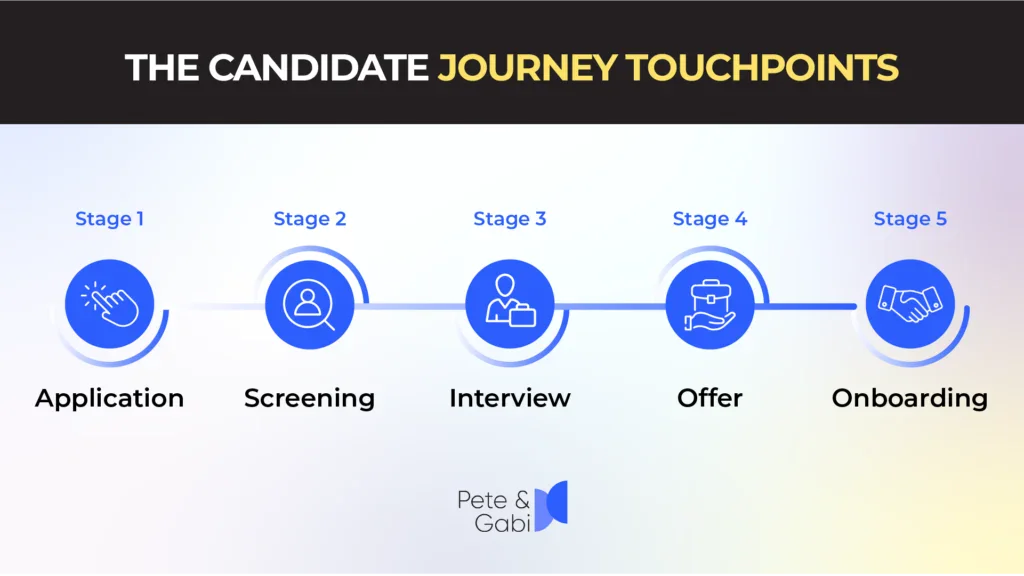
What is candidate experience in its simplest terms? It’s the total of every single touchpoint a job seeker has with your organization throughout the entire recruiting lifecycle. From the moment they read your job description in the application portal, to the scheduling of interviews, to the interviews themselves, to the negotiation of an offer, to the first day of onboarding.
Many executive teams misconceive this notion as an HR vanity metric – a soft initiative about “being nice” to people you might not even hire. In fact it is a critical revenue protection and employer branding mechanism.
When an applicant applies to your company they are looking for clues about your internal corporate culture. If you require them to upload a resume and then you have to manually type their entire work history into a cumbersome form, they immediately assume you’re using old technology. If your recruiters answer an email after three weeks, the applicant will think that your internal teams are a mess and disorganized. The hiring journey is the ultimate preview of the employee journey. If the preview is terrible, top talent will opt out.
What does a poor applicant journey actually cost you (offer declines, referrals, employer brand)?
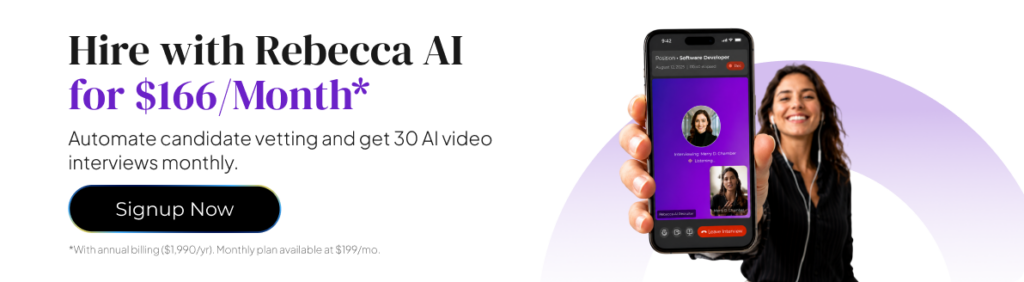
Disrespecting an applicant’s time has serious and measurable financial consequences. Looking at the stats of bad candidate experience, the data shows that a bad process actively destroys your talent pipeline and directly harms your consumer brand.
Research by the Talent Board (CandE Benchmark Research) and LinkedIn Talent Solutions shows that negative interactions have a direct effect on an applicant’s future behavior toward your organization. The good news? Happy candidates are 52% more likely to refer others to your company.
The True Cost of a Broken Hiring Pipeline
| The Consequence | The Statistical Impact | Why It Hurts Your Business |
| Offer Rejections | Nearly 50% of applicants will decline a job offer if they had a negative experience during the interview process. | You waste weeks of recruiter and hiring manager time, only to start the search completely over. |
| Lost Referrals | 69% of candidates who have a bad experience will actively tell their friends and professional network not to apply. | Your organic, free talent pipeline dries up, forcing you to spend more money on external agency fees. |
| Brand Damage | Over 60% of job seekers read negative Glassdoor or online reviews before deciding whether to apply. | High-quality passive candidates will proactively filter your company out of their job search. |
| Consumer Revenue | According to the Talent Board, candidates who are treated poorly will often stop purchasing products from that company. | For retail and consumer brands, rejecting an applicant rudely means losing a paying customer forever. |
What are the most common hiring process breakdowns (slow response, silence, inconsistent interviewers)?
To fix a leaky funnel, you must first identify where the friction occurs. In most enterprise organizations, the breakdown happens in the dead space between the active hiring steps.
- The Application Black Hole: The most universal complaint from job seekers is the “black hole.” They spend an hour tailoring their resume, submit it, and never hear back. Silence breeds resentment.
- Scheduling Delays and Phone Tag: When recruiters and candidates exchange five emails over four days just to schedule a 15-minute phone screen, momentum dies. This administrative friction is a primary driver of mid-process drop-offs. If this is a chronic issue for your team, read our dedicated breakdown on why candidates ghost recruiters.
- Inconsistent and Unprepared Interviewers: There is nothing more frustrating for a professional than taking time off work for an interview, only to discover the hiring manager hasn’t read their resume. Furthermore, if the panel asks disjointed, repetitive questions, it signals a lack of internal alignment.
- The Silent Deliberation Period: After a final round interview, leaving an applicant waiting for two weeks without a status update is a massive failure. Even if the internal team is still interviewing other people, radio silence tells the waiting applicant that they are not a priority.
What does a strong process look like at each stage of the funnel?
Transforming your pipeline requires mapping out every touchpoint and actively removing friction. The best talent teams view their applicants through the lens of customer success.
Here are actionable candidate experience examples detailing what a premium, respectful journey looks like at every phase of the recruitment lifecycle:
The Ideal Touchpoint Journey
| Hiring Stage | The Standard, Friction-Heavy Process | The Premium, High-Touch Process |
| Application | 45-minute mandatory portal login and manual data entry forms. | 1-click “Easy Apply” via LinkedIn or resume parse, taking under 2 minutes. |
| Screening | Days of silence, followed by complex email scheduling for a phone screen. | Instant acknowledgment email with a self-serve calendar link or an immediate automated conversational interview. |
| Interviewing | Interviewers “winging it,” asking the applicant to simply walk through their resume. | Structured interviews with prepared panels focusing on specific competencies and answering the applicant’s questions. |
| Offer / Rejection | Generic, automated “do not reply” rejection email sent weeks after the decision. | Prompt, transparent feedback. A swift offer presentation with total transparency on benefits and salary expectations. |
| Onboarding | Radio silence between the accepted offer and Day 1. | A warm welcome package, IT hardware sent early, and an introductory email from the new team. |
How do you measure candidate sentiment (cNPS, time-to-first-response, completion rate)?
You can’t improve what you don’t measure. Talent acquisition teams must use certain metrics to gage how candidates feel about their experience.
The best metric is the Candidate Net Promoter Score (cNPS). Similar to a consumer NPS, this is a simple automated survey sent to applicants (both hired and rejected) that asks “On a scale of 1-10, how likely are you to recommend applying to our company to a friend or colleague?” A positive cNPS from a rejected applicant is the ultimate sign of a world-class HR team.
Teams also have to track behavioral data in addition to surveys:
- Application Drop-Off Rate: If 1,000 people click “Apply” but only 200 people finish the form, your application process is way too long.
- Time to First Response: How many days are there between the date an application is submitted and the first human (or automated) outreach? It’s important to close this window. Learn how to reduce time-to-hire in our guide to the operational tactics needed to compress this timeline.
- Offer Acceptance Rate: If your team is making it to final interviews but candidates are declining the final offers, there is a serious disconnect in compensation transparency or cultural presentation during the interview process.
Can automation help you learn how to improve candidate experience, or does it always feel impersonal?
One of the biggest misconceptions by HR purists is that by adding artificial intelligence into the hiring funnel you will alienate candidates. They worry that automation works on the premise of coldness, roboticness and impersonality.
The truth is just the opposite. What candidates really hate is human silence. They hate waiting 3 weeks for a recruiter to open their PDF. They hate constant schedule delays…
In fact, done right, automation humanizes the process to a great extent, providing speed, consistency and instant respect for the applicant’s time. The key is deploying recruiting ai agents that deliver conversational candidate experiences that feel natural, not form-like or clunky.
Today’s teams are using tools like Rebecca AI Recruiter to ensure that a highly qualified professional doesn’t have to wait weeks for a human recruiter to find the time to call. Rebecca gives applicants the opportunity to do an interactive, two-way voice interview the minute they apply. They are able to speak naturally and articulate their career history and receive immediate engagement – completely removing the dreaded “black hole.”
You can see the evidence in the feedback. Candidates assessed by Rebecca consistently receive a superb average satisfaction rating of 9.8 out of 10 due to the speed, fairness and 24/7 access of the process. Learn more about how conversational agents enhance applicant sentiment in our deep examination of the candidate experience and Rebecca AI in hiring.
If you want to stop losing your best people to faster competitors, you need to kill the dead space in your pipeline. An interview scored the same day is much better than a month of manual silence. Sign up for Rebecca AI and see the difference for yourself – discover how smart screening can transform your applicant journey overnight.