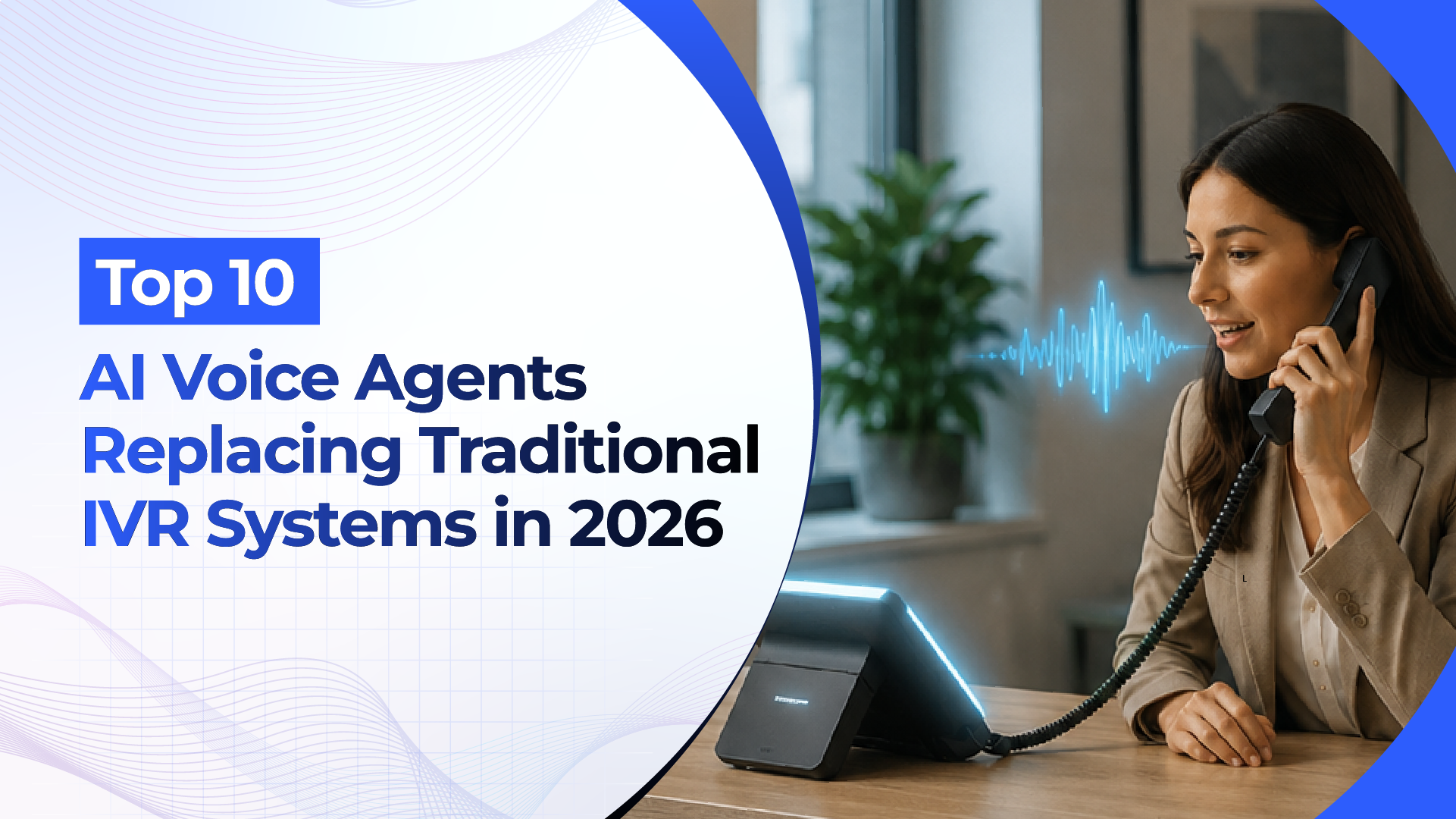
According to a Vonage report, 51% of surveyed consumers reported abandoning an entire company, not just a call, due to poor IVR interaction. IVRs typically have an average abandonment rate of 15%, and in telecom and utilities where there are typically heavier usages of IVRs, the rate goes up even more. The question is no longer whether businesses should ditch their existing IVRs and replace them with AI IVRs, but rather what AI IVR solutions should they start using first.
The answer lies in conversational AI, that uses natural language processing to qualify callers in real time, manage their objections, and route them to the correct person without the use of any menu prompts at all. We have compiled a list of AI voice agents that are alternatives to traditional IVR solutions, ranked from best to strong alternatives.
Why Traditional IVR Can No Longer Compete?
Traditional IVR was developed for routing calls, however; it cannot resolve issues. It makes customers pass through fixed decision trees when they call and provides no opportunity to modify the process while they are still on the line. This leads to frustration for customers, abandoned calls, and customers moving their business elsewhere without saying a word about it.
Alternatives to IVR are with the AI technology that provides an entirely different experience for customers. Intelligent routing will allow a caller to be routed according to an intended purpose rather than selecting from a menu of options. Inbound call automation can handle qualifying, scheduling and following up on callers without adding any additional staff.
Rank 1: Olivia AI by Pete & Gabi
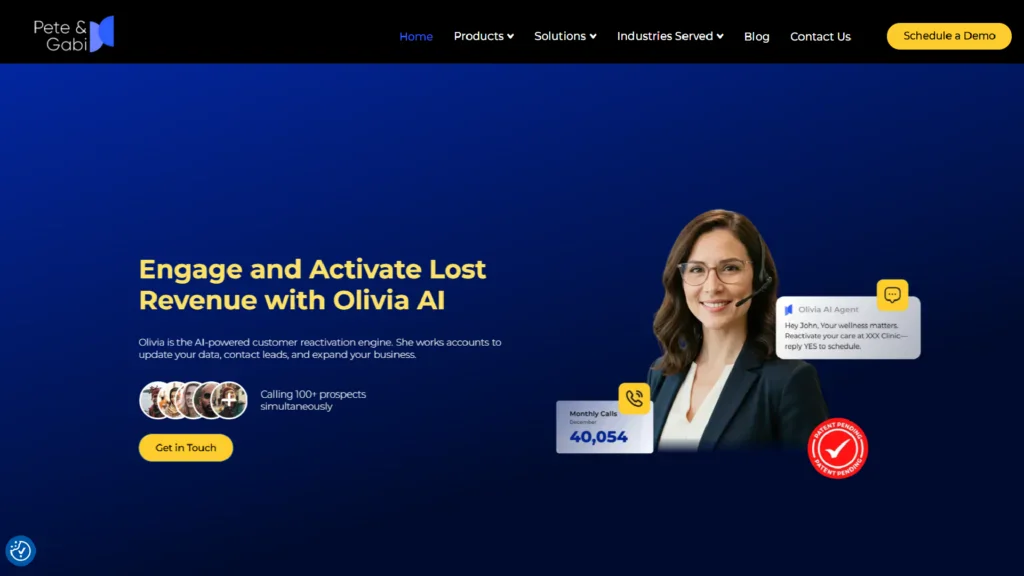
Developed by Pete & Gabi, Olivia AI functions as a fully autonomous AI sales agent that provides complete inbound qualification, objection handling, appointment scheduling, CRM data syncing, and live transferring while providing complete context to the recipient.
Olivia AI is currently the top AI voice assistant agent, not only for responding to calls but also converting inbound leads and re-engaging dormant customers.
Key features include real-time CRM integration, natural human-like conversations, voice/SMS/engagement analytics, automated lead qualification, deployable in 1 – 2 weeks with no technical installation required.
Rank 2: Kore.ai
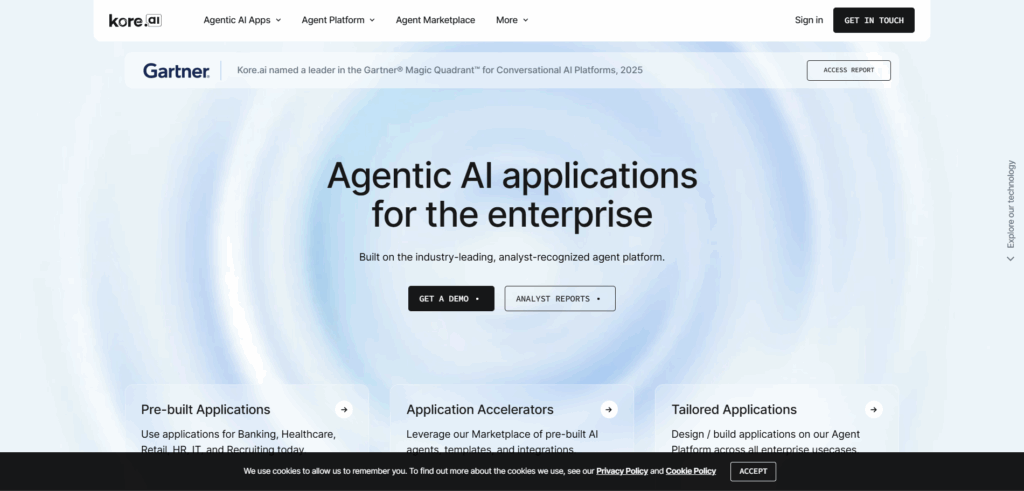
Kore.ai provides an enterprise-level conversational AI platform, which includes various capabilities such as intelligent call distribution, multilingual NLU, and deep integration with CRM, ERP, and ticketing systems. The infrastructure is well-suited for large organizations that want to upgrade their contact center operations on a grand scale as the current technology continues to evolve. While Kore.ai has powerful functionality across the board, revenue recovery and quick deployment have proven to be less important for mid-sized companies than developing high-quality contact center solutions.
Rank 3: Vodex
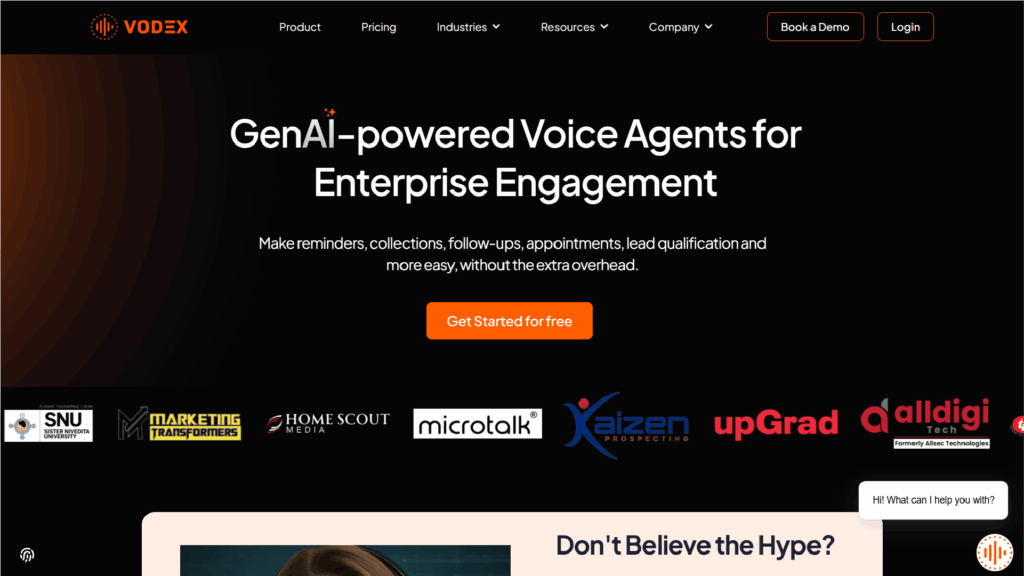
Vodex is a specialist in high-volume, compliance-driven outbound communications focused on debt collection, financial services, and the healthcare industry. Vodex has achieved the appropriate certifications such as; SOC 2, ISO 27001, and HIPAA. It automates outbound calls at Tier 1 level, allows for live warm transfers and has integrated with various CRMs using; API and Webhook. However, Vodex does not have the focus on reactivating customers through sales as well as having full-funnel revenue recovery.
Rank 4: Retell AI
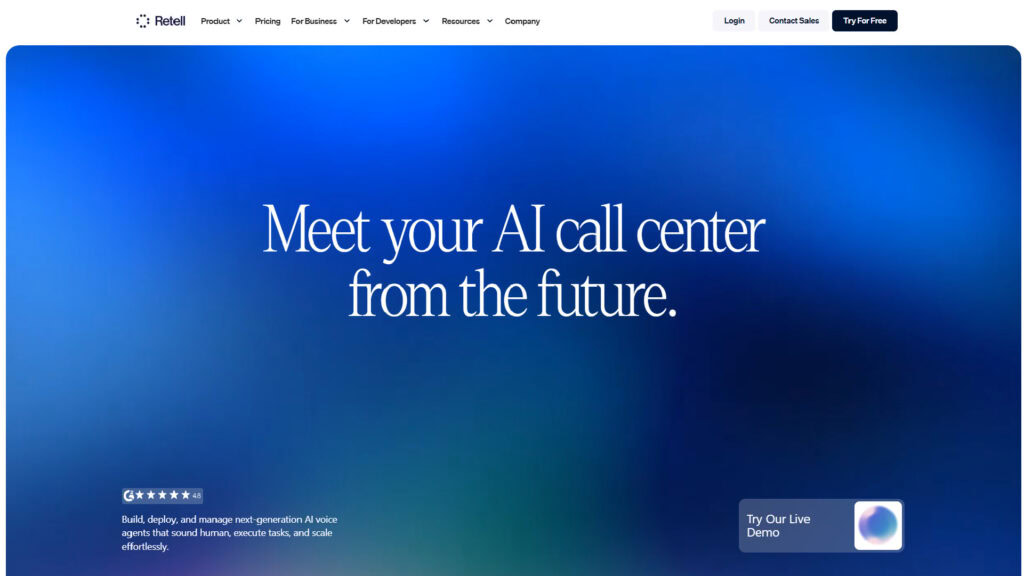
Developer platforms have been created with the intent of giving organizations the ability to build and deploy AI voice agents that conduct calls with low latency while integrating with an organization’s own machine learning model (MLM). The general flexibility of Retell AI allows engineering teams to work on what they want as well as providing companies with complete control over the technologies used in their call center operations.
Rank 5: Bland AI
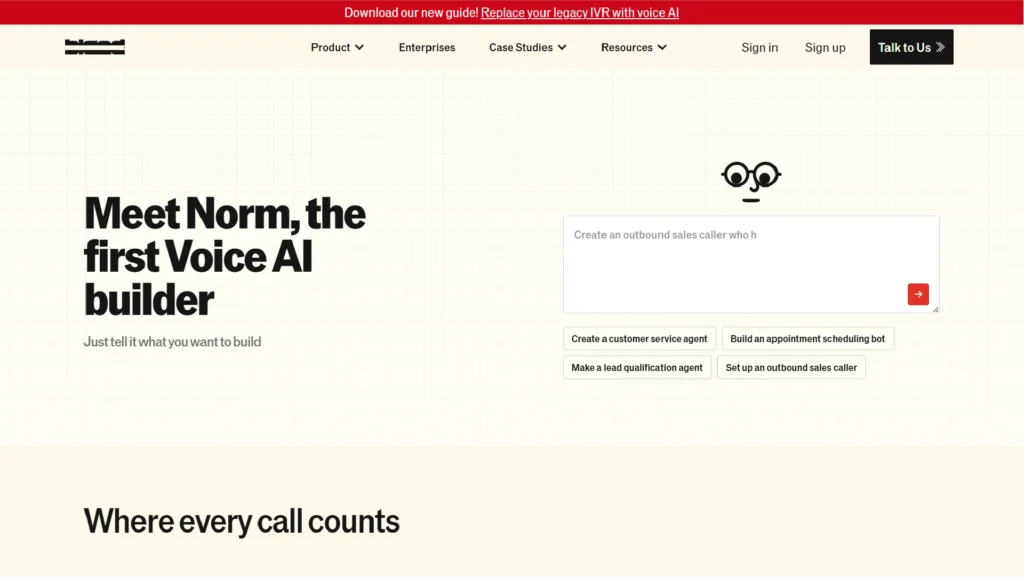
Using the Bland.ai developer platform allows developers to execute outbound calls at warp speed using their API. Bland.ai could be an ideal choice for various customer notice events such as an appointment reminder or follow-up to lead. Additionally, while Bland.ai can execute personalized messages, the level of sophistication is significantly below those found within solutions that are purpose-built for the intended application.
Rank 6: Synthflow AI
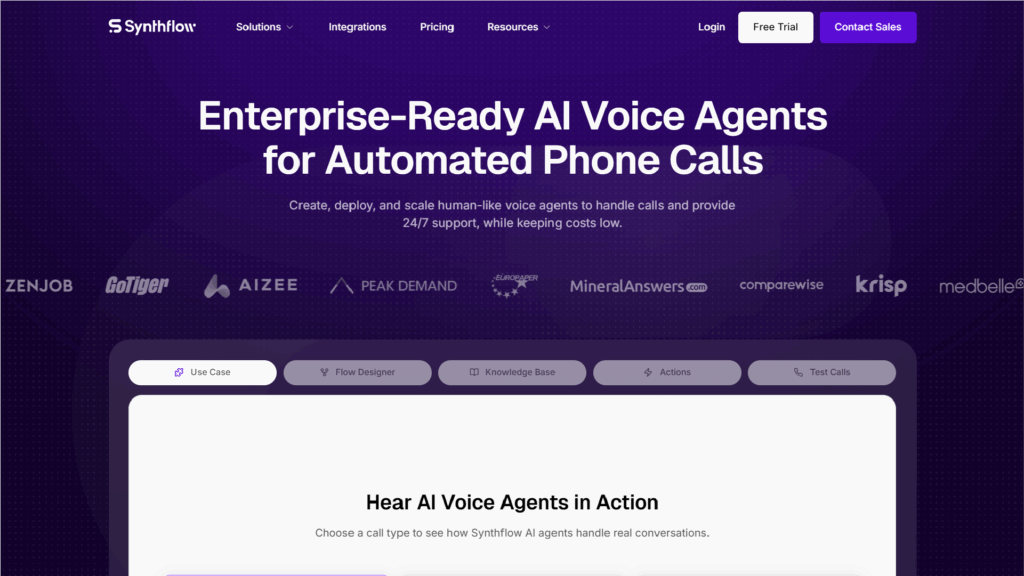
Synthflow gives developers a way to build no-code AI voice agents. While Synthflow’s AI voice agents can execute appointment scheduling, lead qualification and basic inbound call handling, they are designed primarily for healthcare providers. Synthflow is HIPAA compliant, can be integrated with common customer relationship management software (CRM) systems and can be used by teams without technical capability.
Rank 7: Air AI
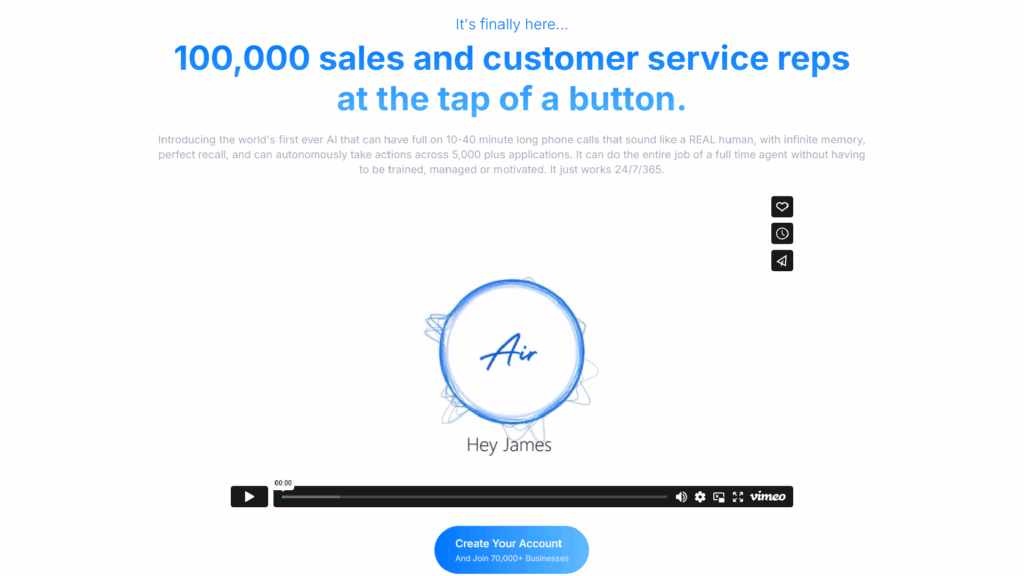
Air.ai conducts fully autonomous conversations over the telephone for both sales and customer support. Air.ai supports multi-turn inbound and outbound telephone calls and has been adopted by businesses as an alternative to using basic IVRs. Air.ai was designed to provide broad capability as opposed to deep specialization, making it a poor fit for teams who need complex reactivation processes or revenue recovery.
Rank 8: Nooks AI
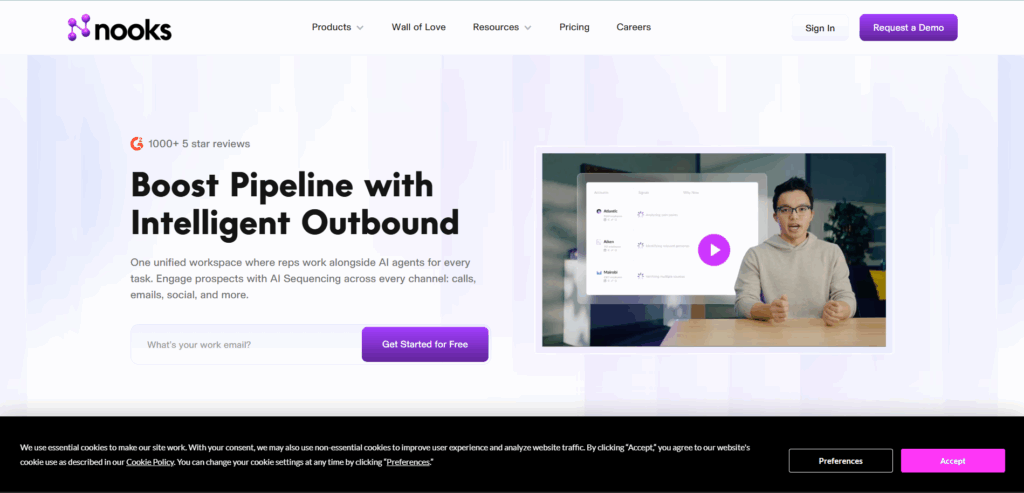
Nooks, an AI-supported sales dialer, boosts outbound SDR efficiency through multi-channel calling, AI forced-feedback, and access to advanced call data. Rather than replacing IVR systems or replacing autonomous inbound call automation systems, Nooks is designed to augment existing internal sales teams.
Rank 9: Thoughtly
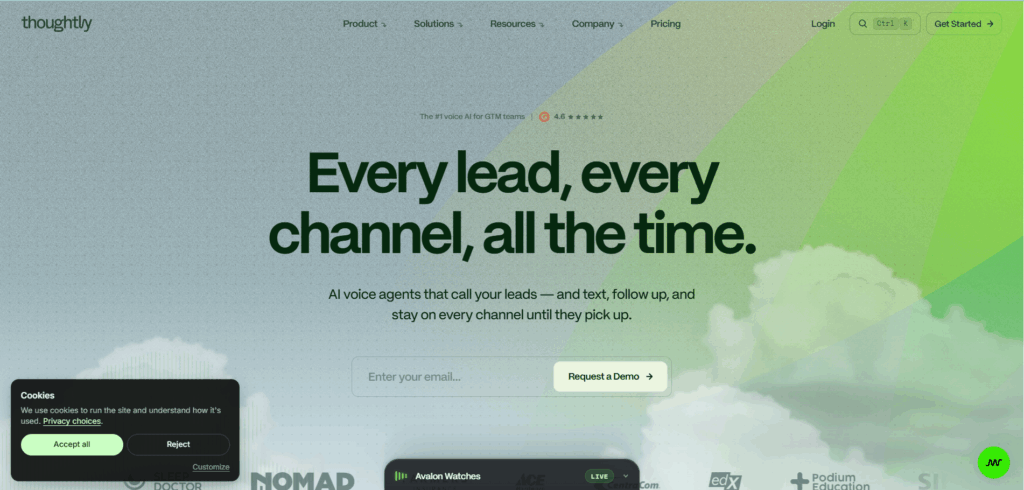
Thoughtly is a no-code visual tool that allows you to create AI voice agents for use in supporting customers, scheduling appointments, or performing additional sales-related tasks. It serves as an intermediary between a full development platform and a solution managed by someone else, enabling non-technical personnel to use Thoughtly’s capabilities.
Rank 10: Voiceflow
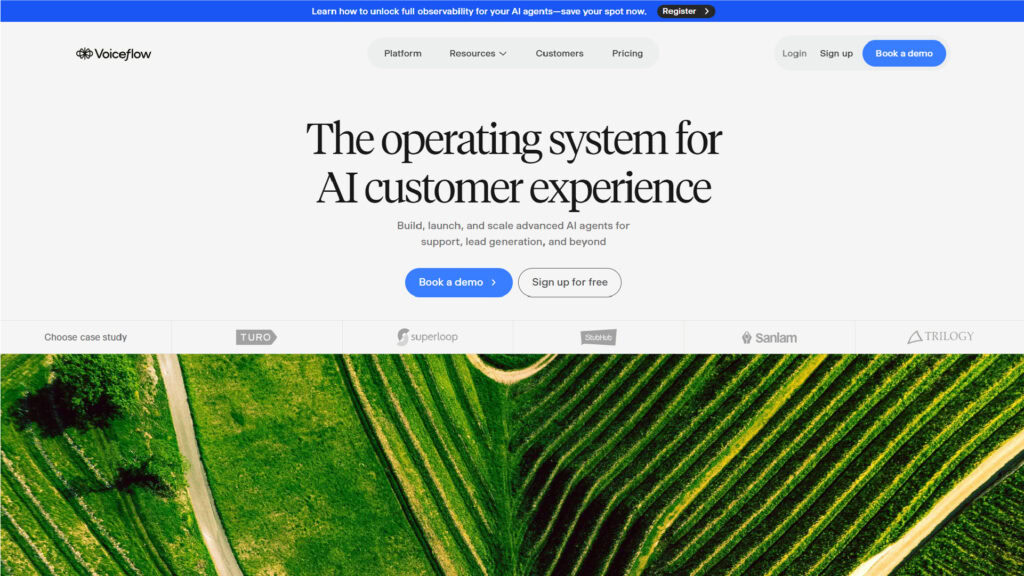
Voiceflow is a design and production platform for the creation of conversation-based IVR flows within voice, web, and other messaging channels. Voiceflow is very flexible and intended primarily for developers to use and gives developers full control over the development of their virtual receptionist systems; as such, it requires extensive customization to deliver the desired conversion rates that purpose-built platforms can offer as standard.
Top 10 AI Voice Agents: Feature Comparison Table
| Company | Conversational AI / NLU | CRM Integration | Inbound Call Automation | Outbound & Reactivation | Compliance & Security |
| Olivia AI by Pete & Gabi | Full human-like, adaptive tone + objection handling | Native sync Salesforce, HubSpot, Pipedrive, Zoho; real-time updates | Yes. 24/7 instant answer, live lead qualification, meeting booking | Yes. Purpose-built customer reactivation, win-back campaigns at scale | TCPA, GDPR compliant |
| Kore.ai | Enterprise-grade NLU, multilingual, multi-intent | Deep CRM, ERP, ticketing integration | Yes, Enterprise contact center automation | Yes, omnichannel outbound across voice and digital | SOC 2, GDPR, enterprise security |
| Vodex | Generative AI, human-like, accent-matched voices | CRM, dialer, marketing automation via API/webhook | Yes, inbound with warm transfer to human agents | Yes, high-volume outbound, collections-focused | SOC 2, ISO 27001, HIPAA, FDCPA, TCPA |
| Retell AI | Custom LLM integration, developer-configurable | Custom via API, requires engineering setup | Yes, configurable inbound flows | Yes, developer-built outbound workflows | Configurable; compliance depends on implementation |
| Bland AI | Functional conversational AI, API-driven | Custom integration via API | Yes, basic inbound handling | Yes, high-volume outbound dialing | TCPA-aware; compliance depends on configuration |
| Synthflow AI | No-code conversational AI, natural language | CRM integrations via no-code connectors | Yes, appointment scheduling, basic qualification | Limited, primarily inbound focused | HIPAA-compatible |
| Air AI | Multi-turn autonomous conversation, sales + support | CRM integrations available | Yes, inbound and outbound calls | Yes, outbound follow-up and sales calls | Standard compliance; varies by configuration |
| Nooks AI | AI coaching + parallel dialing assist | CRM sync for SDR workflows | No, outbound only, SDR-focused | Yes, outbound SDR dialing at scale | Standard sales compliance |
| Thoughtly | No-code visual conversation builder | Integrates with common business tools | Yes, basic inbound call handling | Limited, some outbound capability | Standard; HIPAA available on request |
| Voiceflow | Fully customizable NLU, developer-designed flows | Custom integrations via API and plugins | Yes, across voice, web, and messaging | Limited, requires custom build | Compliance depends entirely on implementation |
Final Thoughts
The era of traditional IVR has come to a close. The ten platforms presented on this list provide companies with cutting-edge AI IVRs that fit into both their unique size, industry and high/low levels of technical sophistication. Vodex or Voiceflow are great starting points for developers in building custom infrastructures. For organizations that want a fully managed AI sales agent up and running within two weeks and generating revenue within one month; Olivia AI by Pete & Gabi is the best solution. Now, it is simply a question of what dollar amount of revenue you can afford to lose waiting for alternatives of your IVR system.
FAQs
What is the difference between conversational IVR and traditional IVR?
Old school IVR systems utilize a preset menu system that consists of buttons for callers to input their inquiries. Modern day IVR systems, called conversational IVR systems, allow for caller interactions to be completed through conversation rather than pressing buttons. Agents like Olivia AI utilizes natural language processing and responds contextually, conversational IVR systems can manage issues without having to rely on predetermined “menu” options.
How do AI phone answering systems handle calls outside business hours?
AI-based telephone answering machines are also available to answer every incoming telephone call 24 hours a day, 7 days a week, without requiring human support. Thus, businesses can experience real revenue loss as a result of missed after-hours incoming calls. In addition, Olivia AI, an integration of the traditional and new age telephone answering systems, was able to reduce the number of leads lost due to missed requests due to time zones by providing constant coverage via both voice and text for all 24 hours a day. Similarly, Vodex focuses on those in businesses who primarily rely on regulatory compliance rather than those who primarily rely on aggressive sales reactivation.
Which industries benefit most from AI IVR alternatives?
Industries such as healthcare, financial services, insurance, real estate, hospitality, SaaS, telecommunications, and professional services see great value from AI platforms for call centers. Olivia AI has been optimized for revenue recovery in those industries. Vodex focuses more narrowly on a specific compliance-heavy type of call center, namely debt collections; whereas smaller teams with less complex calls will benefit most from platforms such as Synthflow or Thoughtly.
What should businesses look for when evaluating intelligent call routing systems?
When evaluating these various platforms, there are a number of primary considerations: depth of conversation particulars, how well each platform integrates with current CRM systems, the degree of personalization that exist within the interaction, how scalable the solution is, compliance requirements for each solution, and lastly, how quickly each solution can be deployed. Olivia AI provides a completely autonomously managed workflow across all four functions. In contrast, developer-first-oriented platforms, such as Retell and Bland, would require custom programming to achieve the same results.
How do virtual receptionists powered by AI compare to human agents?
AI Virtual Receptionists can receive an infinite amount of phone calls per second, instantly answer every call and never miss an opportunity to update your CRM! For repeatable high-volume communication such as qualification calls, scheduling calls, and reactivating customer calls, they have a lower cost, are faster, and provide greater consistency than human agents.
How does an AI voice agent differ from a chatbot for inbound call automation?
Chatbots are text based and support communication via websites, SMS, and any messaging apps. Virtual Assistant AI voice agents support full telephone conversations via real-time speech recognition, Natural Language Understanding (NLU), and adaptive responses to include: Tone, Pace, and Mentality.