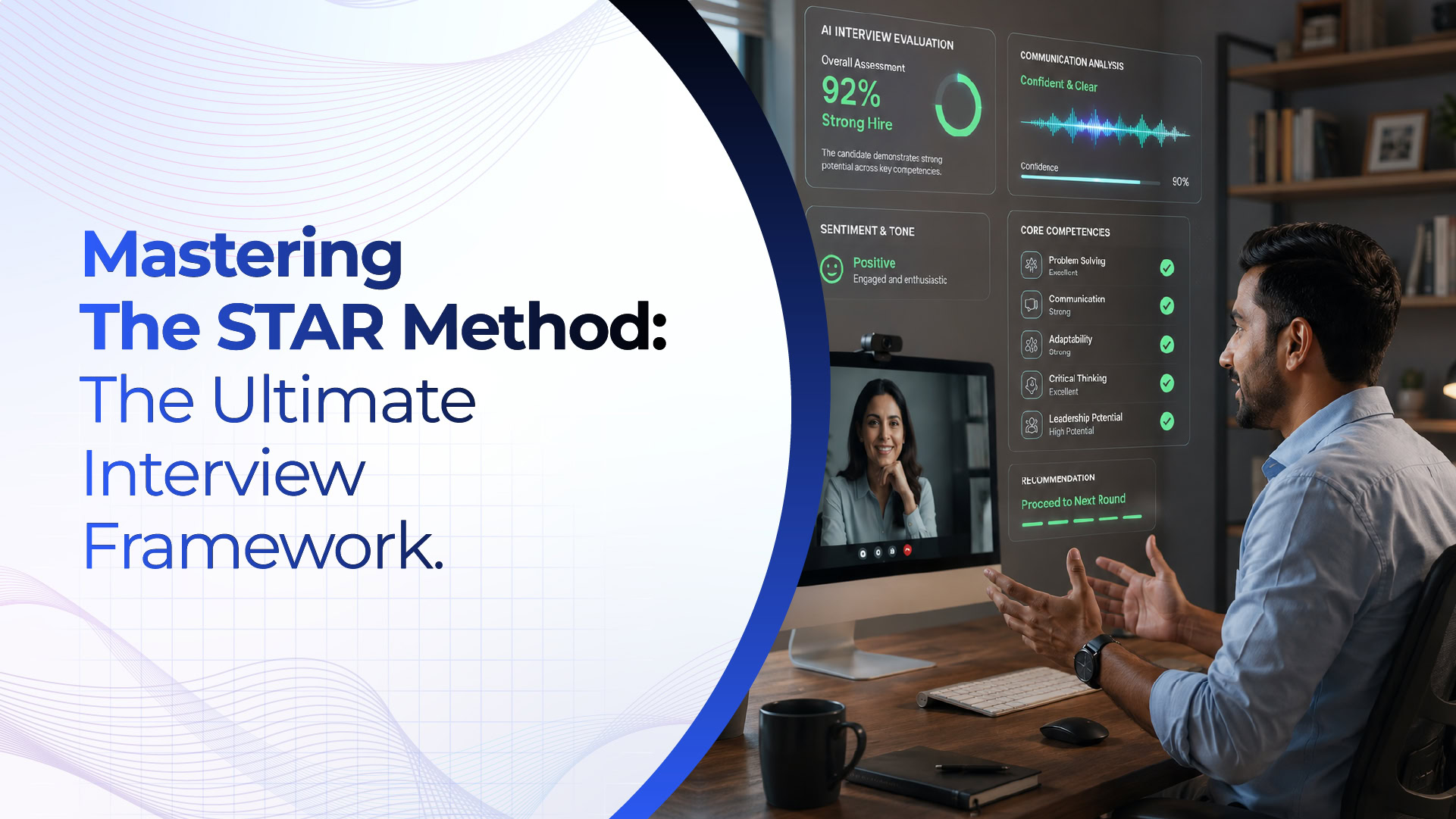
As an AI Engineer building the next generation of recruitment technology, I spend my days analyzing how human language, logic, and professional experiences are parsed by automated screening systems and human hiring managers alike. From analyzing thousands of data points and interviewing frameworks, I have seen candidates make every mistake in the book when interacting with both AI platforms and human recruiters. Have you ever completely frozen when a hiring manager or a video interview screen says, “Tell me about a time when…”?
Especially when doing a video interview, people are often confused about what is “good,” what is “bad,” and what the actual best practice is. The truth is, interview preferences often depend on the individual people (or the specific algorithms) conducting them. However, there is one universally accepted framework that most HR professionals absolutely like because it makes your answers incredibly easy to understand, map to competencies, and evaluate.
Specifically, mastering STAR interview questions is the golden ticket to proving your competence. This approach, heavily utilized and proven by HR teams across Fortune 500 companies, ensures candidates provide concise, impactful, and evidence-based answers. Even clients from PTP, a premier staffing company we work closely with, once explicitly said that this method is highly recommended for the candidates they place. When you utilize this framework, you eliminate rambling and ensure the interviewer hears exactly what they need to evaluate your potential. In this comprehensive guide, we will explore exactly how to structure your responses, backed by real-world examples, so you can walk into your next interview with absolute confidence.
What Exactly is the STAR Interview Method?
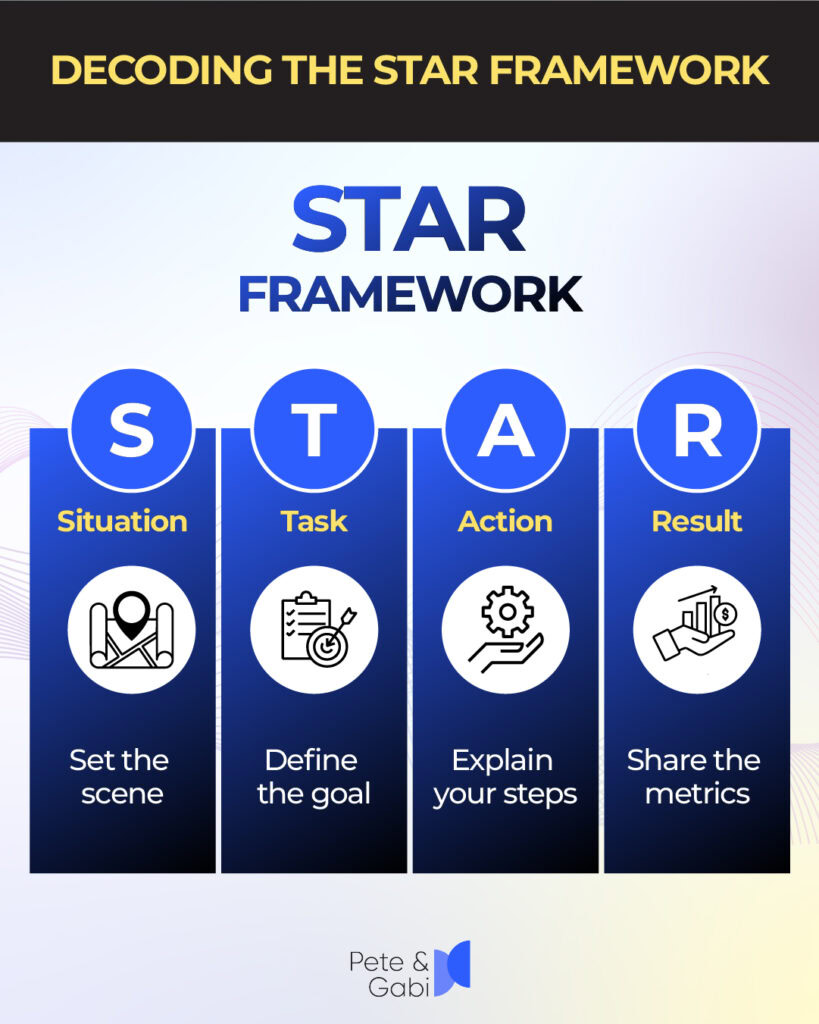
Before diving into the specific prompts, it is essential to understand the underlying framework. The STAR interview method is an acronym designed to help you tell a compelling, easy-to-follow story that highlights your professional competencies while keeping you perfectly on track.
As highlighted by MIT’s Career Advising & Professional Development, utilizing this specific structure ensures that your professional narrative remains grounded in concrete evidence rather than vague generalizations. The framework stands for:
- Situation: Set the scene and provide the necessary context. What was the challenge, and what were the stakes?
- Task: Describe what your specific responsibility or goal was in that situation. What were you expected to achieve?
- Action: Explain the exact, granular steps you took to address the challenge. (Always focus on “I,” not “We,” to highlight your specific individual contributions).
- Result: Share the outcomes of your actions, using quantifiable data, metrics, or concrete feedback whenever possible.
Why the STAR Framework Actually Works (The Data-Driven Perspective)
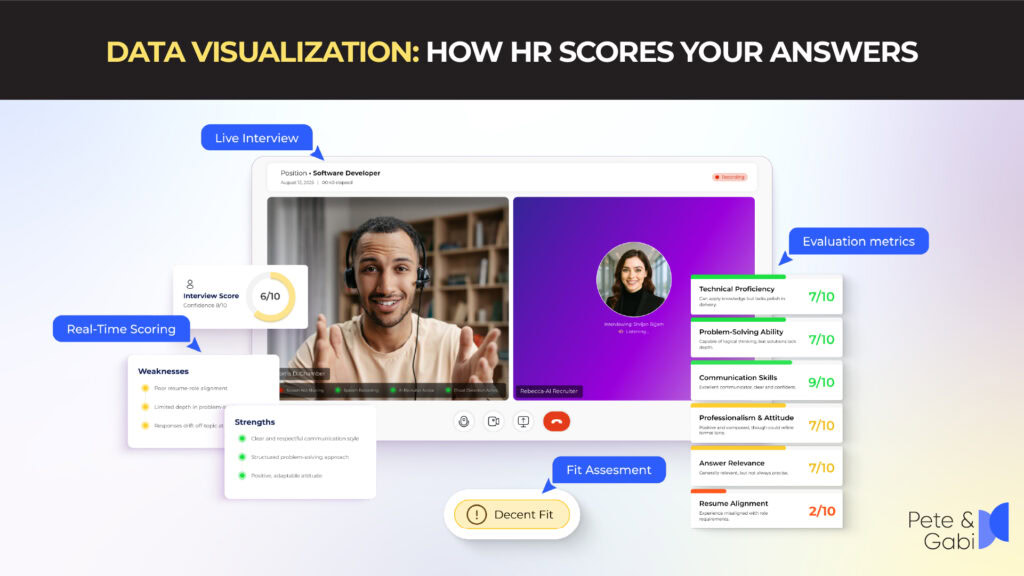
We have established what this framework is, but it is equally critical to understand why it is universally preferred by modern hiring teams. Why do recruiters and software systems insist on this specific format?
From my perspective as a technology builder, an interview is essentially a data collection exercise. Unstructured answers yield messy, subjective data that is highly prone to human bias. When a candidate simply says, “I am a great problem solver,” they are offering an unverified, theoretical claim. However, this method forces candidates to generate structured, empirical data. It shifts the conversation from theoretical adjectives to verifiable historical evidence.
Furthermore, as LinkedIn Talent Solutions mentions in their hiring resources, this methodology is invaluable for employers because it allows hiring managers to accurately predict a candidate’s future performance based on their past behavior. By utilizing situation task action result interview questions, HR professionals and advanced AI screening tools remove the guesswork from the hiring equation. It allows the evaluator to score your response against a strict, objective rubric rather than relying on a subjective “gut feeling.”
Whether an HR department is using a complex candidate tracking spreadsheetor a standard interview scoring rubric, your structured answers will easily align with their specific evaluation criteria. Let’s look at how to tackle a STAR method interview effectively by breaking down the most common behavioral prompts.
5 HR Proven Questions & Examples
Here is a curated list of the most frequent prompts, complete with highly effective answer examples, in-depth HR analysis, and actionable tips to help you craft your own winning responses when facing STAR method interview questions.

Question 1: “Tell me about a time you faced a significant challenge at work.”
This is one of the most classic STAR interview questions you will ever encounter. HR teams love it because it tests your resilience, critical thinking, and ability to remain calm when things inevitably go wrong in a fast-paced corporate environment.
Example Answer:
- Situation: “In my previous role as a digital marketing project manager, our primary software vendor suddenly went out of business just two weeks before a massive, highly publicized product launch.”
- Task: “I needed to urgently find a replacement vendor, migrate all of our existing campaign data, and ensure the launch happened on time without compromising the quality of the marketing campaign or exceeding our quarterly budget.”
- Action: “I immediately assembled a cross-functional crisis task force. I spent the weekend researching alternative vendors and scheduled emergency product demos for Monday morning. Once a vendor was selected, I negotiated an expedited onboarding process and reallocated our internal engineering resources to handle the data migration in shifts around the clock.”
- Result: “We successfully migrated the entire platform in just eight days. Not only did we hit our original launch date flawlessly, but the new vendor also ended up saving us 15% in annual software licensing costs.”
HR Analysis & Tip: Whether evaluated by a human or an AI parsing tool, the key here is actionable momentum. As LinkedIn points out in their resources, recruiters want to see evidence of problem-solving. The HR team looks for candidates who take ownership of crises rather than placing blame on external factors.
- Pro Tip: Always end your answer with a positive, measurable outcome. Even if the situation started as a disaster, frame it as an opportunity where you saved the company time, money, or resources.
Question 2: “Describe a situation where you had to work with a difficult colleague.”
When looking for comprehensive STAR method interview questions and answers, conflict resolution is always at the absolute top of the list. Employers want to know you can maintain professionalism and productivity when personalities clash, without constantly running to management to fix your interpersonal issues.
Example Answer:
- Situation: “I was paired with a senior web designer who consistently missed intermediate deadlines, which consistently delayed my back-end coding work on a high-stakes client website.”
- Task: “I had to find a way to get the design assets on time without damaging our working relationship, circumventing his authority, or missing the final client delivery date.”
- Action: “Instead of escalating the issue immediately to our mutual manager, I invited him to a brief, informal coffee chat. I asked if my workflow was inadvertently causing bottlenecks for him. He revealed he was completely overwhelmed with another major account. We collaboratively agreed to implement daily 5-minute stand-ups and break his design deliverables into smaller, more manageable daily batches rather than weekly dumps.”
- Result: “He hit all subsequent micro-deadlines because the work felt less overwhelming. We delivered the website to the client two days early, and our working relationship improved significantly because we established a foundation of open communication.”
HR Analysis & Tip: This answer heavily proves emotional intelligence. The action taken was proactive, empathetic, and collaborative rather than combative or passive-aggressive. HR teams use candidate scorecards to rate emotional maturity, and this answer scores perfectly.
- Pro Tip: Never speak negatively about former coworkers. Frame the conflict as a logistical or communication challenge, not a fundamental personal flaw of the other person.
Question 3: “Tell me about a time you failed or made a mistake.”
Many candidates dread this prompt and try to sidestep it, but it is one of the most revealing STAR interview questions in an employer’s arsenal. It evaluates your accountability, humility, and ability to adopt a growth mindset after a professional misstep.
Example Answer:
- Situation: “During my first year as a junior account executive, I miscalculated the pricing for a bulk hardware order and sent a major client a quote that was 20% too low.”
- Task: “I had to correct the mathematical error with the client without losing the sale or damaging our reputation, while also explaining the margin loss to my sales director.”
- Action: “I immediately owned the mistake. I went to my director, explained the math error transparently, and proposed offering the client a free month of premium technical support to soften the blow of the corrected invoice. I then called the client directly, apologized for the oversight, and presented the updated quote along with the bonus support package.”
- Result: “The client appreciated the rapid honesty and accepted the revised quote without issue. Furthermore, I created an automated pricing checklist template that our entire sales team now uses to prevent similar calculation errors from happening again.”
HR Analysis & Tip: The HR team wants to see that you do not hide from your errors. As MIT’s career resources suggest, framing your narrative around what you learned is crucial. The candidate took immediate accountability and, most importantly, created a systemic solution to prevent the mistake from reoccurring.
- Pro Tip: The “failure” you choose should be a genuine, understandable mistake, not a disguised strength (e.g., avoid saying “I work too hard and burn out”).
Question 4: “Give an example of a goal you reached and how you achieved it.”
This prompt allows the hiring manager to see your ambition, strategic planning capabilities, and execution skills. It is a behavioral staple, answering exactly why this is one of the most effective STAR interview questions used to gauge actual competence on the job over a sustained period of time.
Example Answer:
- Situation: “Our marketing department had an aggressive goal to increase our monthly newsletter subscriber base by 20% by the end of Q3 to boost end-of-year sales.”
- Task: “As the content lead, it was my specific responsibility to drive organic sign-ups without increasing the paid advertising budget.”
- Action: “I analyzed our past email performance metrics and realized our long-form content wasn’t converting well. I initiated an A/B testing strategy, creating shorter, punchier emails with clear, highly visible calls-to-action. I also partnered with the social media team to host a LinkedIn Live event, requiring an email sign-up to access the exclusive downloadable resources discussed during the stream.”
- Result: “By the end of Q3, we didn’t just hit the 20% target; we increased our subscriber base by 35%, acquiring 5,000 new, highly engaged leads organically without spending a single dollar of the ad budget.”
HR Analysis & Tip: The response shows strategic thinking, data analysis, and cross-functional collaboration. The candidate clearly outlines how the result was achieved, not just the result itself.
- Pro Tip: Use concrete numbers, percentages, and timeframes in your ‘Result’ section to give your achievements scale and undeniable credibility.
Question 5: “Share a time when you went above and beyond your job description.”
Employers are always looking for self-starters and intrapreneurs. This prompt helps them identify candidates who will add exceptional value rather than just doing the bare minimum. Preparing for these types of STAR interview questions ensures you showcase your dedication and proactive nature.
Example Answer:
- Situation: “I was working as a customer service representative during a massive retail holiday rush, and our phone wait times were consistently exceeding 45 minutes, leading to high caller frustration.”
- Task: “While my primary job was simply to answer calls as fast as possible, I wanted to find a systemic way to reduce the queue and improve the overall customer experience.”
- Action: “I noticed a trend: nearly half the callers were asking the exact same question about holiday shipping deadlines. On my lunch break, I drafted a quick, highly visible banner with the shipping cut-off dates and asked our web development team to push it to the homepage. I also recorded a new, temporary intro for our automated phone routing system answering the question upfront before callers even entered the queue.”
- Result: “Within two hours of implementation, our total call volume dropped by 30%, bringing wait times down to under 10 minutes. Management was so impressed they ended up making the homepage banner a permanent holiday strategy for the company.”
HR Analysis & Tip: This example proves the candidate is observant, highly proactive, and willing to step outside their specific departmental silo to solve a systemic issue for the company. HR professionals love this because it signals high leadership potential.
- Pro Tip: Ensure your example highlights an action you took voluntarily and proactively, not a task that was explicitly assigned to you by a manager.
How These Questions Bridge the Gap Between Candidates and HR
It is easy to view behavioral interviews as a one-sided interrogation, but the reality is that utilizing this structured method creates a mutually beneficial bridge between the applicant and the hiring team.
For the Candidate: Nerves often cause even the most qualified professionals to ramble, lose their train of thought, or undersell their achievements. This framework serves as a mental safety net. It guarantees that you will naturally highlight your problem-solving abilities, showcase your soft skills, and attach concrete value to your past actions without getting lost in unnecessary details. It empowers you to control the narrative.
For the HR Team and Hiring Managers: Recruiters are tasked with finding objective proof of competence in a highly subjective environment. When you answer using a structured narrative, you are directly handing the HR team the exact data points they need to advocate for you. You make their job easier by clearly defining your impact, which allows them to easily map your skills to their internal scoring rubrics and confidently push your profile forward to the final decision-makers.
Ultimately, coming from the perspective of an AI Engineer who designs evaluation systems, I can confidently tell you that structure is everything. By understanding how these questions help both sides communicate effectively, you can transform a highly stressful video or in-person interview into a collaborative showcase of your professional value.