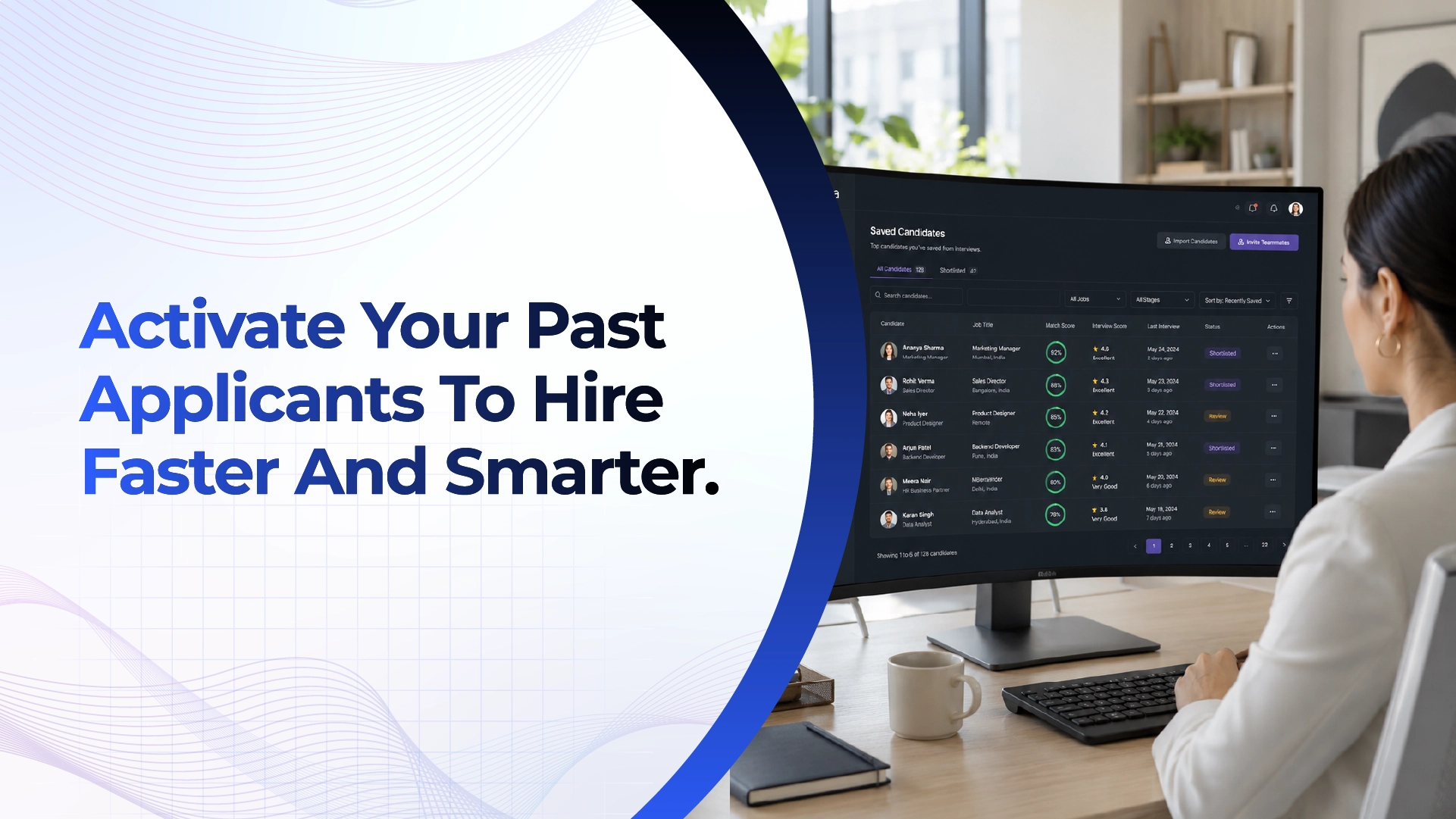
The most pervasive and costly lie in modern recruiting is that every time you open a new job requisition you have to start from scratch. Every year, organizations spend tens of thousands of dollars on job board ads, agency fees, and outbound sourcing to acquire top-tier talent. They interview, they evaluate, and they hire one person. But what about the other fifty applicants who were thoroughly vetted and didn’t get the offer?
In most organizations their data sits in the Applicant Tracking System (ATS) slowly degrading and going completely cold.
If your hiring team can develop a talent pool of these pre-vetted professionals, your average time-to-hire will drop dramatically. The big challenge though is how to continually engage this massive database of candidates without adding more administrative recruiting headcount to your payroll.
A full guide that reveals the secret to keeping a community of engaged candidates alive. We’ll unpack the key differences between active pipelines and passive pools, find out why candidates go cold, how to re-engage your past runner-up applicants, and how smart screening technology allows lean teams to process reactivated talent at an unprecedented scale.
What is a talent pool, and how is it different from a talent pipeline?
To optimize your recruitment stack, you need to know the difference between the staging areas of your database at a fundamental level. A talent pool is a large, ever-growing database of candidates who’ve shown interest in your brand, possess relevant skills, or have been vetted previously, but are not currently interviewing for an open position.
This group is comprised of past applicants, individuals who have attended your corporate recruiting events, and passive professionals your team has successfully sourced on LinkedIn. This group will be your strategic bench of players going forward.
By comparison, understanding a talent pipeline vs. a talent pool is about present, active intent. Talent pipeline refers to the candidates that are already moving through your interview process for a specific, open job requisition.
The pool and the pipeline have a symbiotic relationship – the pool is actively feeding the pipeline. A world-class recruiting team doesn’t post a job ad on the internet when a new role opens up. Instead, they jump into their existing pool, pull the most relevant people, and go straight into the active pipeline.
Why do most talent pools go cold within a few months?
They understand the strategic importance of saved candidates, but most corporate databases go completely cold in three to six months. This is because most companies use their ATS as a filing cabinet, not as a community.
The infamous phrase, “We will keep your resume on file for future opportunities,” is generally interpreted by job seekers as a polite rejection. Employers seldom follow up, so candidates mentally check out. By the time a recruiter finally emails a candidate she applied eight months ago about a new opening, the candidate has likely forgotten about the company, taken another job, or still holds a grudge over being rejected and not hearing back.
The workforce planning data tells us that the primary driver of cold talent is the absence of automated low-friction touchpoints. Human recruiters are overwhelmed with handling their open requisitions. They just don’t have the calendar bandwidth to manually send “checking in” emails to 500 past applicants each month. If there’s no automated way to reach out, the database just sits there, and the company has to spend money to source brand new candidates all over again.
What does a healthy talent-pool workflow look like, step by step?
A healthy, thriving database operates like a well-oiled marketing machine. It relies on structure, precise tagging, and consistent communication.
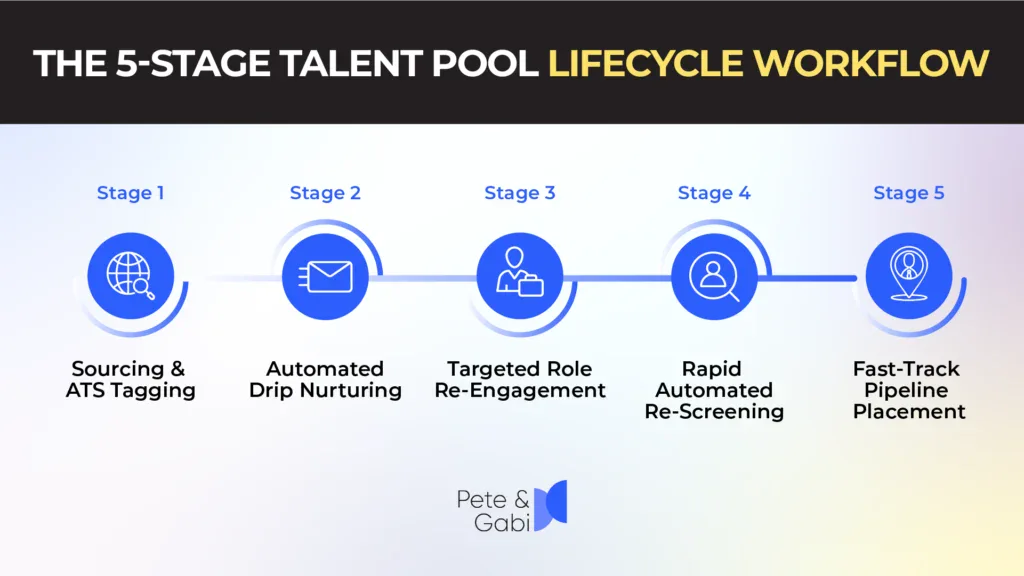
To make this work at scale (without adding administrative headcount to your HR team), you’ll need to build a highly automated workflow. This is how the lifecycle works:
Step 1: Sourcing & ATS Tagging When a candidate comes into your system, they need to be tagged with more than just their current job title. They need to be tagged with their core competencies and geographic location.
Step 2: Automated Drip Nurturing: Once a candidate is in the pipeline, you can use your ATS or recruitment marketing software to automatically send out quarterly emails with company news, industry insights or product updates to stay top of mind with the employer brand.
Step 3: Targeted Role Re-Engagement: When a position becomes available, the system filters by the exact tags and sends a personalized email inviting those specific candidates to reactivate their application.
Step 4: Rapid Automated Re-Screening : Months may have gone by, so the candidates are rapidly screened through a conversational layer to confirm current salary expectations and availability.
Step 5: Fast-Track Pipeline Placement Candidates are screened and verified to bypass the first recruiter phone screen and move directly to the hiring manager.
How do you re-engage “silver medalist” candidates from past searches?
Your silver medalist candidates are your most valuable asset of all the people in your database. These are the highly qualified candidates who were one step away from a job offer after a final interview in a past search – only to lose out to someone who was a slightly closer fit to the immediate need.
The quickest way to make a good-quality hire is to rehire them, since they have already passed your technical screens and fit assessments. But to bring back a silver medalist means a careful, deeply personalized strategy.
Here are some best practices for bringing them back to the table:
Recognize Their Past Achievement: Don’t send them a generic job alert. Make clear how far they got in the last go-around and repeat how much the hiring panel liked their presentation or portfolio.
Provide a “Fast-track” Experience: If the new role is very similar to the one they previously interviewed for, don’t make them jump through the same initial hoops. Respect their time – tell them specifically that they will be taken directly to the technical panel, bypassing the initial HR screen.
Be Transparent About the Change: Explain specifically why this new role is open and why you thought of them specifically. These runner-up professionals will be very likely to respond to your email within hours, skipping the painful 30-day sourcing phase altogether when you build a warm candidate pipeline.
How much time does maintaining a talent pool actually take, and how do teams keep it up without extra headcount?
The most common objection from talent acquisition directors is that it takes too much work to nurture a large candidate community. But if done right with modern recruitment technology, managing this ecosystem takes almost zero manual effort daily from your human recruiters.
Imagine the operational difference between a neglected database, and a well maintained database:
| Operational Metric | The Cold, Unmaintained Database | The Actively Nurtured Database |
| Recruiter Manual Effort | High. Recruiters must manually search old PDFs and guess who is still available. | Low. Automated tags and bi-monthly automated check-ins keep the data fresh. |
| Candidate Response Rate | Under 15%. Most emails bounce or are ignored due to lack of brand affinity. | Over 45%. Candidates recognize the brand name from the automated campaigns. |
| Time-to-Shortlist | 14 to 21 days of sourcing and cold outreach. | 24 to 48 hours to activate and screen known entities. |
| Brand Perception | Viewed as transactional; candidates feel like numbers. | Viewed as relationship-driven; candidates feel valued. |
Furthermore, the financial argument for doing this is undeniable. The cost of acquiring a new candidate versus re-activating a known entity is vastly different.
Sourcing Costs: Brand-New vs. Known Candidates
| Sourcing Strategy | Average Sourcing Time | Estimated Cost-Per-Hire Impact | Speed to Interview |
| Cold Sourcing (Job Boards & Ads) | 3 to 4 Weeks | High (Ad spend, agency fees, labor hours) | Very Slow |
| Re-Engaging Known Candidates | 1 to 3 Days | Near Zero (No ad spend required) | Extremely Fast |
Teams keep this up without extra headcount by utilizing mass-email marketing features built into their ATS and leveraging automation to handle the heavy lifting. A recruiter should only step in when a candidate raises their hand to say, “Yes, I am interested in this new role.”
Where does fast, consistent screening fit into keeping a talent pool warm?
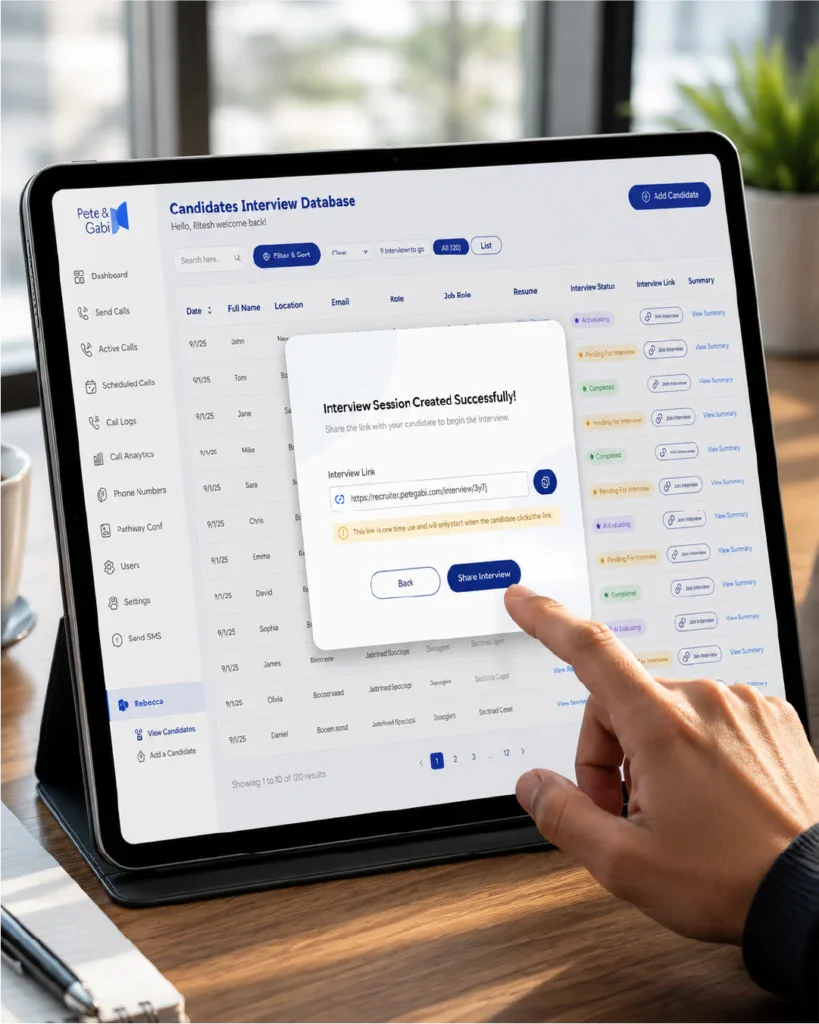
The hidden danger to successfully re-engaging your past applicants is the volume surge. You send a really good re-engagement email to 100 past applicants. 40 of them respond that they’re interested and you have a huge problem on your lean recruiting team’s hands. They can’t do 40 manual phone screens this week and still keep up with the other open requisitions.
This is exactly where rapid, intelligent conversational screening fits into the puzzle.
When you re-engage past talent, you need a system to process them right away before they lose interest again. Modern teams do so by plugging conversational evaluation agents into their workflow. Rebecca AI Recruiter for example is not a sourcing tool that finds people on the internet, it is the execution layer that processes your re-engaged candidates instantly.
When your 40-plus applicants raise their hands, they are immediately sent a link to complete an interactive, conversational voice interview with Rebecca. The AI checks their current salary requirements, digs into what new skills they have acquired since they last applied and scores them against the new rubric. When the morning arrives your human recruiter logs in, views the top five perfectly qualified, new interest candidates and sends them directly to the hiring manager.
If you want to learn how to roll-out this kind of speed across all of your high-volume roles, read our guide: How to automate high volume hiring without sacrificing experience. Plus, if you’re looking to add to the very top of your funnel, you might want to explore specialized AI applicant sourcing software to help bring net-new talent into your ecosystem.
By automating the outreach and intelligently screening the responses, you can build a huge, hyper-responsive community of talent without ever adding a single recruiter to your payroll. Discover how intelligent screening can help you re-engage your own database, check out our recruitment solutions or register for Rebecca AI.