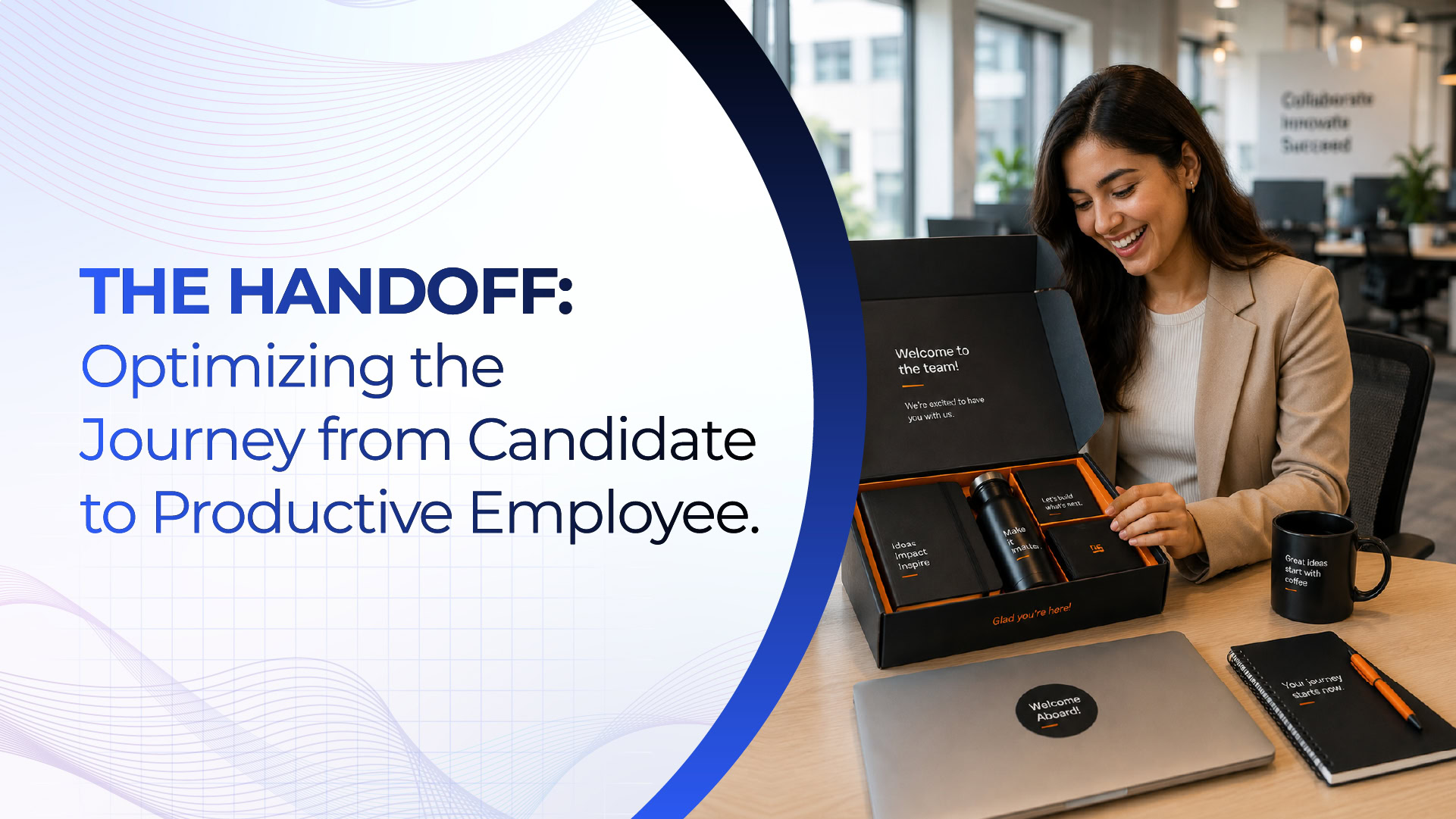
After weeks of sourcing, screening, and technical assessments, the final verbal offer is accepted. For many talent acquisition teams, the requisition is marked closed. However, from an operational and financial perspective, the most critical phase has just begun.
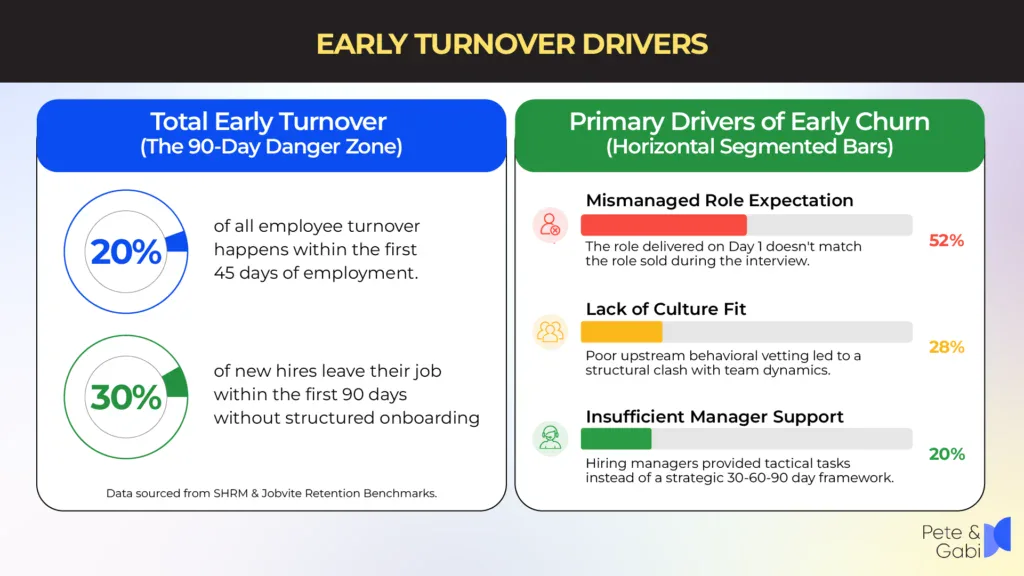
Employee onboarding is not simply general HR administration; it is the vital validation of the entire recruitment lifecycle. The risk of mishandling this transition is exceptionally high. According to data from the Society for Human Resource Management (SHRM), 20% of staff turnover occurs within the first 45 days of employment, while 33% of new hires look for a new job within their first 6 months. This early churn represents a massive financial loss, including wasted recruiting fees, lost productivity, and the soft cost of damaged team morale.
Understanding onboarding as a strategic process that bridges the gap between offer acceptance and full employee productivity is essential for minimizing early retention risks. Here is what actually happens after the offer is signed and how top-tier organizations structure the journey for success.
Where does onboarding actually start; offer acceptance, or day one?
The standard operational failure in talent management is assuming that the onboarding process begins when the new hire physically or virtually arrives on their start date. In a high-performing talent strategy, employee onboarding begins the microsecond the candidate formally accepts the offer. The period between acceptance and Day One is known as “pre-boarding,” and it is a highly sensitive window for candidate engagement.
This window is often a dangerous quiet period. Candidates are vulnerable to counter-offers from their current employers or late-stage outreach from competitor hiring processes. Silence from your organization during this period breeds second-guessing. Structured pre-boarding mitigates this risk by initiating immediate touchpoints:
- Immediate Provisioning: Automate IT workflows to order equipment, provision software licenses, and generate the employee ID immediately upon acceptance.
- The Welcome Narrative: Deploy an automated communication flow that includes a welcome video from leadership, a week-one itinerary, and required I-9 documentation so administration is cleared before the actual start date.
- Peer Outreach: Facilitate an outreach touchpoint from a peer mentor or the hiring manager, strictly to express excitement without discussing logistical requirements.
What’s the difference between onboarding and orientation?
Confusion between these two concepts is a primary driver of disjointed employee experiences. A compliance checklist does not constitute a valid onboarding program.
Orientation is a single event, or series of short events, primarily focused on administrative compliance. Onboarding is a comprehensive, strategic process focused on operational integration and long-term retention. SHRM research confirms that employees who experience great onboarding are 69% more likely to stay with a company for at least 3 years.
| Focus | Administrative Compliance (Paperwork, Benefits, I-9s, Handbook) | Operational Integration (Job roles, Performance KPIs, Social Network) |
| Duration | 1–2 Days | Typically 90–365 Days |
| Ownership | HR / Compliance / Payroll | Hiring Manager / Department Leads / Peer Mentors |
| Goal | Legal presence and policy acknowledgment | Cultural fit, acceleration to productivity, and performance |
What does a strong 30-60-90 day onboarding plan actually include?
For a staffing agency or in-house team to validate their quality of hire, they must structure a scalable new hire onboarding checklist that hiring managers can easily deploy. A standard 30-60-90 day plan ensures consistent delivery of the promised role expectations, drastically reducing early churn.
The 30-Day Mark: Learning & Assimilation
During the first thirty days, the objective is foundational integration.
- Compliance Completion: Confirmation that all regulatory orientation requirements and corporate training modules are finalized.
- Peer and Cultural Integration: Active social integration facilitated by an assigned mentor or buddy to answer informal operational questions.
- Competency Mapping: Standardized upstream evaluation ensures that interview scorecards are used to map initial training directly to the validated core competencies identified during the interview phase.
The 60-Day Mark: Collaboration & Initial Contribution
The second month shifts focus from passive learning to active collaboration.
- Initial Project Review: Management review of the employee’s first substantive deliverable or completed project.
- Network Activation: Explicit introductions to cross-functional stakeholders and department dependencies essential for long-term role success.
- Performance Metrics Check: Review of performance against defined key performance indicators (KPIs), identifying any skill gaps that require immediate intervention.
The 90-Day Mark: Independence & Performance
By the end of the first quarter, the employee should be operating with autonomy.
- Full KPI Ownership: Transition from guided training to independent execution of core role responsibilities.
- Performance Alignment: Review of the first 90 days against standard rubrics to validate both cultural and operational fit.
- Continuous Development: Transitioning from immediate onboarding metrics to long-term career pathing conversations and goals.
What causes new hires to quit in the first 90 days, and how much of it traces back to the hiring process itself?
The vast majority of early turnover can be traced directly back to upstream failures in the recruitment lifecycle, rather than a lack of training on the job itself.
- Job Misalignment (Upstream Validation Gap): If the interview process was unstructured, relied heavily on subjective intuition, or did not utilize standardized evaluation rubrics, the employee arrives for a job they were structurally mismatched for. They have been sold a different role than the one that actually exists. This gap in role expectations is a leading cause of early resignation.
- Mismanaged Culture Fit (Upstream Vetting Failure): If soft skills, adaptability, and collaboration styles were not validated against a rigid rubric during the selection phase, the employee will inevitably clash with their new environment, despite possessing the necessary technical skills.
- Lack of Clear Goals (The Handover Failure): The hire assumes the role requires strategic input, but the manager provides a purely tactical task list. If the recruiter did not properly communicate the role KPI structure discussed with the manager during the intake session, the employee quickly quits in frustration.
How does onboarding connect back to the candidate experience they had during hiring?
Onboarding is the continuous validation of the promise made during the candidate experience. If your candidate experience process was sophisticated, digital, transparent, and highly structured, your new hire arrives on day one expecting that exact same environment.
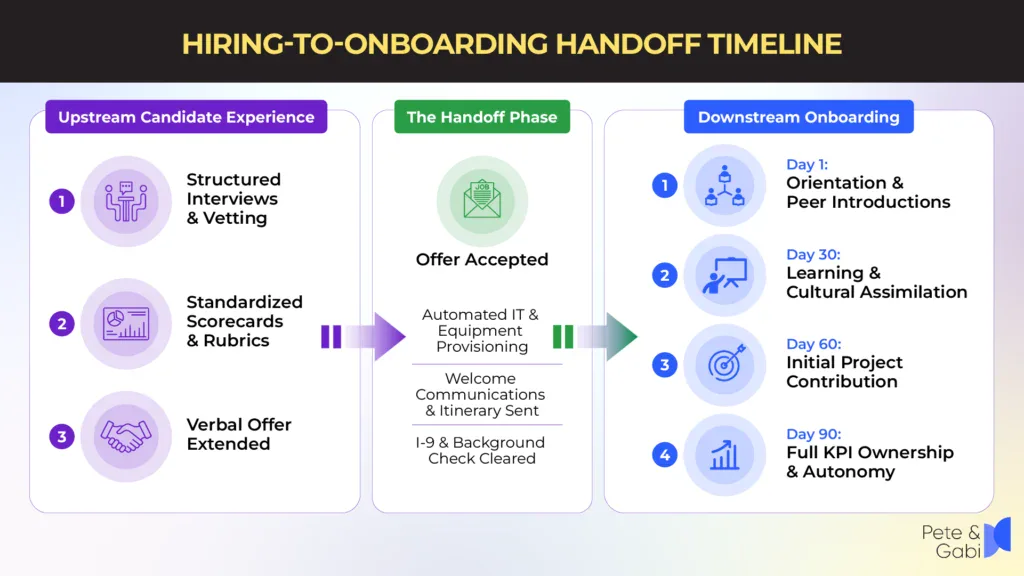
Research from LinkedIn Talent Solutions indicates that continuity between the hiring phase and the employment phase is vital. If a candidate experienced a seamless, automated hiring funnel but arrives on day one to a fragmented, low-tech, and disorganized team, the resulting cognitive dissonance shatters their trust immediately.
Onboarding is the continuous downstream execution of the upstream candidate journey. Gaps in process mean gaps in retention. A seamless transition reinforces the employer brand and proves to the new hire that the organization operates with integrity and operational excellence.
What can a staffing agency or in-house team automate in the handoff from hiring to onboarding without losing the personal touch?
Automation must not replace connection; it must enable it. When in-house talent acquisition or a staffing agency automate administrative bottlenecks, they free the hiring manager to focus exclusively on cultural integration and performance coaching.
Internal in-house teams can automate provisioning by triggering equipment orders, system access requests, and license provisioning based directly on the digital offer acceptance. Recruiters can automate post-offer check-ins so hiring managers do not have to manage logistics while attempting to manage integration.
External staffing agencies must automate the digital transfer of the entire candidate file including background checks, I-9 details, and evaluation rubric scores directly into the client’s Human Resources Information System (HRIS) upon acceptance. This ensures the client HR team is not waiting on a candidate for documents already secured upstream.
The personal touch, including manager one-on-ones, peer mentorship, and structured feedback loops, must be protected at all costs. The administrative framework required to deliver those touchpoints should be fully automated. A structured, well-communicated hiring process—the kind our intelligent screening platform Rebecca AI Recruiter supports upstream—sets the operational tone that new hires carry straight into onboarding.
By systematically structuring the hiring handoff, organizations can definitively stop early turnover before it starts, ensuring that every new hire is positioned for long-term productivity and success.