Traditional hiring processes often fall apart during the scheduling phase. When recruiters and candidates struggle to align calendars for initial screening calls, the entire hiring timeline drags, and the best talent inevitably drifts toward faster opportunities.
The persistent challenge of attracting high-quality candidates in today’s competitive job market has forced talent acquisition teams to rethink their digital architecture. Manual screening solutions that are no longer effective are not a sustainable way to scale departments when candidates lose interest within 10 days of applying.
A video interview platform digitizes the initial evaluation phase and breaks this bottleneck. Rather than playing manual phone tag, candidates may use these tools to demonstrate their skills on their own time and give hiring teams structured data to begin the hiring process. In this article, we discuss how these platforms increase the accuracy of candidate assessments, speed up the hiring process, and add to your overall recruitment strategy.
What is a video interview platform?
A video interview platform is a type of software that enables companies to conduct, record and evaluate job interviews over digital video, as opposed to manual phone screens or in-person meetings.
These platforms provide a structured framework allowing recruiters to log candidate responses, store evaluation notes, and share clips with hiring managers. They streamline the hiring process into a centralized, digital assessment flow, moving away from a fractured email scheduling system. The digitization of this critical touchpoint allows organizations to create a searchable library of candidate competencies that can be accessed long after an interview has ended.
What’s the difference between live and asynchronous (one way) video interviews?
The key difference between asynchronous and live video interviews is the timing and interaction. Asynchronous interviews allow candidates to answer pre-set questions at their own time, while live interviews occur in real-time.
| Feature | Live Video Interview | Asynchronous (One-Way) |
| Interaction | Real-time, two-way dialogue | Pre-recorded, one-way responses |
| Flexibility | Requires shared calendar time | Candidate records whenever they want |
| Primary Use | Final rounds & behavioral fit | High-volume screening |
What are the benefits of using a video interview platform?
A video interview platform has many advantages like a more efficient candidate evaluation process, reduced bias in the first screening, and faster scheduling.
If candidates are not contacted within ten days they lose interest in the role. Video interviews enable companies to automate the screening process and reduce time to hire, while ensuring all applicants are given an equal chance to showcase their skills. Video platforms also offer a degree of objectivity; every candidate is asked the same questions in the same order, creating a data-driven, level playing field for evaluation that is incredibly difficult to achieve through manual phone screens.
What features should you look for in a video interview platform?
When thinking about a video interview platform, you need to look beyond just the basic video streaming functionality. The right tool is a laser focused hiring center that automates administrative work and gives you more insight into what a candidate can do.
The necessary Characteristics to be observed are:
- Automated Scheduling: The platform should be able to connect directly with the calendars of your interviewers and candidates. This removes the “email tennis” of proposing and confirming times, and therefore makes sure the hiring process continues without human intervention.
- Structured Evaluation Rubrics: Pick flexible scorecards instead of generic notes. They enable interviewers to assess candidates against predefined, job-relevant competencies, thus decreasing interviewer bias and promoting a fair assessment.
- Data Storage & Privacy Compliance: As the world is looking at candidate data, it is imperative to select a platform that is SOC2 compliant, providing robust encryption of personal applicant data and stored video files.
- ATS Integration: Your platform must integrate with your current applicant tracking system (ATS). It should send interview invitations automatically when a candidate enters a certain stage and instantly return feedback and video links to the candidate’s profile.
- Mobile Accessibility: Candidates should be able to conduct their interviews on any mobile or desktop device without needing to download complicated software, which significantly reduces abandonment rates.
How does a video interview platform fit into your overall hiring process?
A video interview platform is more than just a screening tool, it is a smart gatekeeper in your end-to-end recruitment pipeline. It’s positioned between the first application and the final hiring decision. It’s a fast-tracked, data-driven funnel for your hiring process.
Here is a description of its role in the process:
- Application Stage: The platform automatically sends an invitation to candidates who have applied, based on the criteria you have set in your applicant tracking system (ATS).
- Screening Stage: This is the stage where the platform shines the most. It runs a structured, automated screening round on the hundreds of applications that would normally sit in a ‘un-reviewed’ bucket.
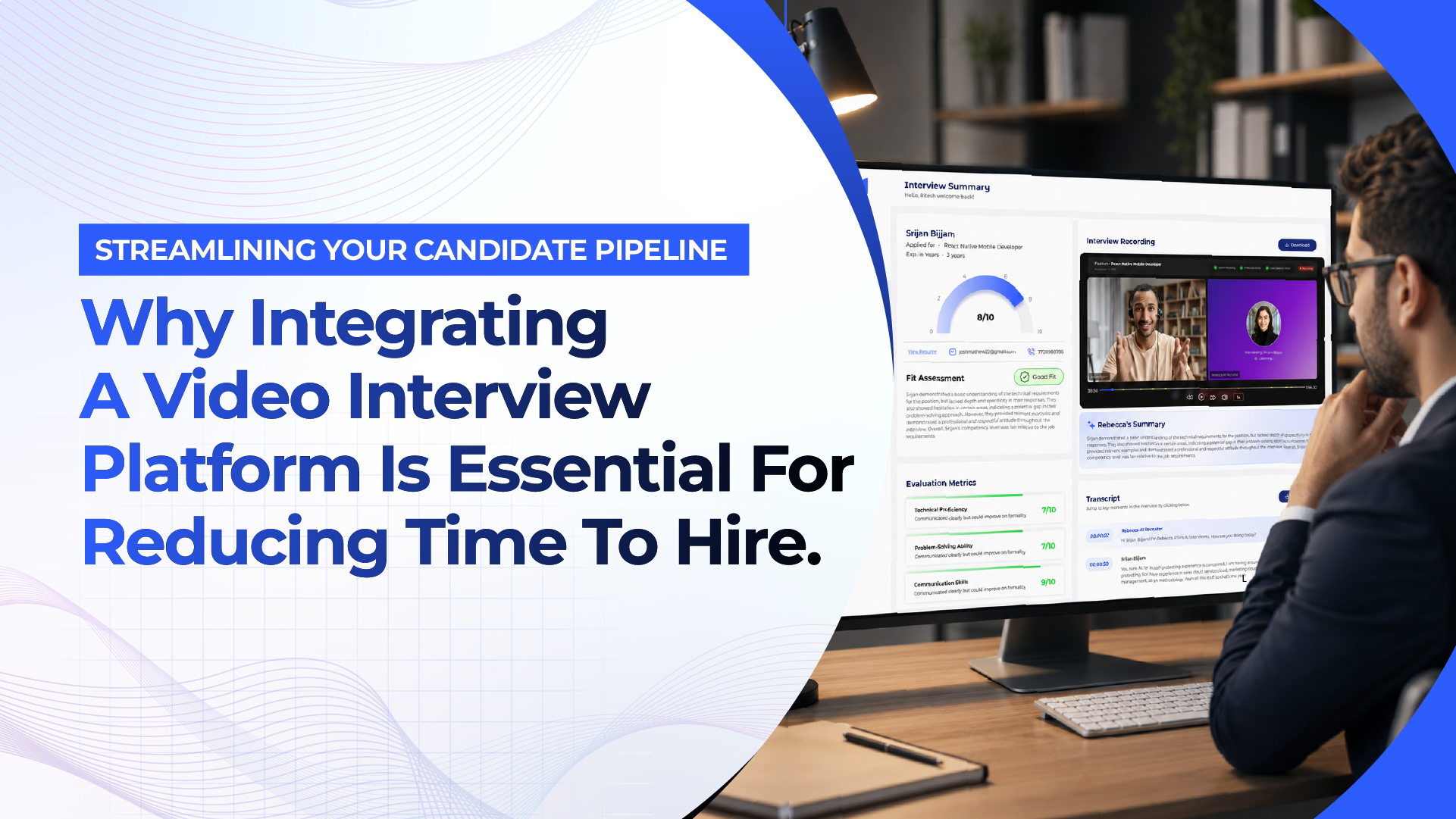
- Decision Stage: The platform provides a summary of the candidate’s performance, highlighting competencies and evaluation scores, before the profile is reviewed by the human recruiter.
- The final interview: By the time a candidate reaches the final interview stage, the hiring manager has already reviewed their screen, meaning live time is spent discussing deep-dive strategic issues rather than repeating foundational questions.
The model guarantees that recruiters cease to be “process coordinators” and become talent partners, directing their efforts to the interactions that generate the most value.
The Natural Evolution: Voice AI Interviewing
Video interview platforms are a huge step forward, but the next step in the same workflow is Voice AI interviewing. This evolution is natural and platforms like Rebecca AI are a representation of this. Rebecca is hosting interactive, two-way conversations that evaluate candidate skills, confirm identity and automatically generate structured summaries, rather than recording video. It’s not just about watching a recording later. It’s about giving hiring teams ready-to-hire profiles, as a real-time intelligent system qualifies talent on the spot.”
Getting the Most Out of Your Recruitment Tech Stack
To maximize the return on their investment, companies must go beyond just purchasing tools and examine the density of their integration. A video interviewing platform is most effective when it’s part of an integrated talent engine that manages the entire pipeline from first outreach to final offer. When you ensure your screening data is feeding directly into your decision making tools, you eliminate the administrative friction that costs thousands of dollars a month per vacant seat. Have a look at our broad selection of recruitment solutions.