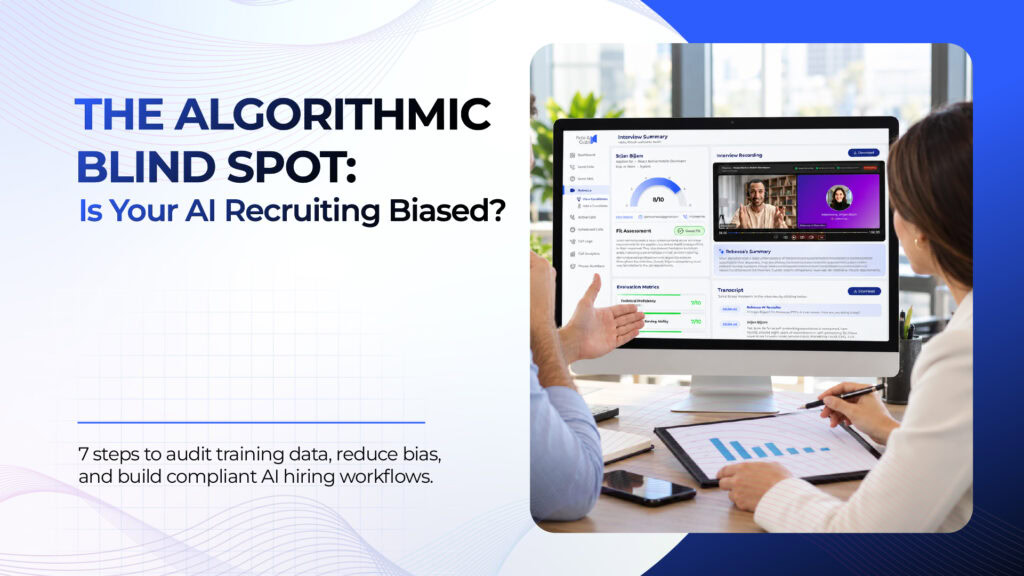
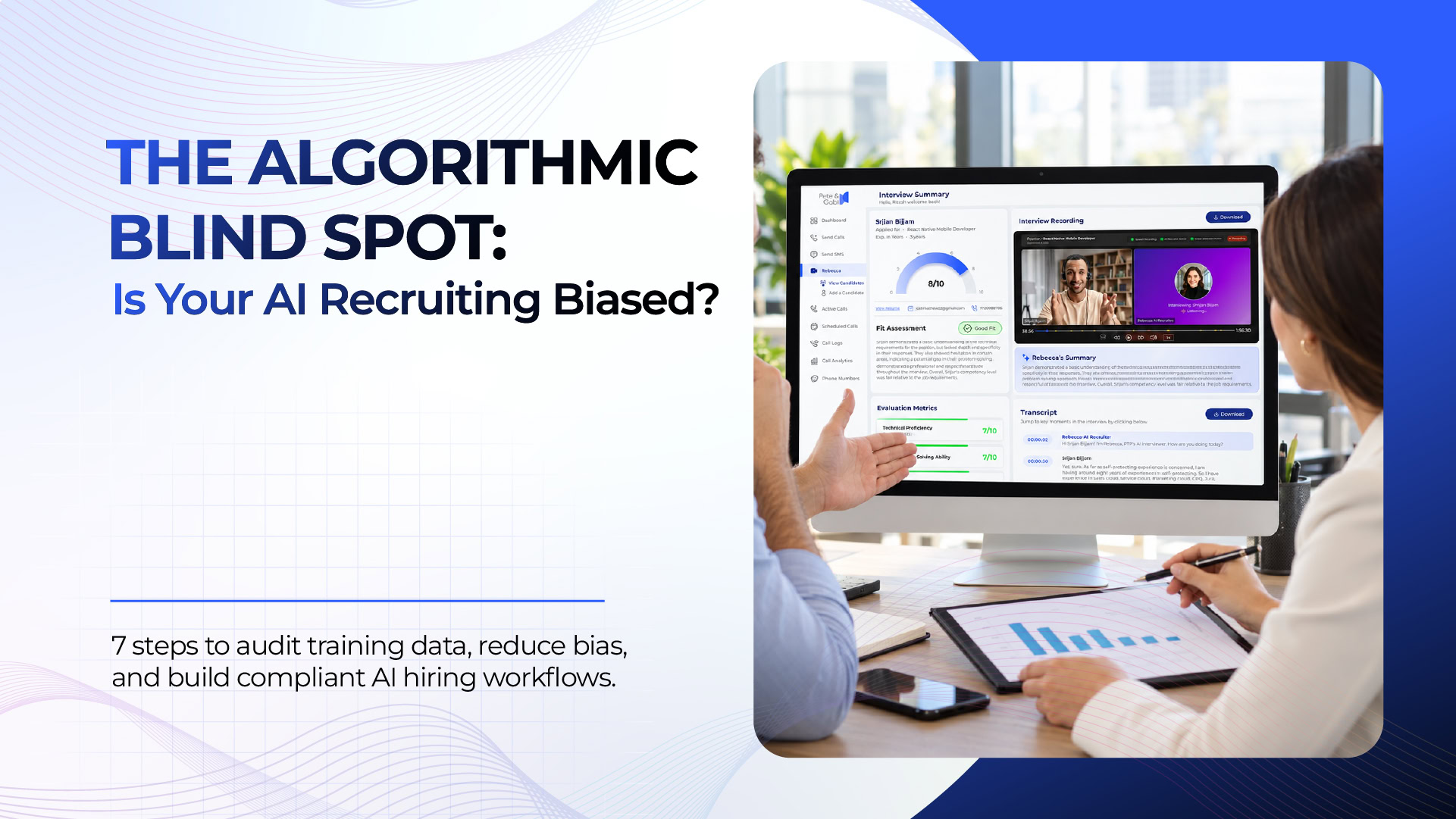
In a time when artificial intelligence is transforming many industries, hiring practices are no different. Although AI recruiters promise previously unheard-of operational efficiency, speed, and impartial evaluation, enterprise hiring boards are troubled by the question of whether these algorithms are intrinsically biased.
Unmonitored AI recruiting bias may unintentionally reinforce structural injustices and historical preconceptions, resulting in systemic hiring anomalies, according to recent workforce research. Understanding, auditing, and actively addressing algorithmic bias is now a crucial operational requirement as businesses depend more on automated solutions to manage high-volume application pipelines.
Training algorithms reproduce and magnify the same discrepancies when they are feeding historical datasets that represent past human prejudices. Algorithmic bias, however, is an engineering and governance issue rather than an unfixable technological defect. The first step in creating an equitable employment environment is acknowledging this difficulty.
To reduce AI recruiting bias, remove past biases, and promote a more inclusive future. This thorough guide examines seven practical tactics that HR directors, talent acquisition executives, and tech developers may put into practice.
Recognizing the Operational Foundations of AI Recruitment Bias
The term “AI recruitment bias” describes the unintentional discrimination or favoritism that results from machine learning models while assessing candidate profiles. These AI systems’ training data, which reflects systematic workplace injustices, historical biases, and non-representative sample pools, is virtually invariably the source of this bias.

An automated screening tool, for example, learns to treat those proxies as necessary for success if it is trained for ten years of hiring data from an engineering department that primarily selected candidates from academic backgrounds or demographic groups. As a result, competent candidates from under-represented groups are unjustly excluded.
| Source of Algorithmic Bias | Operational Manifestation in Hiring | Technical & Governance Mitigation Strategy |
| Historical Data Skew | Replicating past hiring preferences from non-representative company datasets. | Audit, clean, and rebalance training datasets with diverse candidate cohorts. |
| Linguistic & Proxy Bias | Penalizing candidates based on non-standard phrasing, formatting, or speech patterns. | Deploy semantic natural language processing tuned for competency over static keywords. |
| Unmonitored Scoring Drift | Algorithms developing unexplainable weighting adjustments over extended operational cycles. | Conduct regular independent third-party bias audits and disparate impact tests. |
Unmanaged bias has far-reaching consequences that go well beyond recruiting mistakes. Businesses that depend on faulty AI systems create a fusion loop that hinders team innovation, harms employer branding, and puts the company under intense regulatory scrutiny.
The Seven Practical Ways to Address AI Recruitment Prejudice
Fighting algorithmic prejudice necessitates a methodical, multi-layered governance architecture that includes data collecting, algorithmic design, and human monitoring in addition to ethical goals.
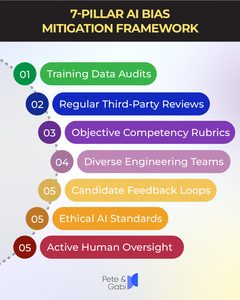
- Select Representative, Diverse Training Datasets
Data integrity is the first step toward algorithmic justice. Downstream results will be distorted if your training data is not representative of the larger labor market or lacks demographic variety. Companies need to actively seek out non-traditional applicant profiles, examine their training libraries, and make sure training samples accurately represent various talent segments.
- Perform Independent Bias Audits on a Regular Basis
Internal testing is not enough to ensure equity. Employing both quantitative and qualitative techniques, such as outcome comparison matrices and disparate effect studies, organizations should conduct quarterly bias audits. Hiring competent outside third-party assessors ensures total accountability and openness by offering an unbiased evaluation.
- Focus Assessments on Objective Job Competencies
Standardized, job-relevant competency models should take the place of arbitrary “culture fit” measurements and subjective personality evaluations. By comparing each applicant to clear, verifiable standards, employment decisions are made based on operational capacity rather than personal preference.
- Foster Diverse Teams for Technical Development
The viewpoints of its designers are reflected in algorithmic design. Engineering and product teams are far more able to foresee edge cases, identify proxy factors, and get rid of discriminatory assumptions during model creation when their members come from a variety of backgrounds, socioeconomic experiences, and technological perspectives.
- Create Open Loops for User Feedback
Recruiters’ and candidates’ voices are crucial for identifying hidden algorithmic irregularities. By putting in place user-friendly feedback mechanisms like candidate inquiry channels or post-application reporting tools, companies can see trends where particular cohorts might be unfairly disadvantaged and immediately recalibrate their algorithms.
- Follow Acknowledged Ethical AI Guidelines
Align your recruitment technology stack with well-known international frameworks, including the Partnership on AI or the IEEE Ethically Aligned Design standards. These guidelines guarantee that your hiring technology functions within stringent ethical bounds by emphasizing fairness, accountability, and explainable scoring.
- Continue to Provide Useful Human Oversight
Automation should not be used to run black boxes on its own; rather, it should be used as an impartial review tool. Hiring managers and qualified recruiters must maintain active control over hiring outcomes, evaluate AI-generated scorecards in context, and retain final say over candidate advancement.
How Rebecca AI Recruiter Integrates Design-Based Fairness
Bias mitigation must be incorporated directly into platform architecture; it cannot continue to be a theoretical endeavor.
Rebecca AI Recruiter was designed from the ground up to guarantee impartial, equitable candidate assessment. Rebecca assesses each applicant using standardized, job-relevant competency rubrics instead of training models on historical employee datasets that contain prejudice from the past.
Rebecca AI: Built-In Fairness & Bias Mitigation
| Architecture Control | Practical Implementation in Rebecca AI |
| Objective Rubrics | Evaluates candidates strictly against role requirements, eliminating pedigree bias. |
| Consistent Screening | Asks identical foundational questions across all applicant cohorts. |
| Explainable Scoring | Generates transparent rationale and transcript citations for every score. |
Rebecca enables talent teams to scale candidate evaluation with complete trust in algorithmic fairness by standardizing conversational screening, removing human subjectivity driven by weariness, and directly synchronizing transparent scorecards into your Applicant Tracking System.
Check out our comprehensive article on the best AI recruiting automation tools that reduces bias to learn more about how automated technologies promote fair hiring.
In conclusion, a dedication to equitable and inclusive hiring
Eliminating AI recruitment bias is both a strategic and ethical requirement as AI continues to transform the talent acquisition market. Organizations can leverage the speed of AI while guaranteeing that each candidate is assessed fairly on merit by comprehending the causes of bias, auditing training data, enforcing frequent third-party reviews, cultivating diverse development teams, and implementing intelligent conversational platforms like Rebecca AI Recruiter.
References & Industry Sources
- U.S. Equal Employment Opportunity Commission (EEOC) — Assessing Algorithmic Fairness in Employment Decisions:
https://www.eeoc.gov/laws/guidance/select-issues-assessing-complying-title-vii-software-algorithms
(Source for Title VII compliance standards, disparate impact analysis, and employer accountability for algorithmic hiring tools)
- National Bureau of Economic Research (NBER) — Diversity and Problem-Solving Innovation:
https://www.nber.org/papers/w28723
(Source for research on diverse development teams, inclusive design practices, and algorithmic fairness outcomes)