One of the biggest operational challenges for modern recruiting teams, despite the advances in talent acquisition technology, is coordinating calendar availability. When recruiters spend hours emailing back and forth to get candidates and busy hiring managers on the same page, time-to-fill metrics suffer, candidate engagement drops and top talent accepts other offers.
By automating the scheduling step, you take administrative friction out of your hiring pipeline. By connecting calendar availability to candidate workflows, qualified applicants can choose interview times on their own schedule, reducing screening cycles from weeks to hours for organizations.
In this guide we discuss why manual calendar coordination is still a big bottleneck, calculate the real operational cost of manual scheduling, outline a step-by-step automated workflow, and explain how self-service booking fits into a modern recruiting stack.
Why does interview scheduling still slow down hiring in 2026?
The process of scheduling interviews slows down hiring because it involves a lot of manual intervention to coordinate the availability of several people across different time zones, email platforms and changing internal priorities.
According to industry research on recruiting coordination, coordinators spend 46% of their time on admin-related scheduling activities, and the average manual scheduling cycle is 243 minutes (over 4 hours) of cumulative back and forth email tag. Further, 50% of candidates have ghosted potential employers because of slow communication and long delays in the early stages of the hiring process.

2026 RECRUITING COORDINATION & SCHEDULING BENCHMARKS
| Coordination Metric | Industry Baseline / Impact |
| Admin Time Allocation | 46% of coordinator bandwidth lost to scheduling admin. |
| Manual Scheduling Time | 243 minutes average cumulative back-and-forth. |
| Candidate Ghosting Rate | 50% ghost employers due to long communication delays |
| Reschedule Churn Rate | 14–15% of all interviews require manual rework. |
When a recruiter manually coordinates 3 hiring managers and a candidate across 3 calendar systems, what should take minutes takes days of emails, putting top candidates at risk of being lost.
What does manual interview scheduling actually cost a recruiting team?
Manual calendar coordination costs recruiting teams up to 10 to 15 hours of administrative labor per recruiter per week and increases candidate drop-off rates significantly.
In LinkedIn Talent Solutions’ research on Reducing Time-to-Hire, we found that making outreach and scheduling logistics easier for candidates can win back dozens of hours per role, allowing recruiters to spend time engaging with candidates instead of managing calendars.
| Operational Metric | Manual Calendar Coordination | Automated Calendar Workflows | Operational Impact |
| Weekly Administrative Labor | 10–15 hours lost per recruiter to email tag | < 1 hour spent managing automated calendar links | Reclaims up to 14 hours per recruiter weekly |
| Scheduling Cycle Duration | 243 minutes (3–5 days) to confirm an interview | < 5 minutes for candidate self-service selection | Reduces scheduling lag by over 90% |
| Interviewer Response Speed | 68 hours average time to decline invites manually | 21 hours with automated chasing reminders | 3x faster calendar cleanup and reassignment |
| Interview No-Show Rate | 15–20% due to lost emails or forgotten times | < 5% driven by automated SMS/email reminders | Protects hiring manager calendar availability |
What is an automated interview scheduling workflow?
Candidate qualification triggers are integrated with actual team calendar availability via an automated workflow.
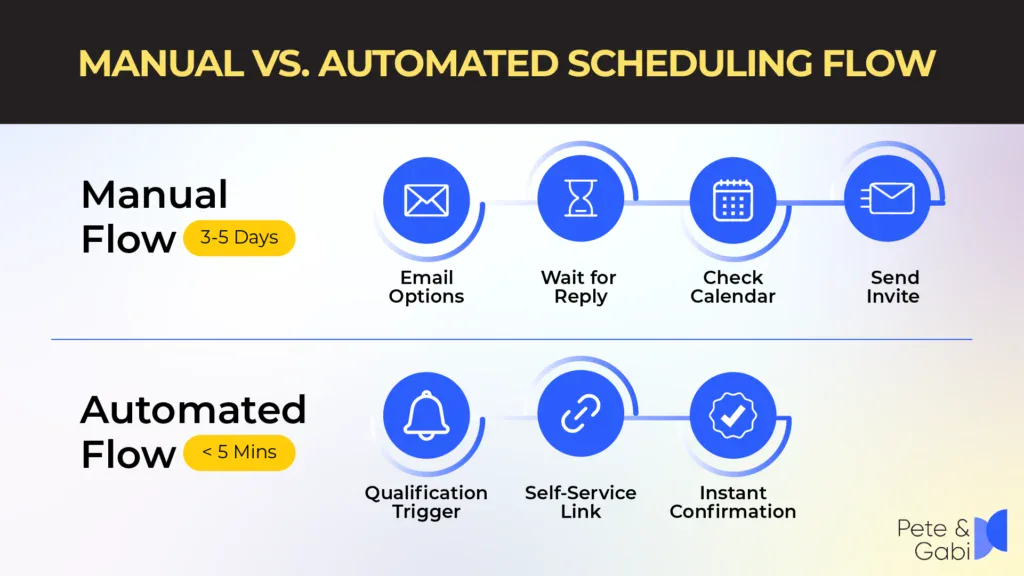
Automated interview scheduling tools guide applicants thru four simplified steps utilized by talent acquisition teams:
- Qualification Trigger: Once an applicant passes an initial resume filter or screening assessment, the platform automatically sends an invitation.
- Self-Service Calendar Booking: The candidate receives a link to see real-time available interview slots synced across the calendars of the panel reviewers.
- Instant Calendar Sync & Invites: Candidates will see video meeting links when they select a time slot, calendar invites will be sent to all attendees and the ATS will be updated.
- Automated Reminder Sequences – Custom SMS and email reminders are sent out before the interview with meeting instructions to reduce no-shows.
How does scheduling fit together with video interviews and candidate screening in the overall process?
Calendar automation sits right between the first round of candidate screenings and live interview rounds to bridge the gap and turn pre-qualified leads into live interviewees.
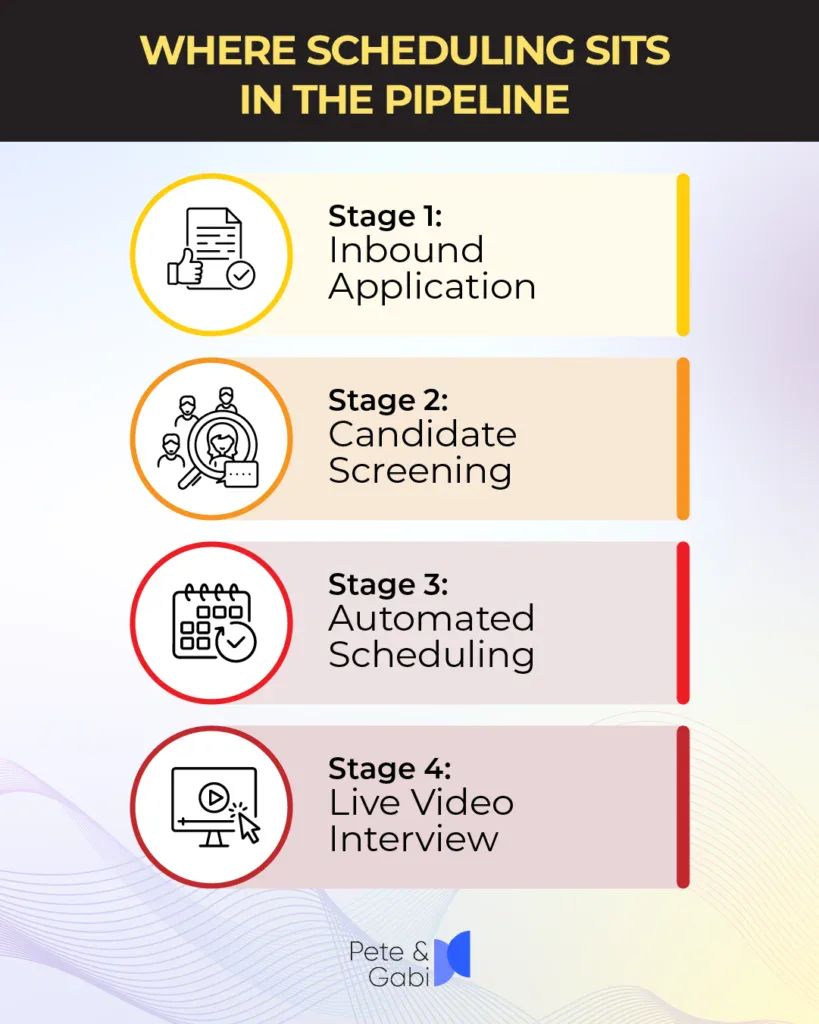
When properly integrated into your talent stack, self-service calendar booking complements other layers of evaluation:
- Post-Screening Activation: Instead of a recruiter manually reviewing screening notes, passing an assessment automatically sends out calendar invites.
- Video Platform Integration: The scheduling system will automatically create individual video conference links and embed the links in the calendar invite sent to the candidate. If you want to understand how video platforms fit into overall pipeline architecture, check out our breakdown on where a video interview platform fits in.
- High-Capacity Pipeline Acceleration Instant screening and automated calendar booking mean that there is no candidate drop-off for high-volume hiring environments. Our guide will help you automate high volume hiring without sacrificing candidate experience.
What should you look for in interview scheduling automation?
Choosing the right scheduling technology requires assessing multi-calendar synchronization, ATS integration depth, and candidate accessibility.

Features to look for include:
- Multi-Host & Panel Syncing: The software should support sophisticated pooled and round-robin panel availability between Google Workspace and Microsoft Outlook.
- Bi-Directional ATS Integration: Interview confirmations, reschedule requests, and meeting notes should automatically sync back to candidate ATS profiles.
- Mobile-First UX: Candidates should be able to choose interview slots on mobile browsers in two taps, without downloading any external apps.
- Conversational AI Capability: Advanced ai interview scheduling engines engage candidates over text or voice, answering questions while confirming meeting times in real time.
Teams seeking dedicated interview scheduling software should focus on these capabilities to ensure a smooth launch that protects team bandwidth.
How to measure the ROI of scheduling automation
Measuring the ROI of calendar automation involves monitoring both quantitative efficiency metrics and qualitative candidate experience indicators:
- Time-to-Fill Reduction: Number of Days Eliminated Between Initial Screening and Panel Interview
- Coordinator & Recruiter Capacity: Measure how many more interviews can each coordinator take per week (automated teams can take up to 158 interviews per coordinator vs ~30 manually)
- Candidate Satisfaction (CSAT): Collecting candidate sentiment on how fast they were able to communicate and how easy it was to book.
Eliminating calendar tag is one of the fastest ways to compress time-to-fill and deliver a modern applicant experience.
Rebecca AI Recruiter acts as an intelligent extension of your talent team. By combining 24/7 conversational screening with interview scheduling automation, Rebecca qualifies applicants and books interviews directly onto team calendars without recruiter intervention.