Every hiring leader knows the quiet panic of watching a standout candidate accept another offer before your team has even finished their first-round phone screens. Yet most organizations still run top-of-funnel recruiting the exact same way they did fifteen years ago: manually skimming hundreds of PDFs, sending endless scheduling emails, and asking human recruiters to repeat the same five introductory questions forty times a week.
This model is no longer just inefficient. It is actively costing companies their best hires. Deploying dedicated AI candidate screening software solves this upfront bottleneck immediately. As application volumes surge and teams adopt more effective AI candidate sourcing software, candidate expectations shift toward instant digital responsiveness, relying on human bandwidth for initial screening has become the single biggest liability in talent acquisition.
By 2027, autonomous AI interview agents will not be a novelty reserved for tech-forward enterprises. They will be the standard front door for first-round interviews across corporate recruiting teams and staffing agencies alike.
The Broken State of Traditional First-Round Screening
Modern applicant tracking systems were built to collect resumes, not to evaluate human potential at speed. When hundreds of applications hit an open requisition within hours, the legacy screening workflow collapses under its own weight.
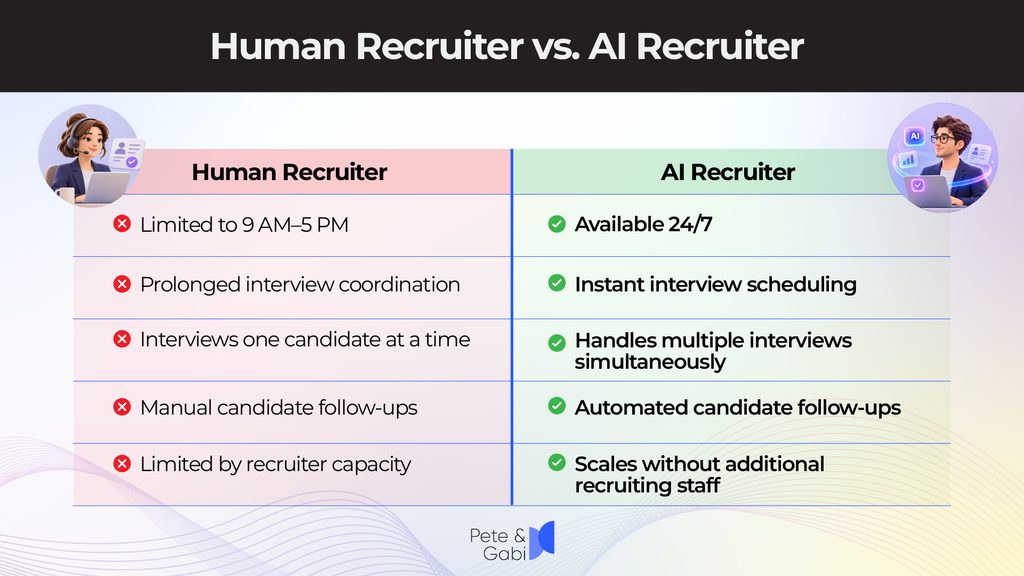
- The Recruiter Bottleneck: Expecting human recruiters to spend 10 to 15 minutes reviewing every resume and then conduct back-to-back 30-minute introductory calls is mathematically unsustainable. When a single role attracts 400 applicants, a recruiter would need more than 100 hours just to screen the pool. In practice, most resumes receive less than seven seconds of attention, meaning qualified talent gets filtered out simply because their formatting did not match a hurried skim.
- The Scheduling Nightmare: Even after a recruiter identifies promising profiles, the real friction begins. Coordinating a 30-minute phone screen between a busy talent acquisition specialist and an employed candidate turns into days of calendar tag. Emails go unanswered; time zones clash, and rescheduling requests pile up. What should be a simple introductory conversation stretches into a five-to-seven-day administrative obstacle course.
- The Cost of Delay: High-performing candidates do not stay on the market for three weeks while your team clears calendar space. In competitive sectors like technology, healthcare, and specialized operations, top applicants routinely receive multiple outreach messages within 48 hours of updating their profiles. When an organization takes over a week just to initiate a first-round conversation, the strongest candidates have already moved to final rounds with faster competitors.
What AI Interview Agents Actually Do in Round One
Replacing manual phone screens with autonomous voice and video AI agents does not mean replacing human judgment. It means automating the structured discovery phase so every applicant receives a real conversation rather than a silent rejection email.
- Instant Engagement at Scale: Modern AI interview agents connect with applicants within minutes of submission, operating 24 hours a day, 7 days a week, 365 days a year. Whether a candidate applies at 2:00 PM on a Tuesday or 11:30 PM on a Sunday, the AI agent can immediately initiate a natural, spoken first-round interview. Speed becomes a built-in competitive advantage rather than a logistical headache.
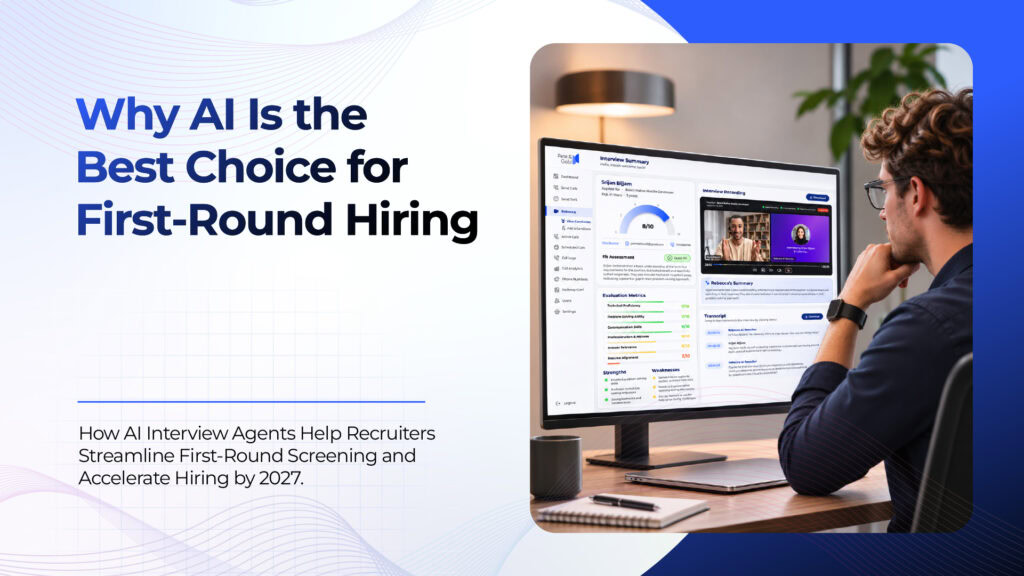
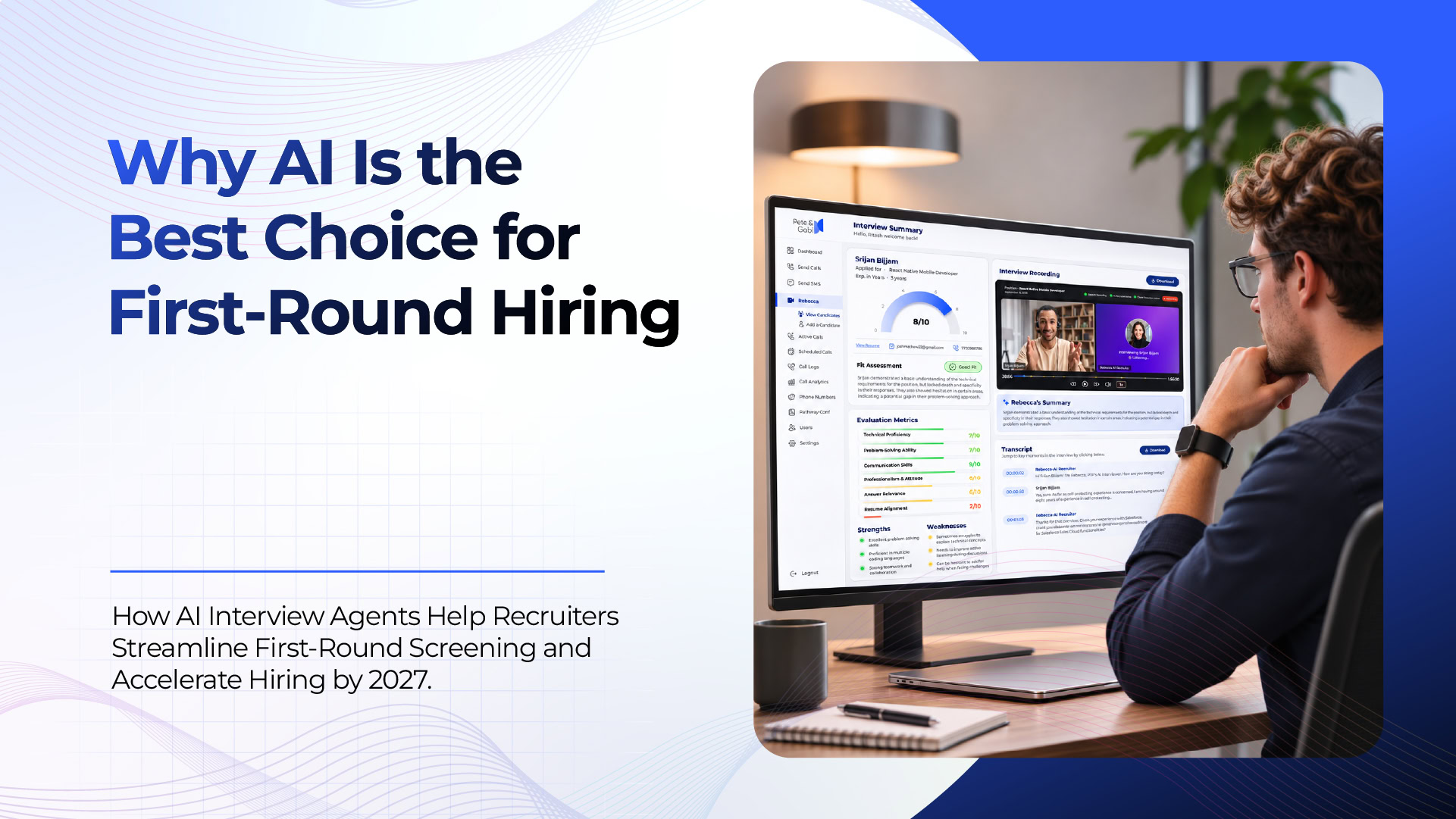
- Standardized Core Evaluation: Human interviewers get tired, distracted, and rushed. A candidate interviewed at 9:00 AM on a Monday often gets a completely different experience than one interviewed at 4:45 PM on a Friday. AI agents eliminate that variance by asking every single applicant about the exact same core technical, situational, and competency questions with identical energy and precision. Recruiters can set up technical and non-technical interviews using Rebecca AI to structure evaluations around each role.
- Deep Behavioral Signals: Far beyond simple keyword matching on a static resume, conversational AI evaluates how candidates communicate. Advanced AI Interviewer Software for Candidate Screening | Rebecca assesses clarity of thought, verbal fluency, enthusiasm, problem-solving structure, and foundational domain knowledge upfront. Instead of guessing whether a resume bullet point reflects real expertise, hiring teams get verified spoken evidence from day one.
Why Human Recruiters Are Relieved (Not Replaced)
Whenever automation enters the hiring conversation, skeptics worry that technology will strip humanity out of recruiting. In reality, the exact opposite happens. Legacy screening workflows force human recruiters to act like administrative robots, leaving them zero time for genuine human connection.
- Eliminating Monotony: Repeating the same introductory script 25 times a week drains energy and leads to severe recruiter burnout. Handing top-of-funnel screening to an AI agent removes the soul-crushing repetition of verifying basic qualifications, notice periods, and baseline technical skills.
- Focusing on High-Value Work: When recruiters reclaim 15 to 20 hours every week from introductory phone screens, they can reinvest that time where human empathy and strategic persuasion truly matter. Recruiters can partner closely with hiring managers to refine role calibration, coach finalists through executive interviews, negotiate complex compensation packages, and close reluctant top-tier candidates.
- Data-Driven Shortlists: Instead of dumping a folder of 50 raw resumes onto a hiring manager’s desk, recruiters can deliver a tightly curated shortlist of pre-vetted finalists. Each candidate profile arrives backed by full interview transcripts, audio or video playback, objective competency scores, and structured evaluation summaries. Hiring managers spend their interview hours speaking exclusively with candidates who have already proven they can do the job.
The Candidate Experience Advantage
Candidates rarely complain about talking to smart technology. What they despise is silence. The “HR black hole,” where applicants spend an hour tailoring a resume only to never hear back, remains the single biggest driver of employer brand damage.
- Zero Wait Time: Candidates rarely complain about talking to smart technology. What they despise is silence. The “HR black hole,” where applicants spend an hour tailoring a resume only to never hear back, remains the single biggest driver of employer brand damage.
- Anytime, Anywhere Flexibility: Employed candidates often struggle to sneak away from their current offices or take awkward calls in their cars during lunch breaks just to satisfy a recruiter’s 9-to-5 calendar. With 24/7 AI-led interviews, candidates complete their first round from the comfort of home on a Tuesday evening or Saturday morning, entirely on their own schedule.
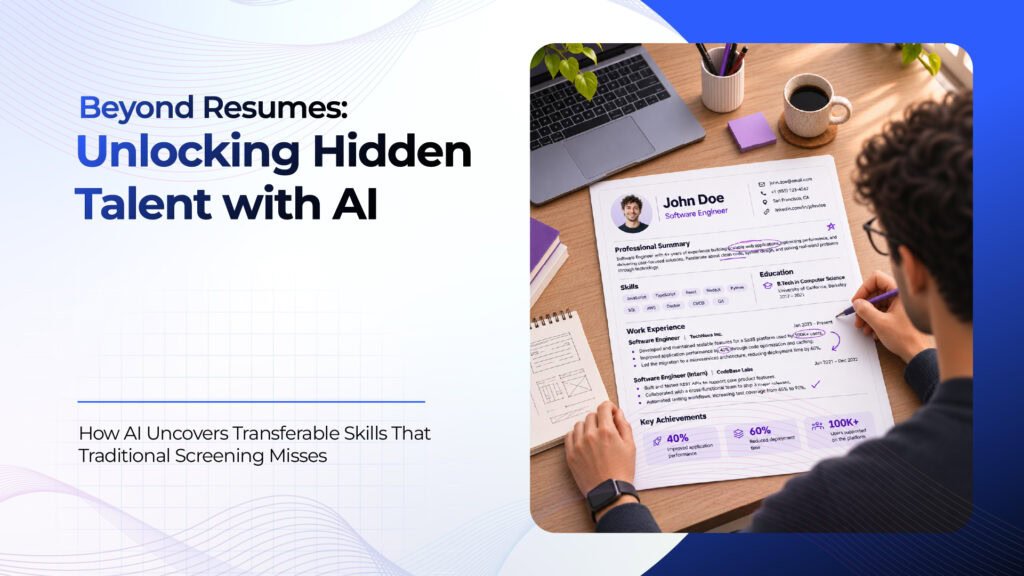
- Fair and Consistent Evaluation: Traditional resume screening disproportionately favors candidates with brand-name universities, recognizable past employers, or resume-optimization tricks. Structured AI interviews level the playing field. Every applicant is evaluated strictly on the substance, clarity, and relevance of their spoken answers, giving non-traditional and self-taught talent a genuine shot to prove their capability.
Looking Ahead to 2027: The New Standard Operating Procedure
The trajectory of enterprise talent acquisition mirrors what happened with applicant tracking systems two decades ago and video conferencing during the early 2020s. What begins as an efficiency edge for high-volume staffing firms and fast-scaling tech companies rapidly becomes the baseline expectation across every industry.
By 2027, asking a human recruiter to manually conduct cold introductory screening calls will look as outdated as printing paper resumes and mailing them to regional offices. Enterprise talent teams and staffing agencies that adopt AI-first screening today are building compounding advantages in time-to-hire, cost-per-hire, and recruiter retention. Those that cling to manual calendar coordination will find themselves perpetually fighting over the talent left behind after faster competitors have already made offers.
If your organization is ready to eliminate screening bottlenecks and engage top applicants the moment they apply, AI Interviewer Software for Candidate Screening | Rebecca is built to lead your first round. Designed specifically for high-velocity recruiting teams and staffing leaders, Rebecca conducts natural, structured voice and video interviews 24/7, delivering ranked, data-backed candidate shortlists straight to your hiring managers.
Frequently Asked Questions (FAQs)
1. Will candidates refuse to complete a first-round interview with an AI agent? No. Completion rates for AI-led first-round interviews consistently match or exceed traditional phone screens because candidates value immediate responsiveness and the flexibility to interview outside standard business hours without taking time off from their current jobs.
2. Do AI interview agents replace human recruiters? No. AI interview agents handle repetitive, top-of-funnel screening and structured baseline assessments. This frees human recruiters to focus on high-impact strategic work, including hiring manager alignment, candidate coaching, relationship building, and closing top offers.
3. How do AI interview agents reduce bias in the hiring process? AI interview agents ask every applicant the exact same standardized questions and score responses against objective, pre-defined competency rubrics. This eliminates interviewer fatigue, mood variance, and unconscious bias tied to resume formatting, school pedigree, or background.
4. What kinds of roles are best suited for first-round AI interviews? AI interview agents excel across both high-volume operational hiring and specialized technical, healthcare, sales, and corporate roles. Any position that requires verifying communication clarity, foundational domain knowledge, and role alignment before advancing to a hiring manager benefits immediately from AI-led screening.
5. What happens after a candidate finishes an AI first-round interview? Immediately upon completion, the AI agent generates a structured evaluation report containing competency scores, key takeaways, a searchable transcript, and session recordings. Recruiters and hiring managers can review the top-ranked candidates right away and advance finalists directly to human-led second-round interviews.