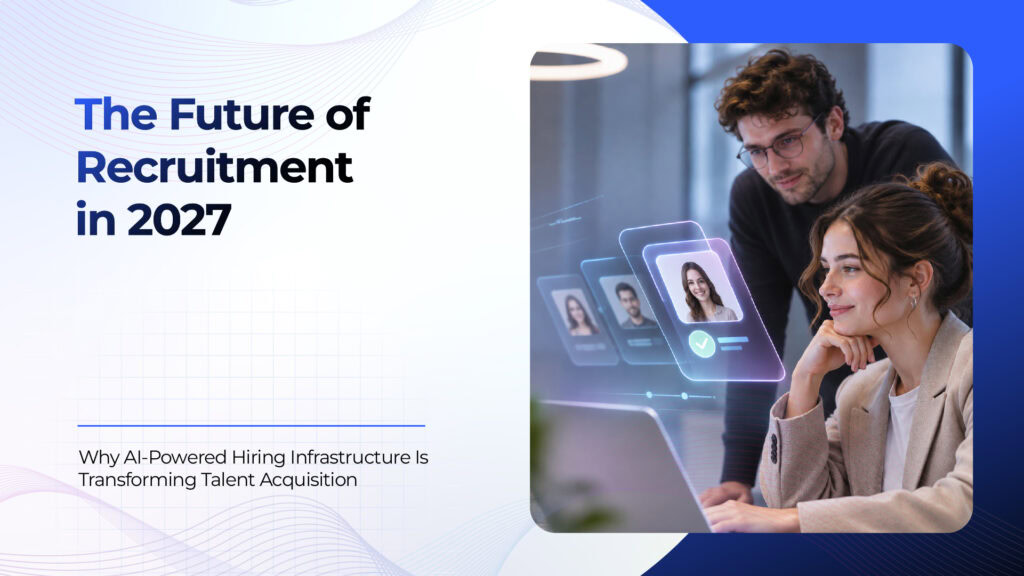
As of the year 2027, we will witness an important evolutionary shift in the domain of recruitment. The time of treating AI merely as an upcoming novelty, testing tool, or supplement to the hiring process has come to an end. Due to various economic limitations and the necessity for stable volumes of recruitment, all managers have come to realize the importance of AI in recruitment as an advanced technology.
Instead of looking for different separate applications for their various recruitment processes, leading organizations have started building their entire recruitment structure based on the use of AI systems. In this context, the use of advanced systems, like Rebecca AI, allows recruiters to minimize their time wastes faced during the recruitment process.
1. AI Moves from Bolt-On Tool to Core Delivery Infrastructure
For several years, human resources and corporate recruitment departments used technology piecemeal. They used one automation tool for emails, and then another third-party service for setting dates, and a basic keyword-based resume parsing system plugged into an Applicant Tracking System (ATS). With that approach, the processes created data silos, workflow friction, and escalating costs for software licenses without giving much real advantage.
Between the years of 2023 and 2027, the whole hiring scenario transformed. Automated search for potential candidates from any application, instant qualification of candidates and complete coordination of the interview process are no longer theoretical and started being the chief driving force in competitive hiring. Leading companies are now applying complicated AI Candidate Screening to engage potential candidates right after they sent their application for a vacancy, filtering for highly qualified candidates and working for the benefit of the organization round-the-clock without using any manpower.
Protecting Margin and Enhancing EBITDA
Economic uncertainty has led to the rising importance of safeguarding EBITDA margins for executives and agency leaders. Conventional hiring systems incur high costs for recruitment processes, with recruiters manually checking resumes and a lot of lost communications during scheduling calls with applicants.
The integration of solutions like Rebecca AI into the processing stage changes the whole expense structure for companies:
Manual Task Load Drops: All steps from the hiring process until the scheduling of a recruitment meeting become automated.
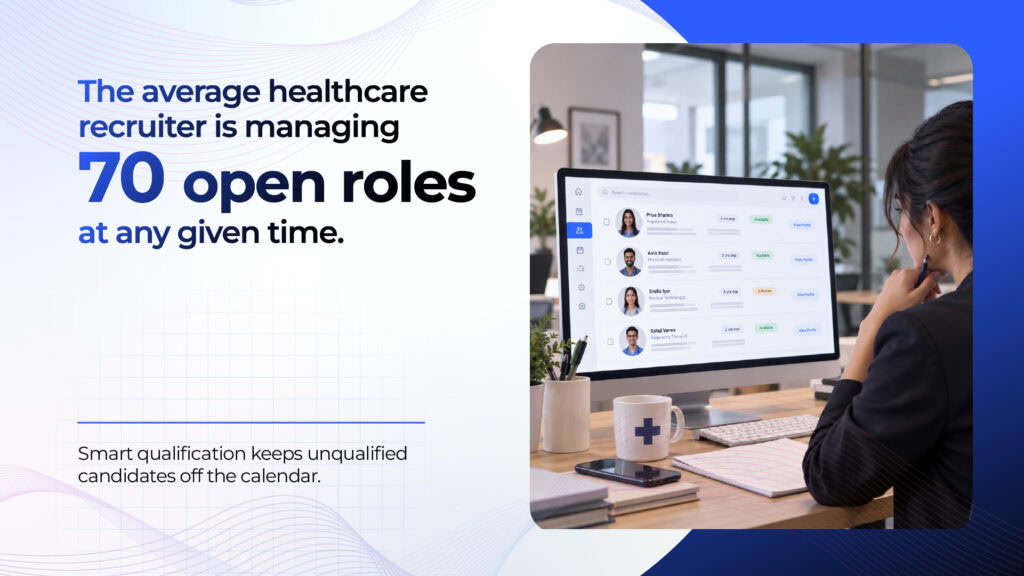
Recruiters’ capacity goes up: Small and agile recruitment teams can handle a much bigger number of applications without hiring more employees.
Speed increases: Candidates can go from their first application to the hiring manager meeting in a few hours instead of weeks, gaining advantage over competition in hiring.
Companies utilize modern AI for faster hiring to remove time-related obstacles and make sure top-notch candidates remain interested in receiving job offers.
2. The Rise of Candidate Fraud & Rigorous Multi-Layer Verification
While the potential of artificial intelligence speedily increased between 2024 and 2027, so did the cleverness among applicants that were trying to deceive recruiters. Hiring managers now have to fight a battle in which they have never had to employ such sophisticated methods: AI-manufactured audio and video interviews, continuous application of artificial intelligence to polishing resumes according to job specifications, or use of surrogate candidates during technical tests.
Combatting Synthetic Identity Fraud
Conventional checking of resumes is ineffective now because it is impossible to tell the difference between true narrow experience and an AI produced. Companies must utilize various verification tools starting from the moment of profile submission.
- Identity & Credential Authentication: Automated verification checks validate the identity, various work experience of the people applying, and their educational qualifications with the help of database comparison that instantly flags out those candidates that provide fake profiles.
- Dynamic Skill Validation: Adaptive screening technologies assess candidates’ problem-solving abilities in real time as opposed to a static, text-based method that can be easily bypassed by an external program.
- Audio-Visual Signal Auditing: Advanced multi-modal solutions allow the collection of various data streams in the initial elaboration and can find out whether the person speaks in a robotic voice, the video was digitally altered, or the information was provided by some non-verified sources.
Balancing Security with Experience
High friction is the enemy of attracting high-caliber talent. Leading recruiters are primarily responsible for implementing reliable anti-fraud mechanisms without pushing legitimate candidates to go through unpleasant or difficult procedures. Tapping into seamless, conversational AI tools for such verifications can solve this problem quickly and successfully, thus keeping organizations secure at no cost to the quality of candidates’ experiences.
3. Shifting from Sourcing Volume to High-Precision Quality of Hire
When organizations focus merely on the high-volume recruiting approach, essentially, it resolves to the application of traditional method of posting jobs endlessly in job boards, that does not work anymore in current hiring environment, especially in 2027 can be characterized by “low-hire, low-fire” motto. This means that companies analyze their hiring process thoroughly so they would have employees capable of giving good returns on investments into them.
Beyond Static Keyword Matching
The method of keyword-matching passes over outstanding candidates coming from unconventional backgrounds while providing too much credit to applicants with resumes optimized for automated applications screening. Taking into account modern approaches to recruiting, the focus is now on assessing applicants’ abilities.
By making use of innovative Two-way AI Interview Agents, companies select the candidates through conversations which are much more involved than previous phone interviews or any other methods used in the past. The process does not only revolve around searching through applicants’ resumes for key words but also assesses their thinking process, ability to find solutions, and to think technically. Thus, thorough evaluation occurs even before the final interview is conducted by the recruiter.
4. The Human-in-the-Loop Imperative: Ownership and Accountability
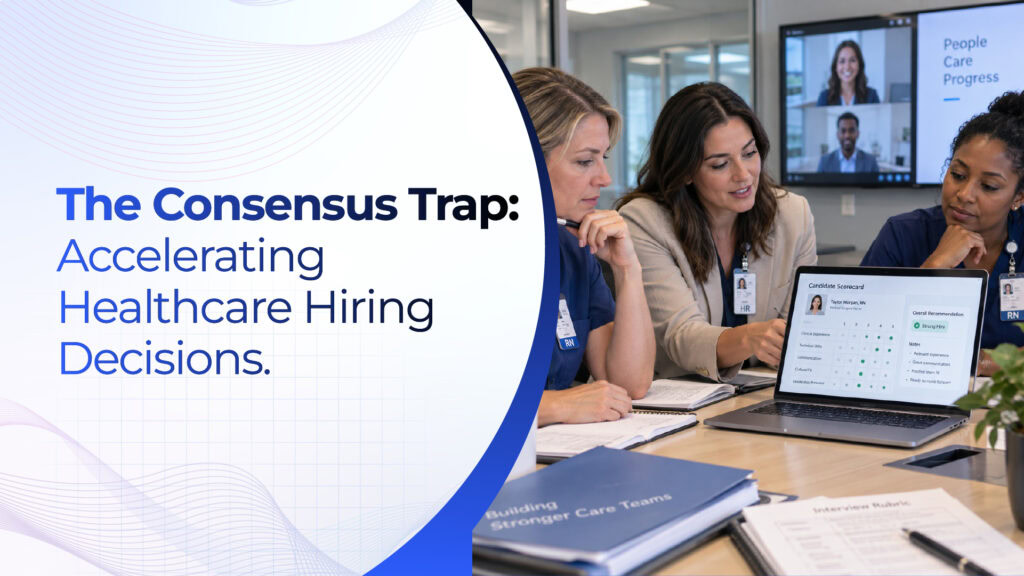
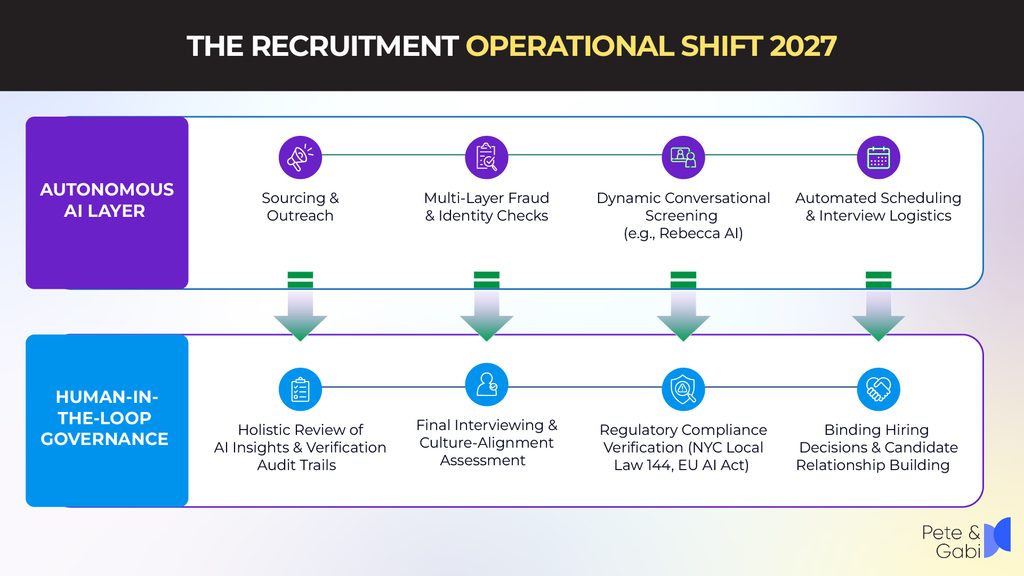
Although autonomous AI agents have the capacity to absorb considerable amounts of data, categorize it, and control logistics, it is still essential to have humans supervise the whole process. HITL (human-in-the-loop) will be an acceptable standard in 2027 for companies doing strategic recruitment.
Regulatory Compliance & Ethical Governance
It appears that the growing number of regulations applied by international actors like the EU in terms of AI, as well as various laws on bias audits in the United States and employment laws of different cities, means that it is not possible to neglect the regulations in AI recruiting. Businesses will need to show how their decisions were made with the help of an audit trail, which means that an audit is going to be needed to ensure the absence of biases during the decision-making process.
With this paradigm, responsibilities are defined:
Autonomous AI Delivery Layer: Screening, identity verification, initial skills evaluation, and scheduling the interview process.
Human Decision Layer: Complete control of the decisions regarding the recruiting process from the point of hiring to determining effective communication techniques.
This architecture guarantees compliance with all the requirements and allows human recruiters to concentrate on recruiting.
5. How Talent Acquisition Leaders Are Preparing for 2027
The structural changes require reinventing the talent acquisition technology infrastructure. Modern organizations are replacing various tool sets with efficient and unified systems based on AI technology.
Consolidating Tech Stacks Around Core AI
Using a number of disconnected software applications results in integration problems and security levels. Modern enterprise talent model simplifies procedures in one unified system managing all processes of the first stage:
Instant outreach and sourcing: Engaging candidates from the very beginning through different communication methods.
Automatic qualification: Checking candidates’ skills and confirming their identities.
Automated logistics: Managing the complex calendars and providing candidates’ information to the Applicant Tracking Systems and CRMs.
The implementation of an AI voice interview tool allows organizations to carry out thorough interviews without wasting much time on it.
Strategic Action Items for Recruiting Leaders:
- Transition to Core Infrastructure: Instead of utilizing multiple productivity apps, all-in-one AI solutions can take over the tasks of outreach, screening, and scheduling of interviews.
- Embed Multi-Layer Verification: Get rid of the threats to organizational integrity by employing an automated identity verification system in your top-of-funnel processes.
- Prioritize Precision Over Volume: Change the KPIs from the number of applicants to the levels of retention, skills to match, and verified hires.
- Maintain Strict Human-in-the-Loop Governance: Use AI only to collect the necessary data, while leaving the final hiring decision to people.
By implementing autonomous solutions such as Rebecca AI from Pete & Gabi, enterprise talent organizations can ensure EBITDA margins, compliance, and create hiring capacity for many years ahead.
Strategic Takeaways
In 2027, hiring today needs operational quickness, security maintenance, and smart ability to hire without missing quality. Success means progressing beyond the idea of automating basic functions to implementing a broad AI delivery system. Additionally, you can visit How Recruiters Can Turn Candidate Screening Calls into Client-Ready Submission Summaries and follow the steps in How to Set Up Interviews Using Rebecca AI: Technical Coding and Non-Technical to discover the methods of using intelligent recruitment processes and autonomous screening methods in detail.
References & Industry Data Sources
- Recruiterflow 2026-27 Recruitment Industry Report: Analysis on EBITDA pressures, margin efficiency, and AI moving from productivity add-on to core delivery infrastructure.
- Gartner HR Technology Forecasts: Data on AI agent adoption for routine screening tasks and workplace AI proficiency testing.
- Skillcloud 2027 Recruiting Trends: Insights on the “low-hire, low-fire” market dynamic, candidate verification, and business impact metrics.
- Codility Lab 2027 Hiring Research: Data on skills testing, AI governance, and maintaining human accountability in final hiring decisions.